Indonesia: Java, Bali, and Komodo Islands - September 10 - October 2, 2017
Part Three - Flores Island, Indonesia
Flores Island is predominantly Catholic of
Portuguese descent, although western Flores is largely Muslim.
Diverse cultures with ancient traditions have survived
in its isolated villages in the interior.
Page One - Labuan Bajo; Komodo Island
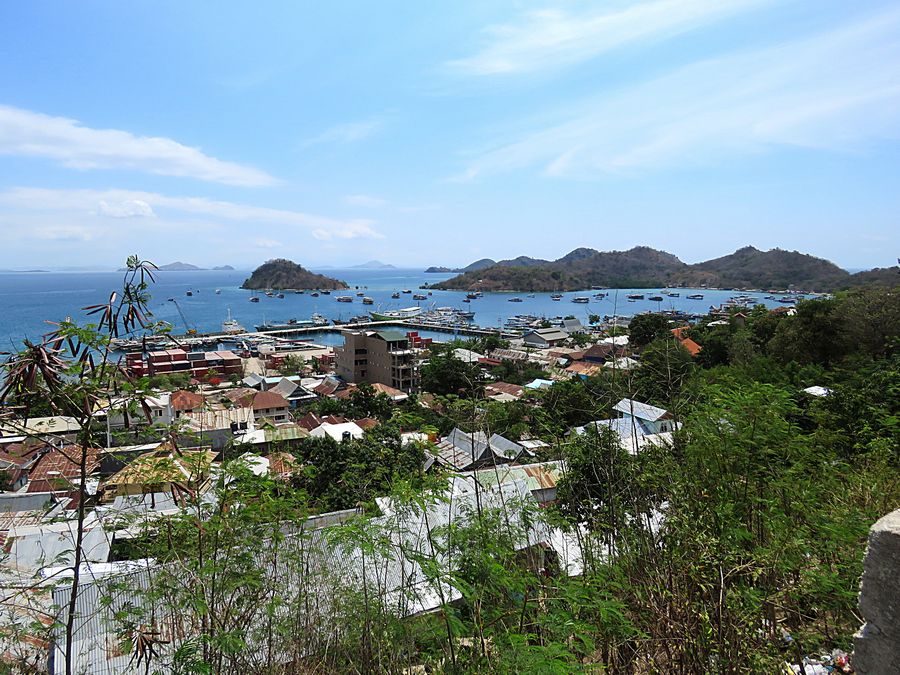
View of the fishing village of Labuan Bajo on the western end of Flores Island.
Labuan Bajo has become the gateway town for trips to the nearby Komodo
Island and Rinca Island, both part of Komodo National Park.
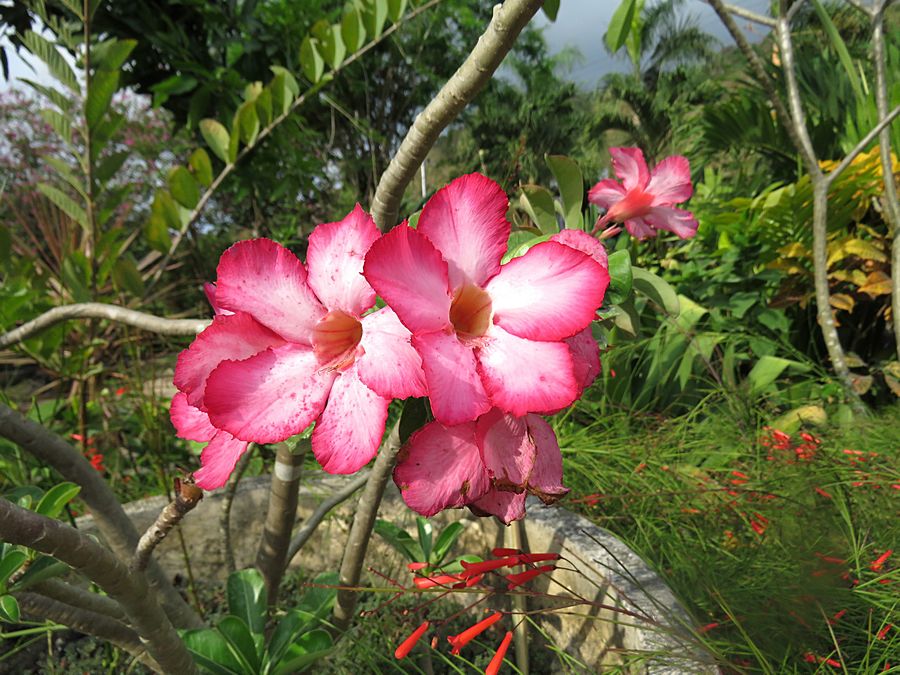
Flower on the grounds of Bintang Flores Hotel where we
stayed during this final segment of the tour.
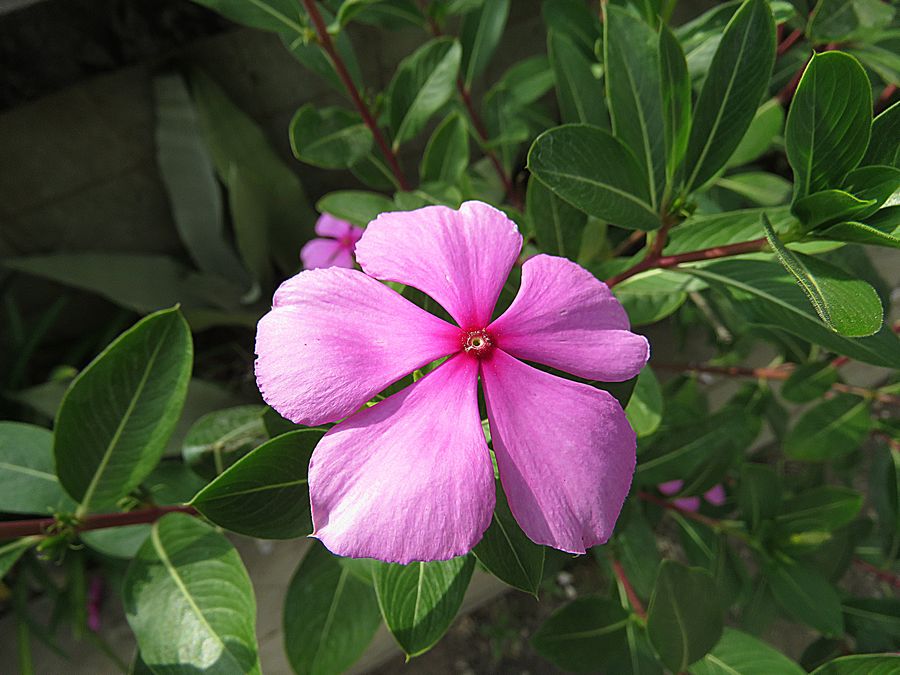
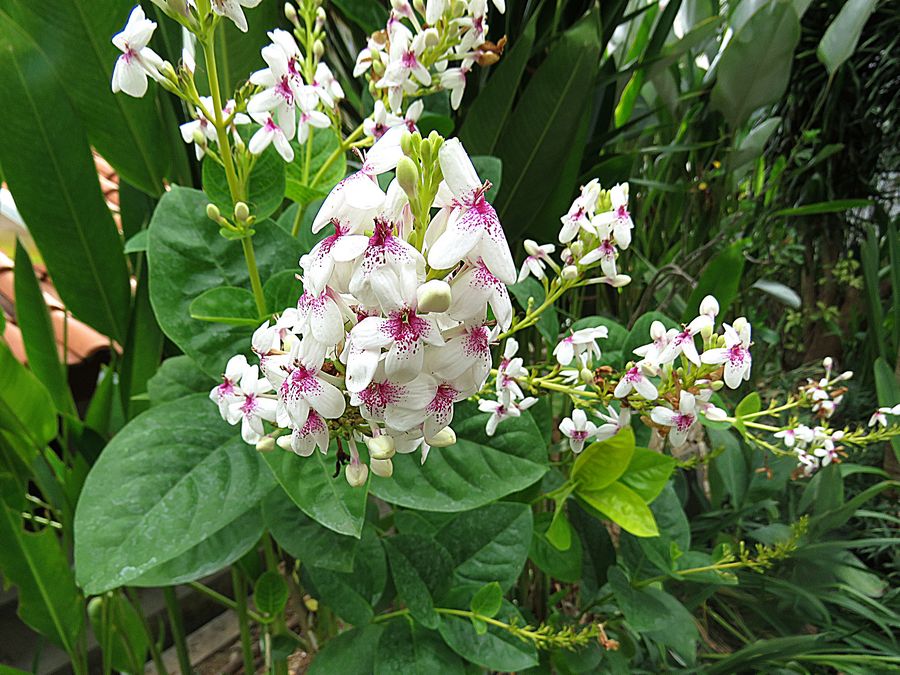
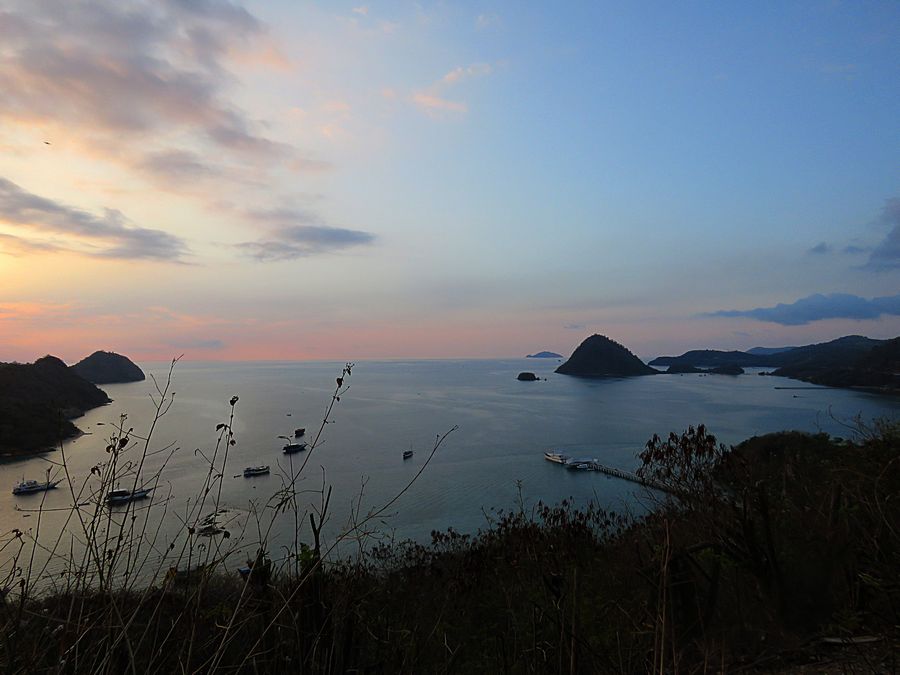
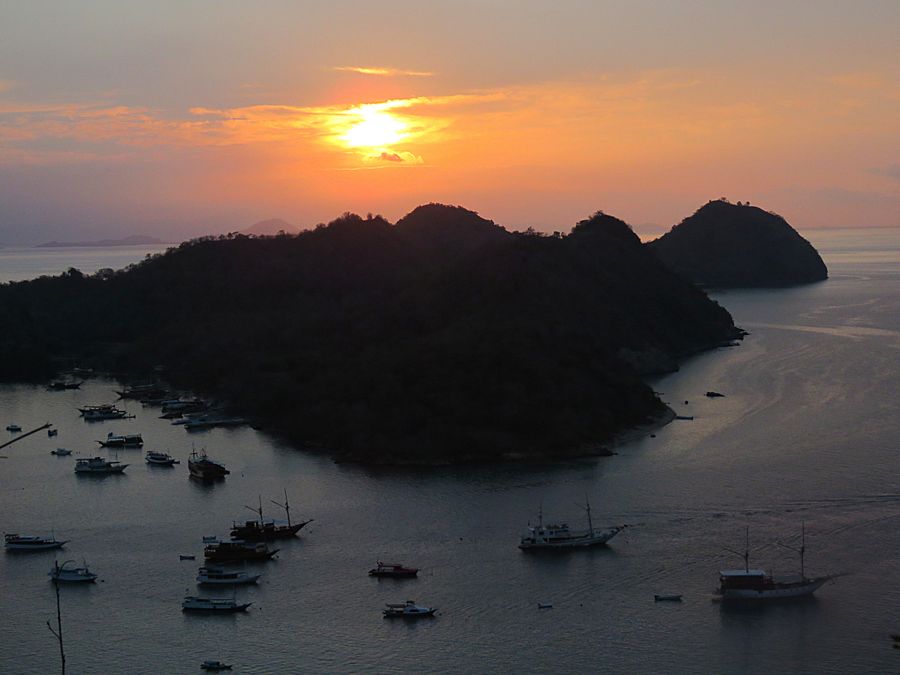
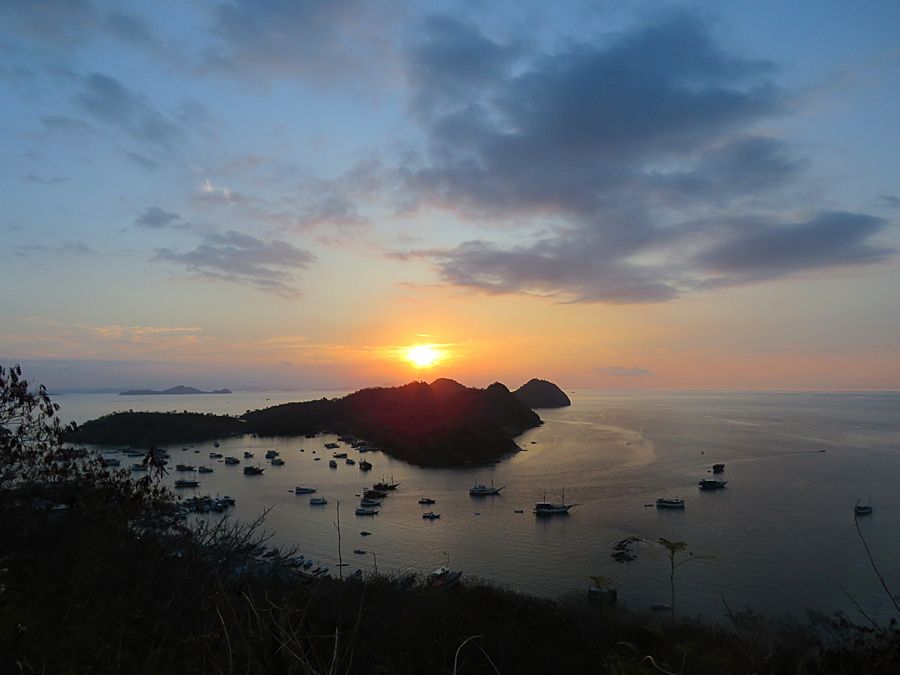
We drove (a couple of us, including me, walked) up Bukit Cinta (Love Hill)
to see lovely panoramic views and the sun setting on Labuan Bajo.
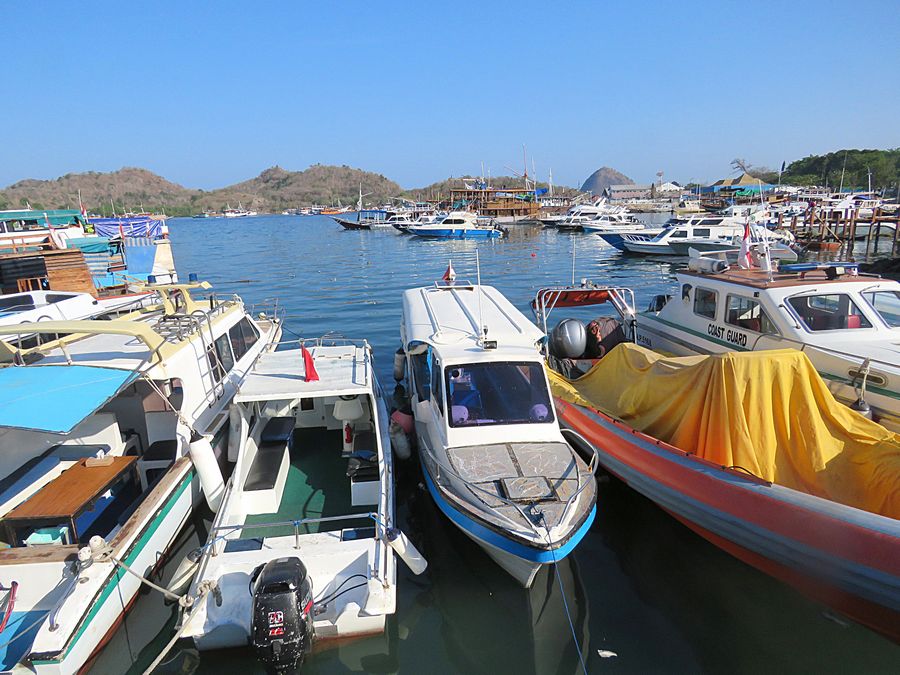
Labuan Bajo harbor on September 27. We boarded a small boat for our
ride to Komodo Island, a UNESCO World Heritage Site. Komodo was first
settled as a penal exile colony, but the descendants of the first settlers are
now fisherman.
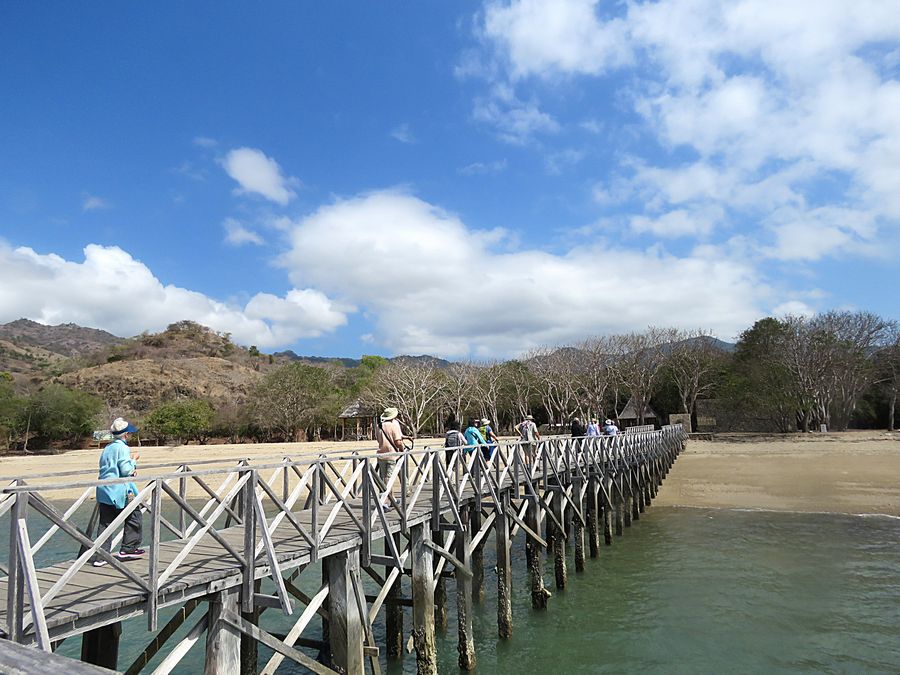
Arriving at Komodo Island. People live here but so do komodo dragons.
The dragons are protected under Indonesian law, and a national park,
Komodo National Park, was founded to aid protection efforts.
The dragons are a large species of lizard found in the Indonesian islands of
Komodo, Rinca, Flores, Gili Motang, and Padar. It is a member of the
monitor lizard family.
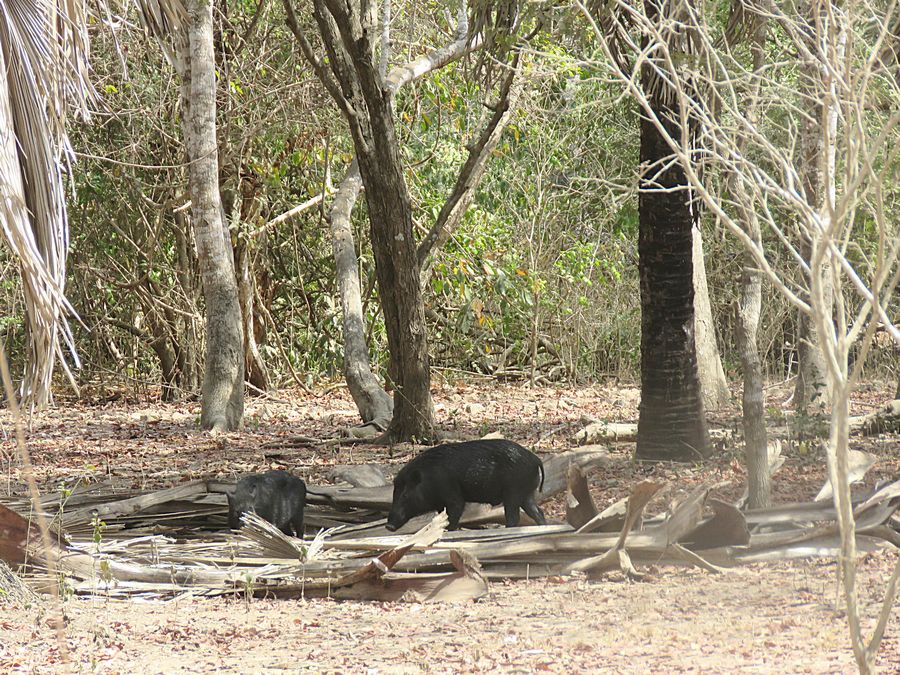
Wild boar not far from the beach area
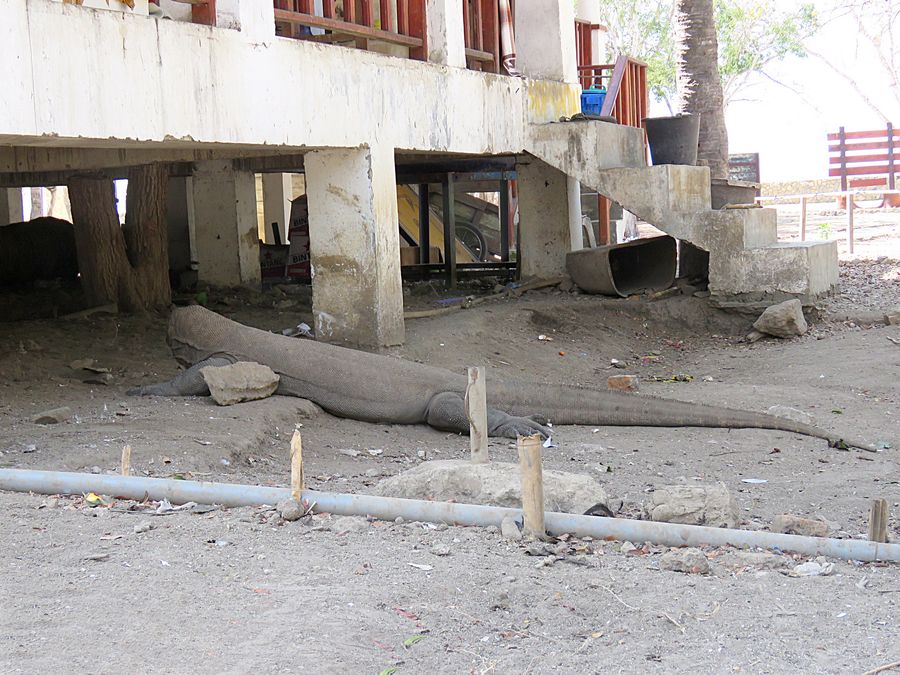
Our first view of a komodo dragon. Its head is under the park rangers'
kitchen. It is common to see them around the kitchen as they have a
tremendous sense of smell. We were told if anyone was bleeding,
he/she could not go on the walk to see the dragons. It would be too dangerous.
Mating begins between May and August, and the eggs are laid in September.
Males will fight each other for hours for females. The eggs are incubated for
about 9 months. Young Komodo dragons are vulnerable and therefore
dwell in trees, safe from predators and cannibalistic adults. They take 7 to 8
years to mature.
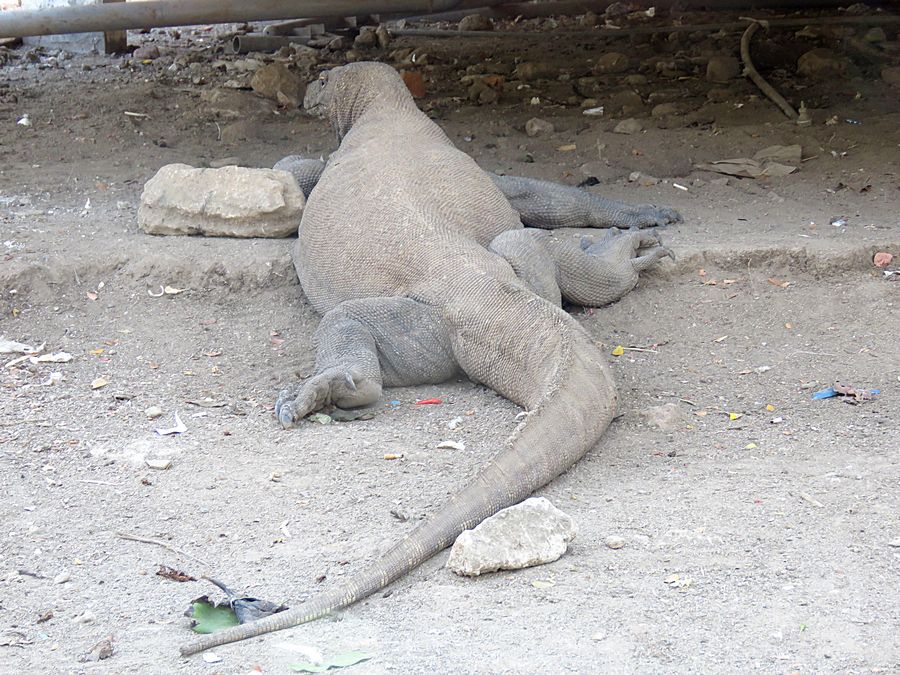
Komodo dragons hunt and ambush prey including invertebrates, birds, and
mammals. They will go after humans. It is believed they have a venomous
bite; there are two glands in the lower jaw which secrete several toxic
proteins.
It is the largest living lizard species, growing
up to a maximum length of 10 feet and up
to a weight of 150 pounds.
They live up to 30 years.
Komodo dragons are solitary, coming together
only
to breed and eat. They are
capable of running rapidly in brief sprints
up to 12 mph, diving up to 15 ft, and
climbing trees proficiently
(only when young) through use of their strong claws.
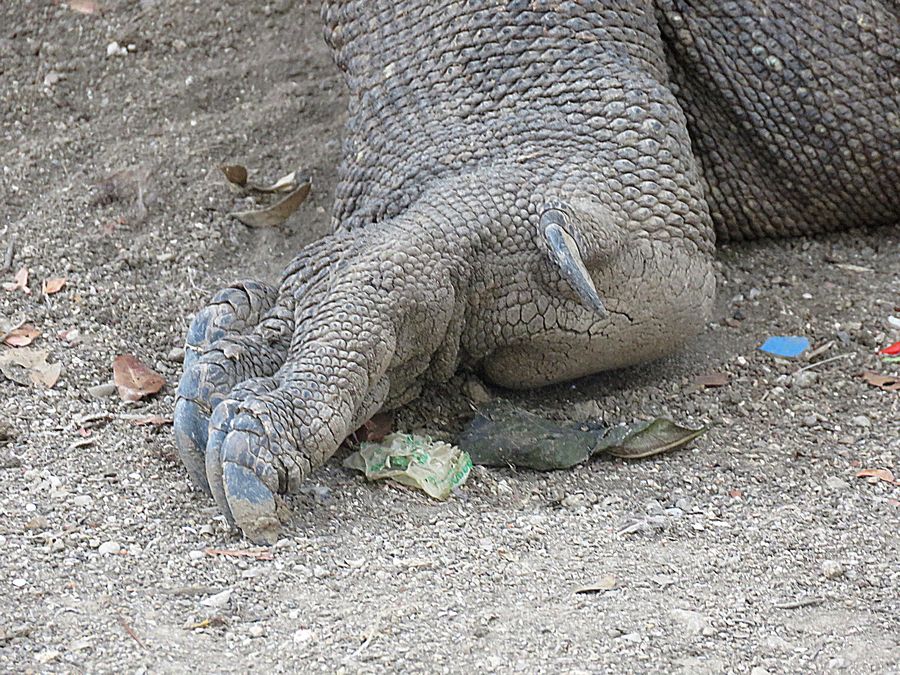
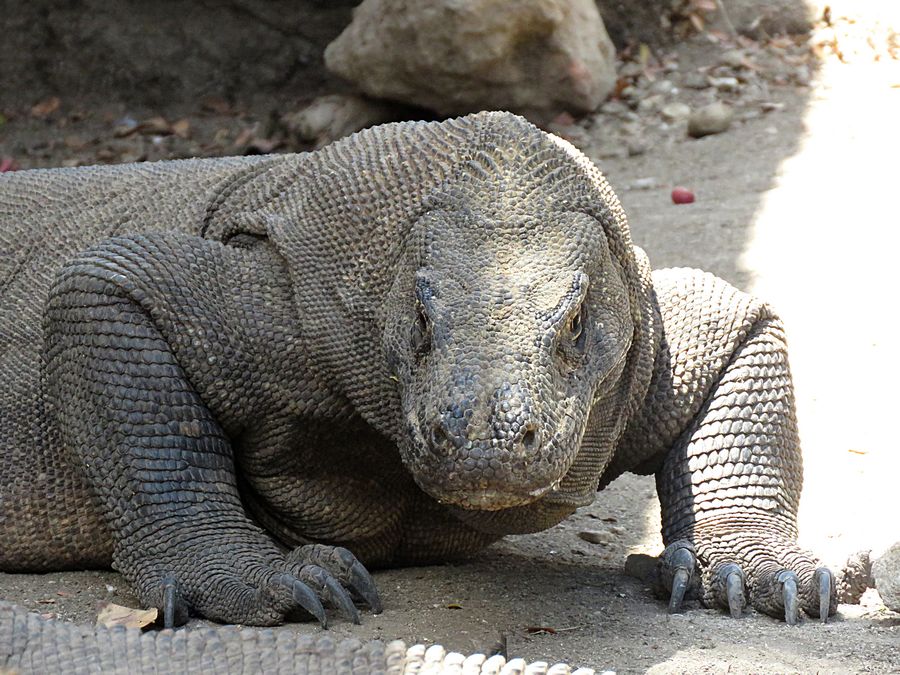
Closeup of a claw.
The Komodo dragon uses its tongue to detect, taste, and smell stimuli, rather than
using the nostrils. With the help of a favorable wind and its habit of swinging its
head from side to side as it walks, a Komodo dragon may be able to detect carrion
from 2.5–5.9 miles away.
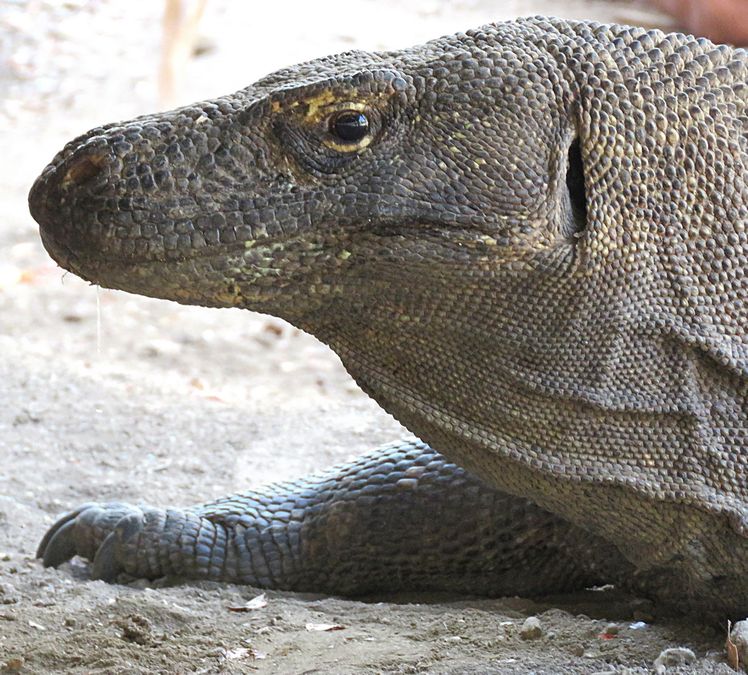
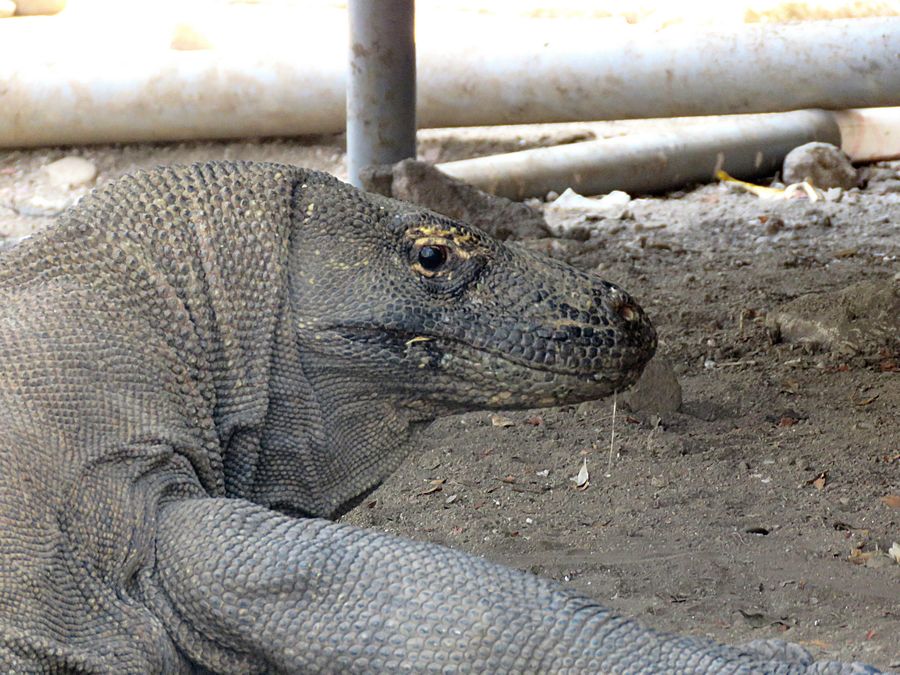
They can see objects as far away as 985 feet, so vision does play a role in hunting,
especially as their eyes are better at picking up movement than at discerning
stationary objects. Their retinas possess only cones, so they may be able to
distinguish color but have poor vision in dim light. They have a much smaller
hearing range than humans. The result is an animal that cannot hear such sounds
as a low-pitched voice or a high-pitched scream.
Vision and hearing are useful, but the Komodo's sense of smell is its primary food
detector. The Komodo smells much like a snake does. It uses its long, yellow forked
tongue to sample the air.
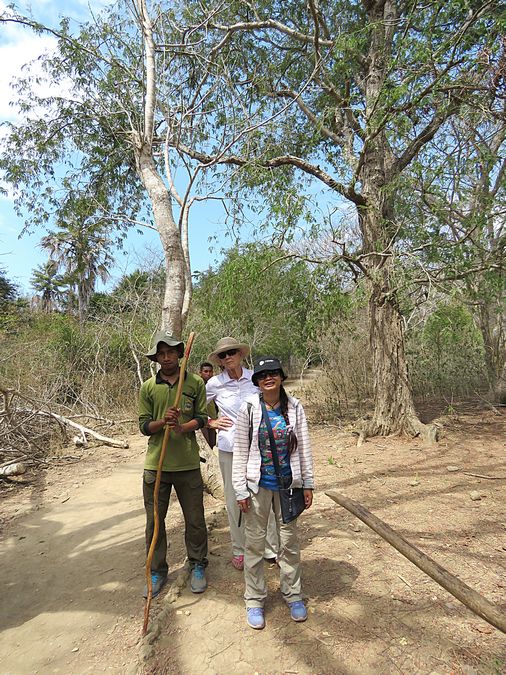
The park rangers carried forked poles to protect us from the dragons if they
became aggressive. Since the dragons' faces are very sensitive, poking their
faces holds them off, if you aim right. We had 3 park rangers with us, one in
front,
one in the
middle, and one in the back.
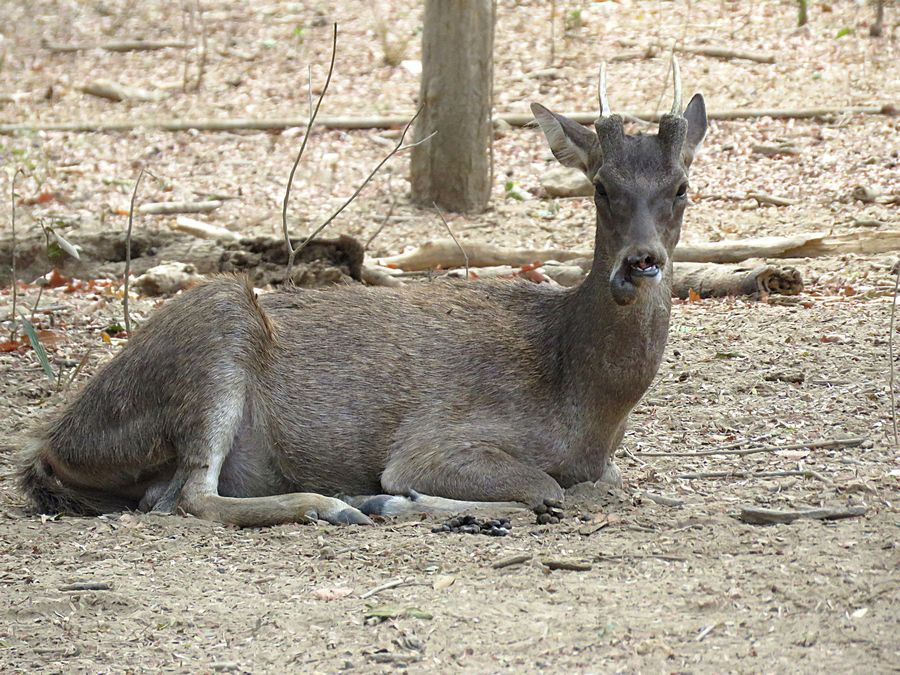
We saw several deer grazing very close to 2 komodo dragons.
This one appeared to have a deformity around its mouth.
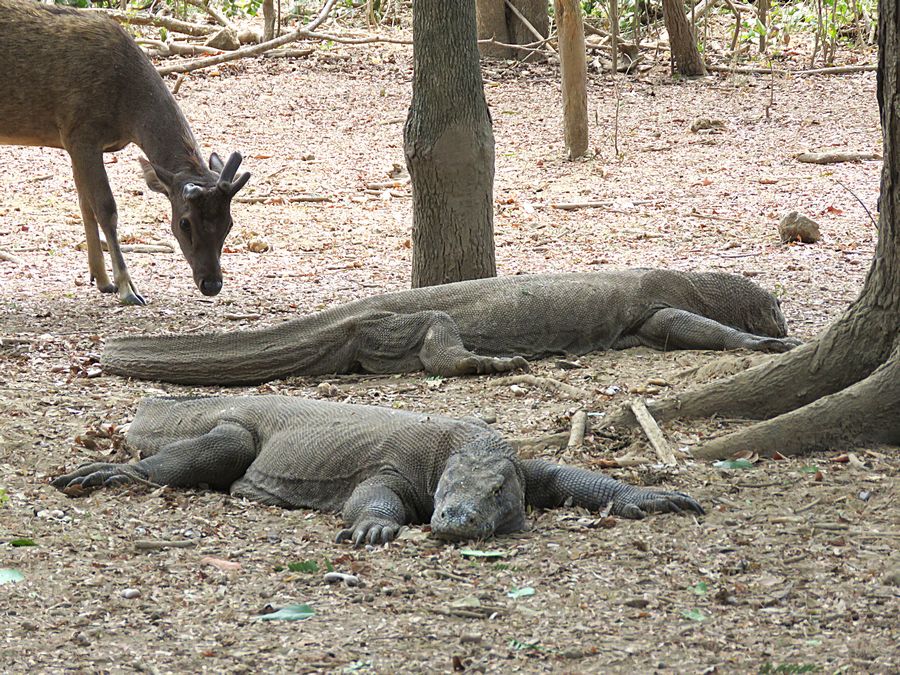
Fortunately for the deer, these 2 komodo dragons were resting.
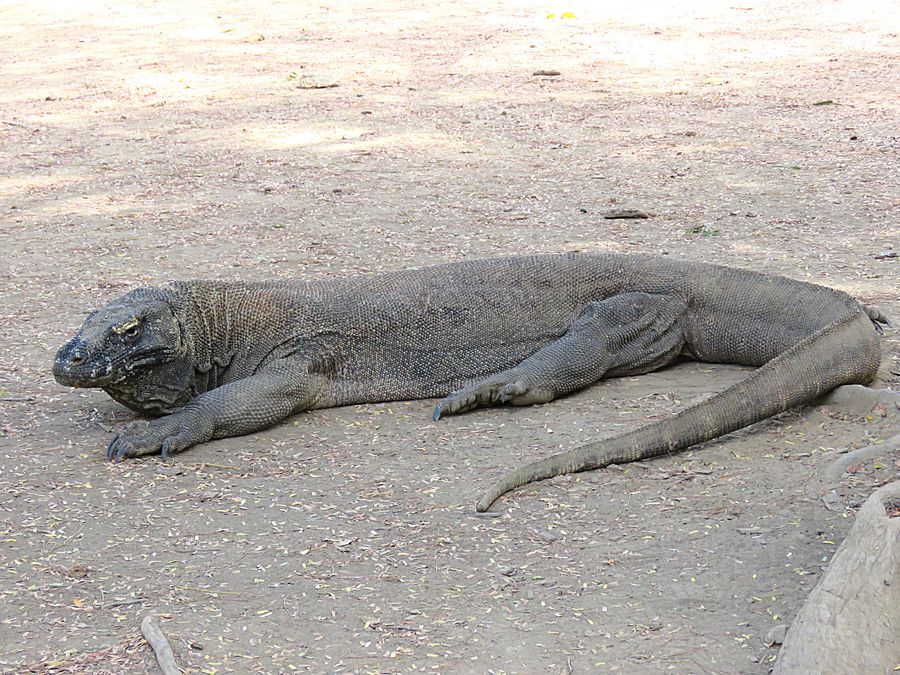
Not far from where we saw the 2 dragons near the deer,
we saw this male dragon.
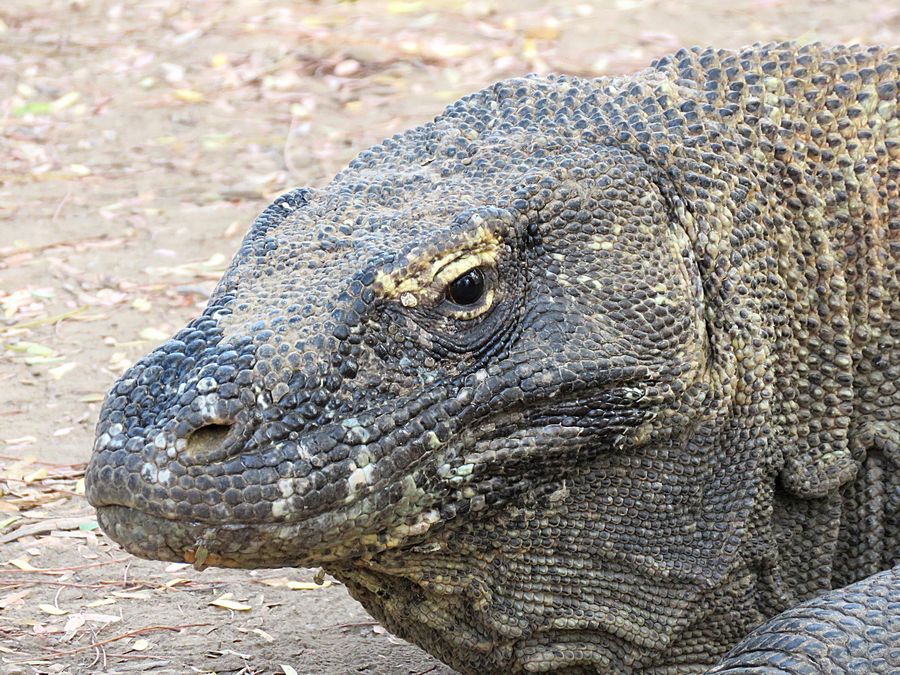
Look at the head size of this male dragon, then look
at the head size of the female dragon in the photo
below. It is hard to distinguish between males and
females, but the park rangers said the female
heads are smaller. Of course, the younger dragons,
male or female, have smaller heads than the older dragons.
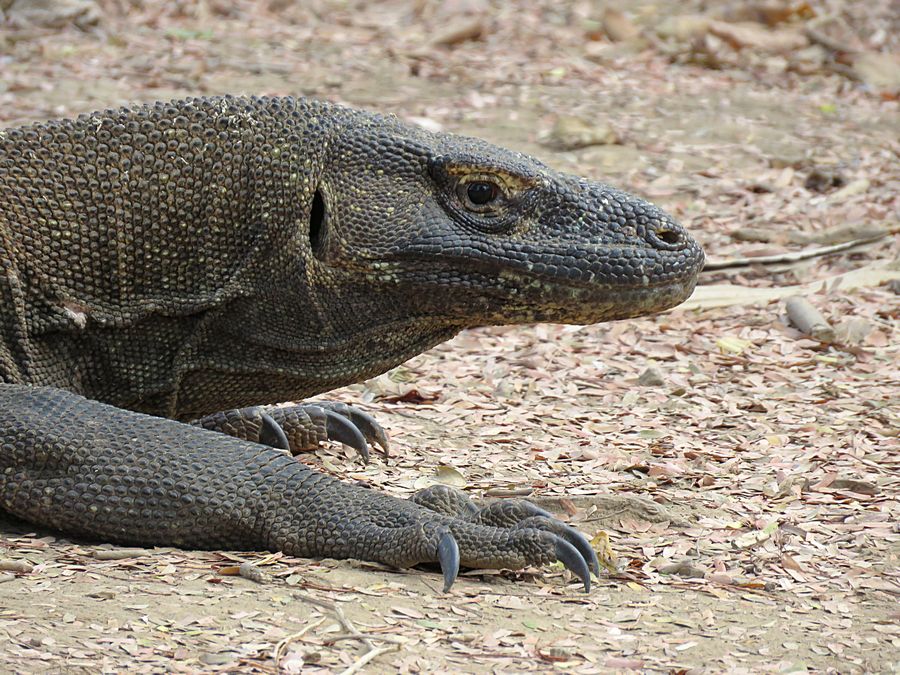
Female komodo dragon that was not far away from the male.
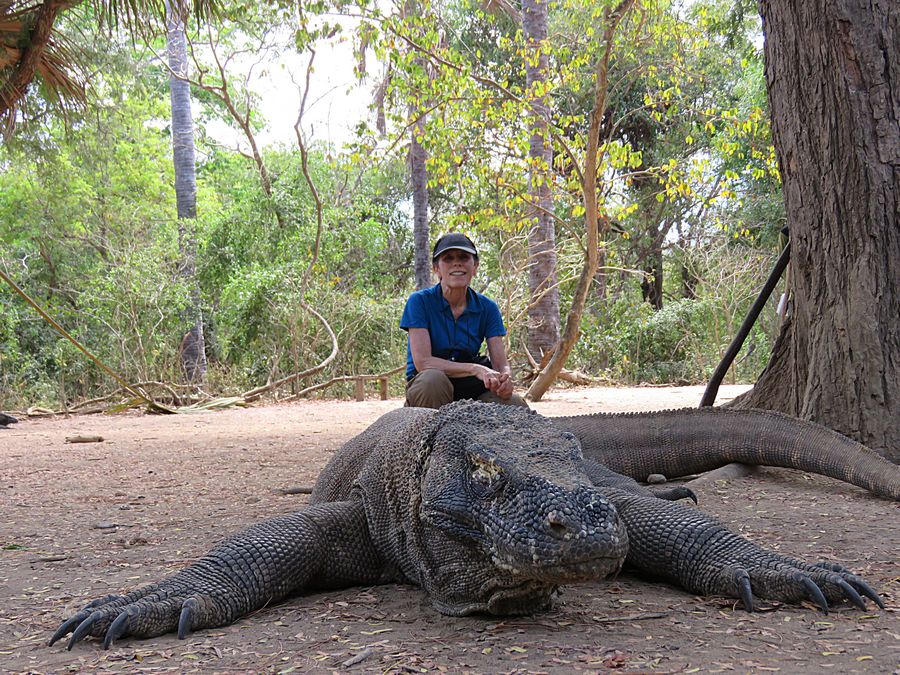
The lead park ranger offered to use our cameras to take photos of each of
us with this large male. The other rangers were standing by with their poles
in case the dragon got upset. This was relatively safe, since I am behind the
dragon; the ranger was in front of him. You can just barely see the head of the
nearby
female dragon in the middle, far left of the photo.
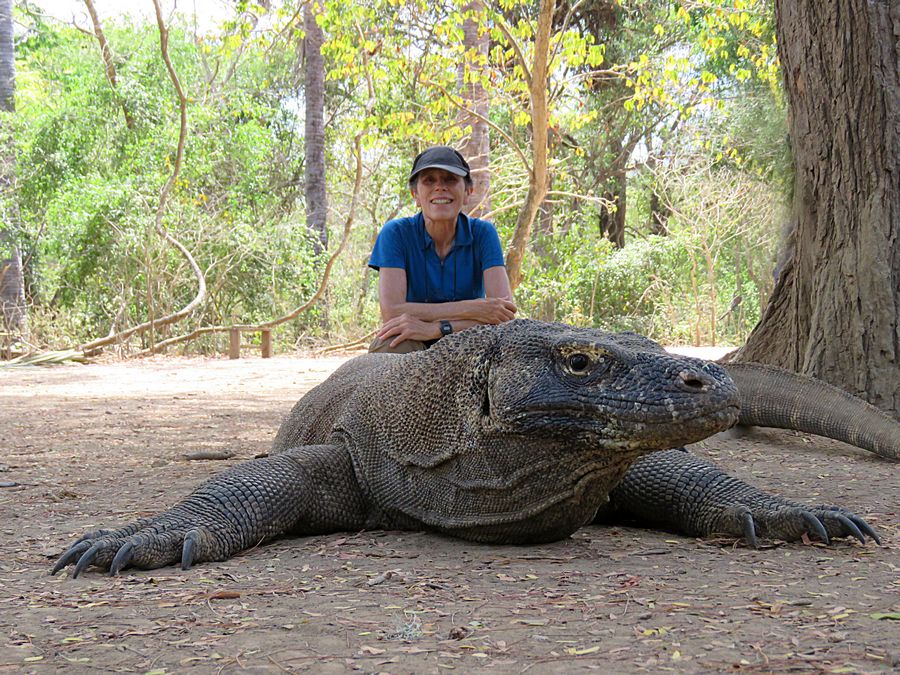
The dragon seems even more alert in this photo.
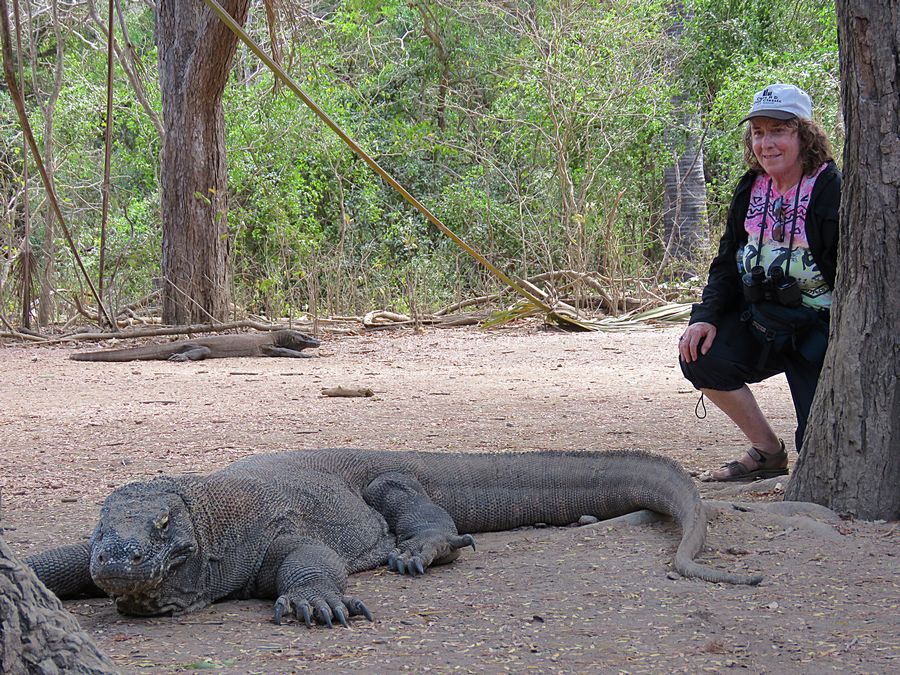
Karen behind the male dragon. The female dragon is in the background.
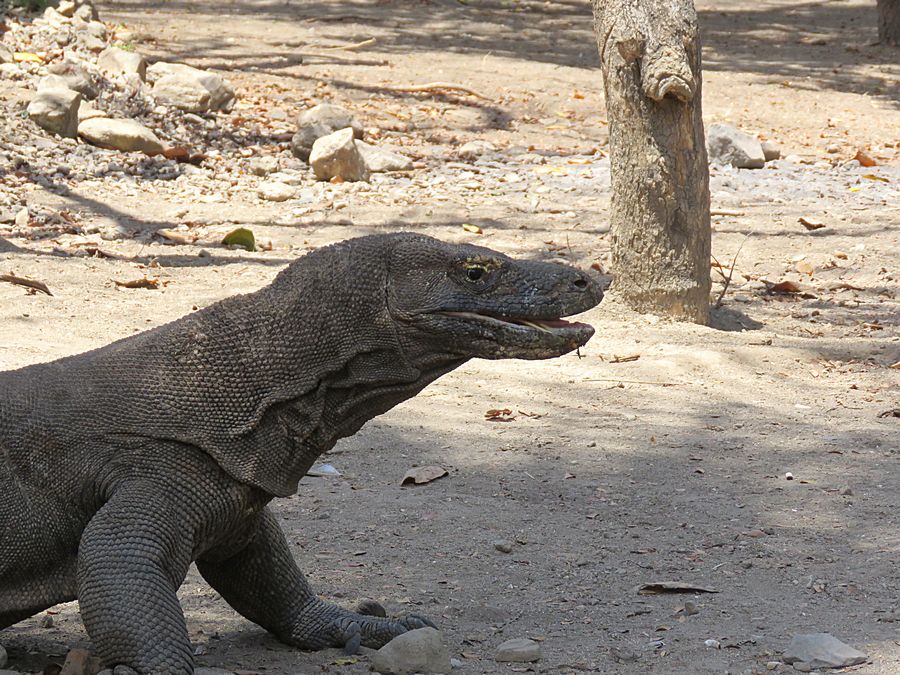
Back at the area near the kitchen we saw two dragons.
This dragon was being lured
to move from under the kitchen
area by one of the park rangers.
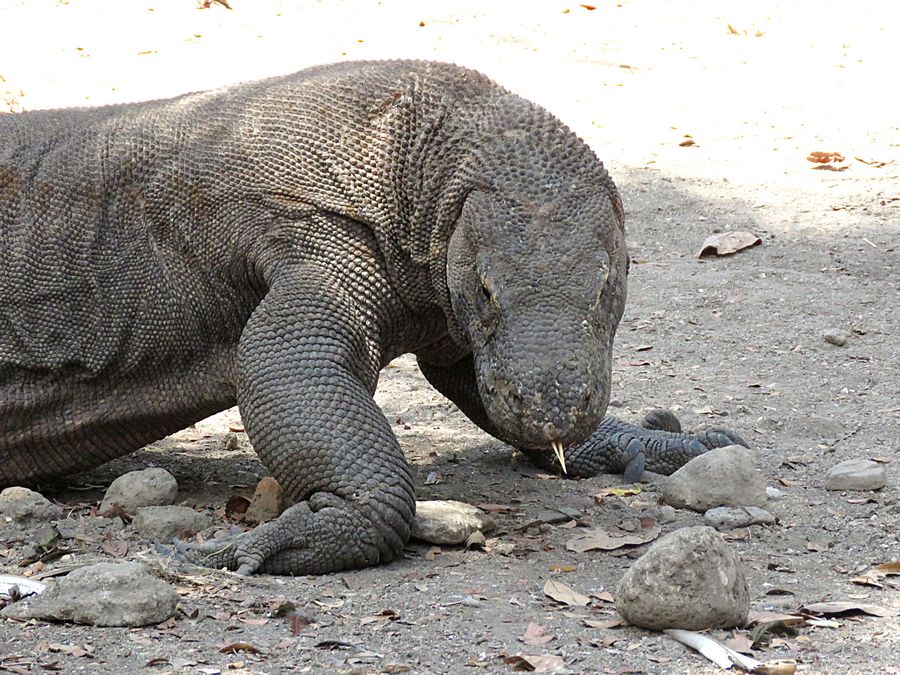
Forked tongue starting to come out of its mouth.
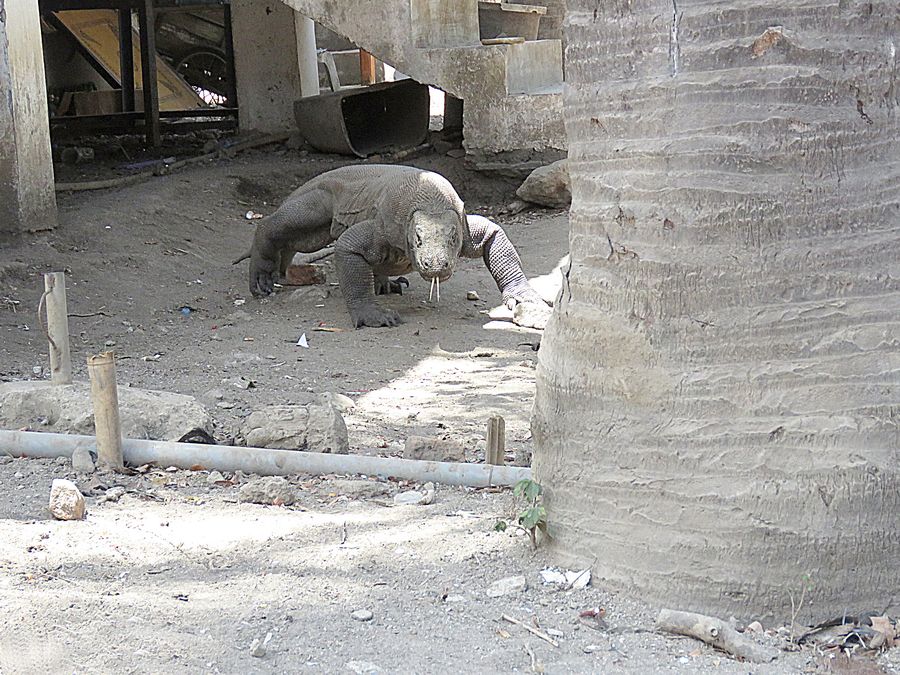
Another dragon that had also been resting
under the kitchen got up and looked toward
us while we were paying attention to the first dragon.
The yellow forked tongue used for smelling is showing.
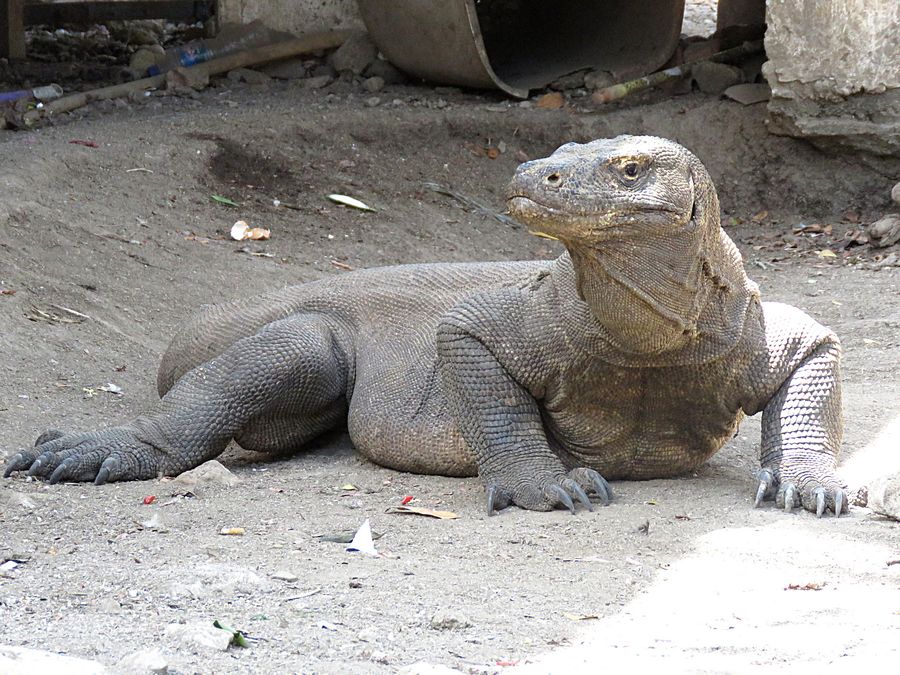
Seems to be on full alert.
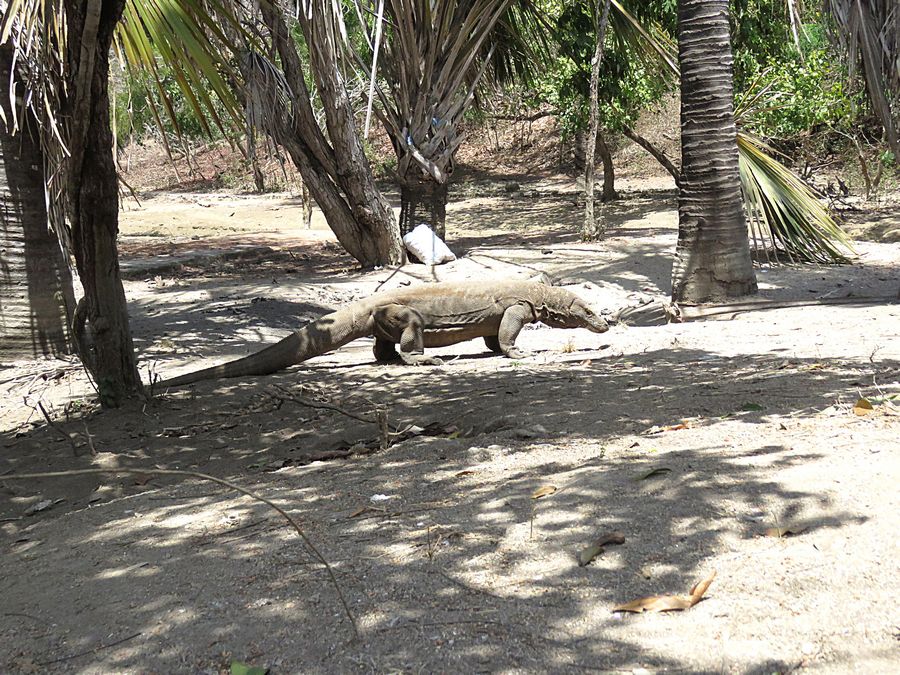
The dragon that had been lured away by the ranger.
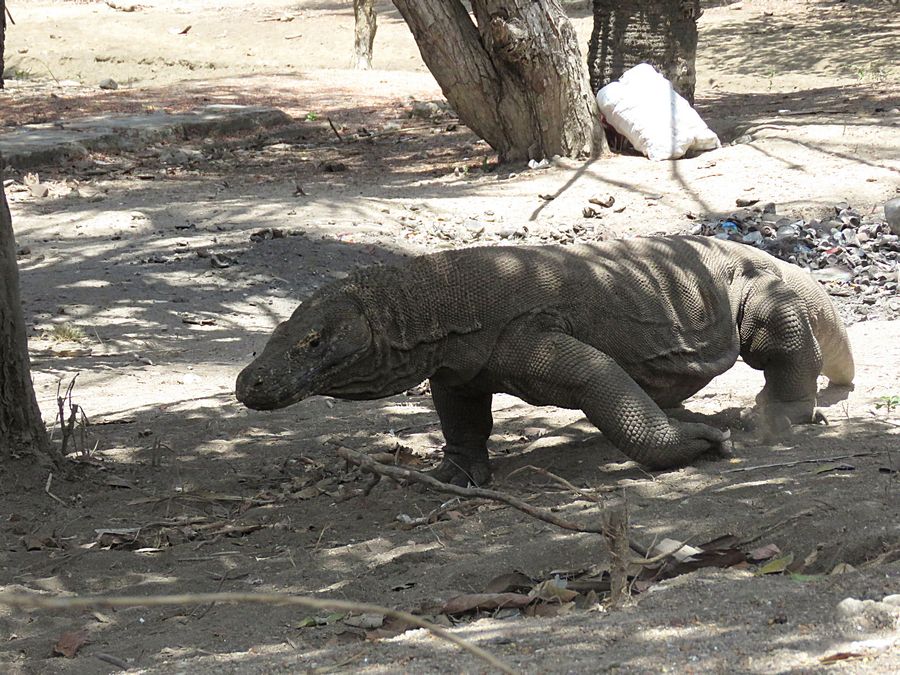
That dragon going back to the kitchen area.
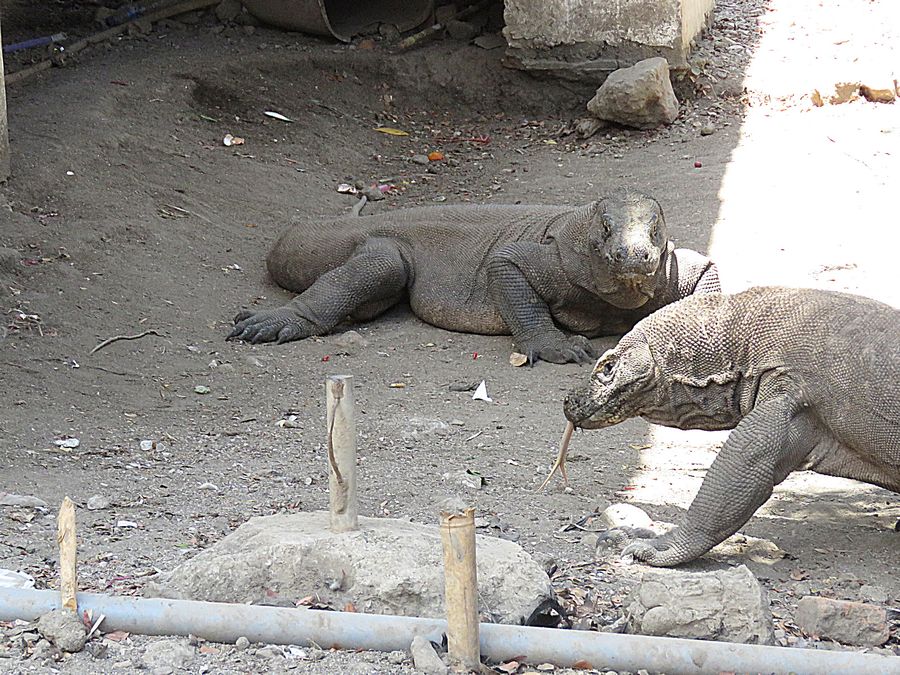
Both dragons back around the kitchen area.
The forked-tongue can be clearly seen in this photo.
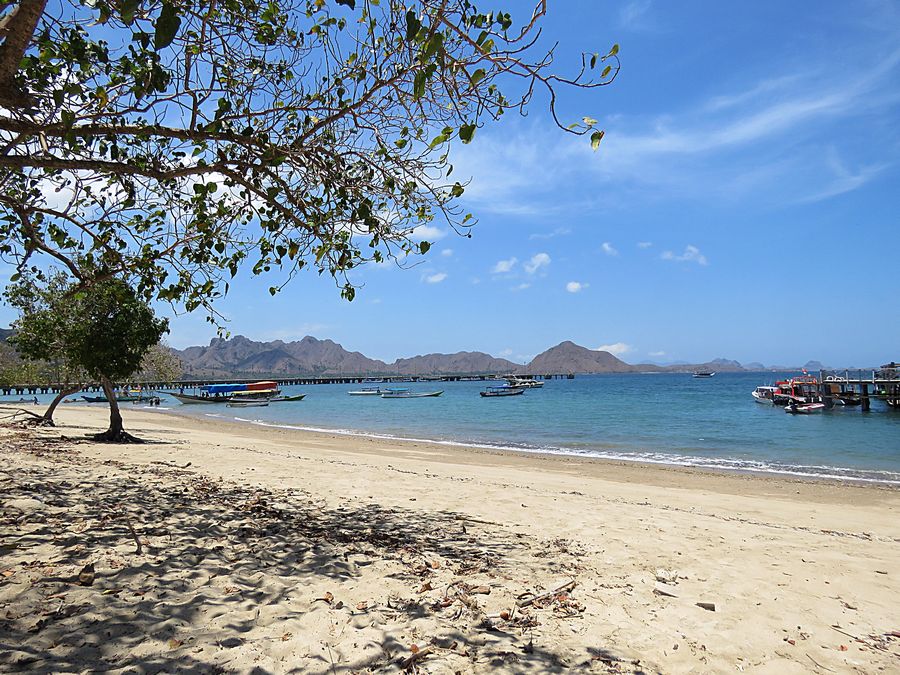
Beach area where we arrived at & departed from Komodo Island.
Vendors were in a small market area to the left of
this scene selling souvenirs to tourists.
Link to Part Three, Page
Two - Back to Labuan Bajo; Cecer Village
Pat's Home Page