Indonesia: Java, Bali, and Komodo Islands - September 10 - October 2, 2017
Part Two - Bali, Indonesia
Page Six - Jatiluwih, Ulun Banu Bratan Temple, Tiga Wasa Village
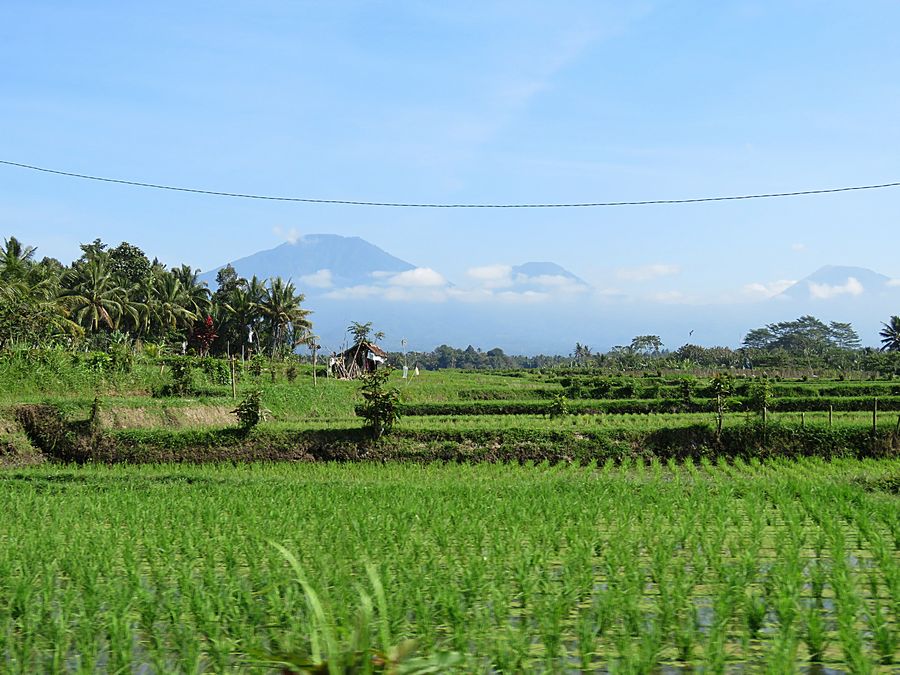
We left Ubud the following morning and took a scenic ride in convertibles
to well known rice fields and to an island temple, before staying in Lovina
in northern Bali.
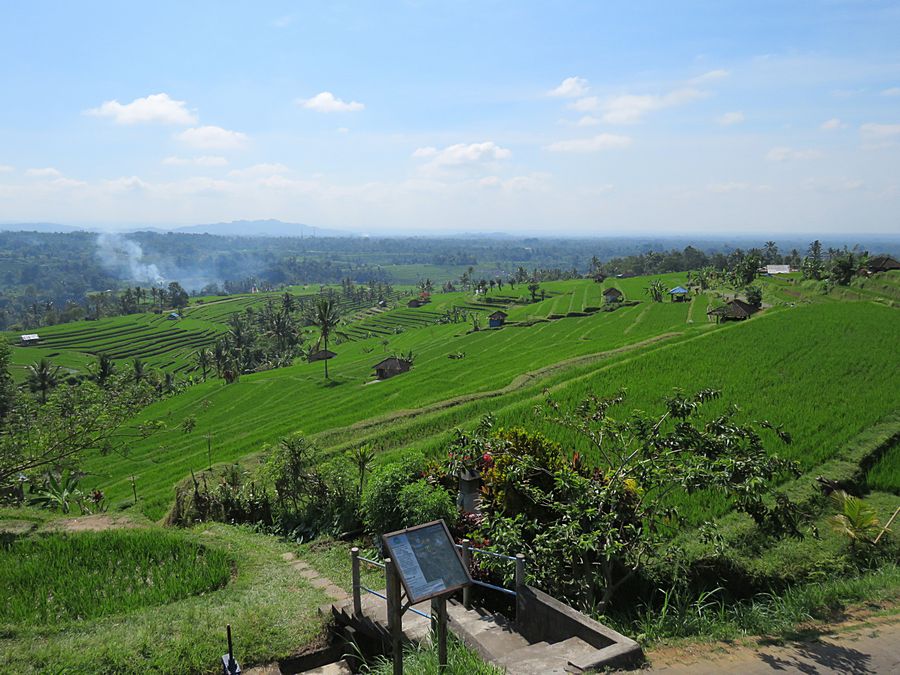
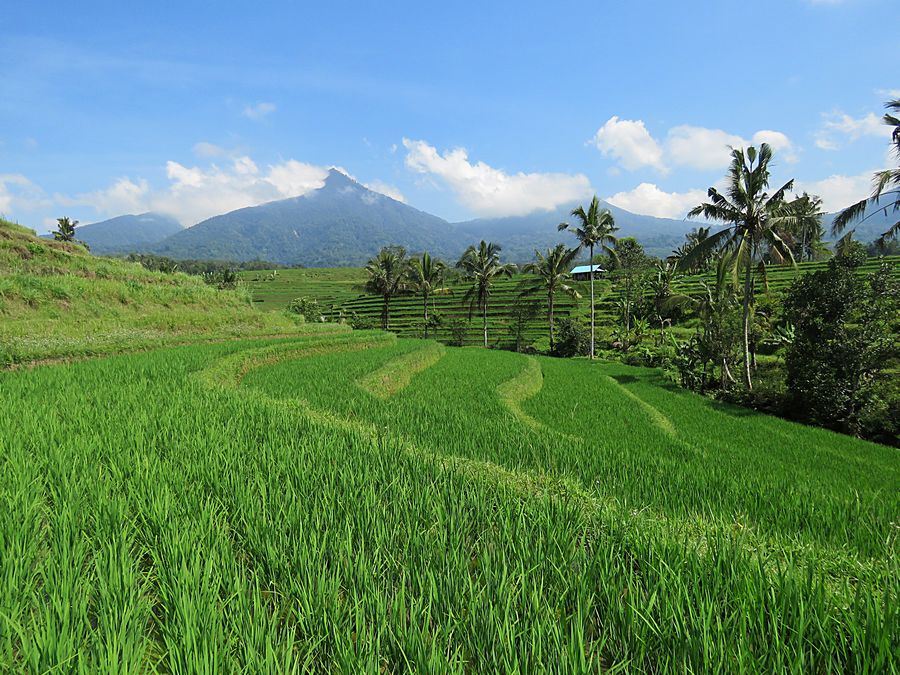
In Jatiluwih. The Jatiluwih rice fields have been designated a UNESCO
World Heritage Site because they exemplify the traditional Balinese
community irrigation system called subak (dating back to the 9th century).
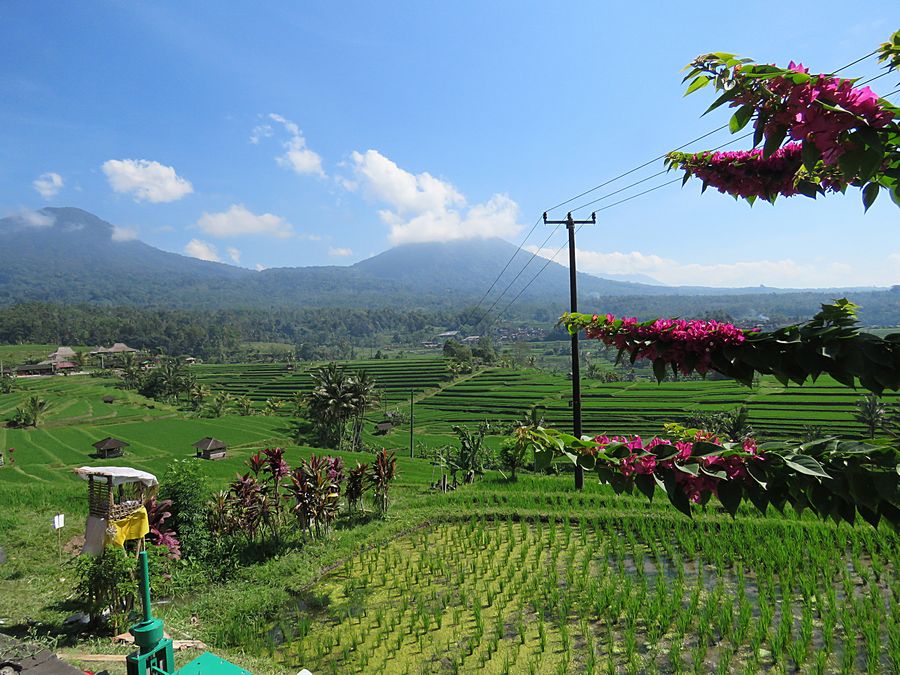
Subak components are the forests that protect the water supply, terraced
paddy landscape, rice fields connected by a system of canals, tunnels and
villages, and temples of varying size and importance that mark either the
source of water or its passage through the temple on its way downhill to
irrigate subak land.
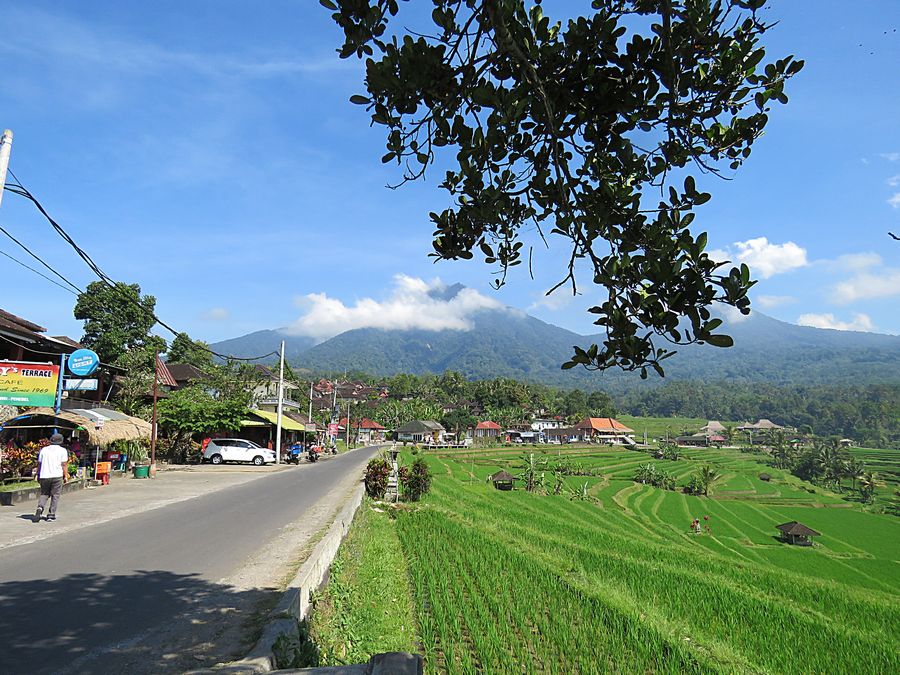
Village of Jatiluwih
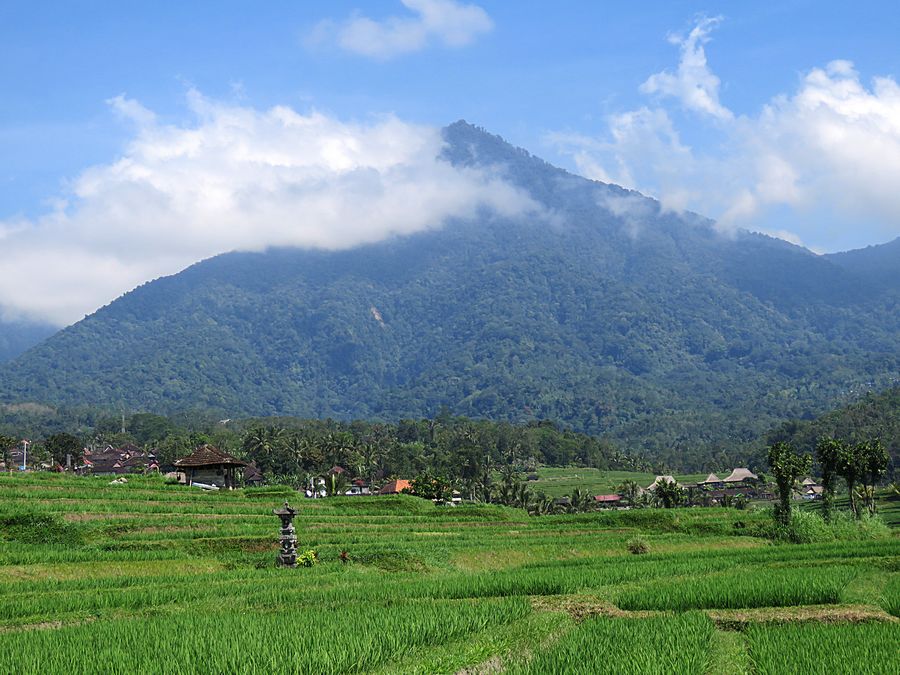
We walked through the rice paddies
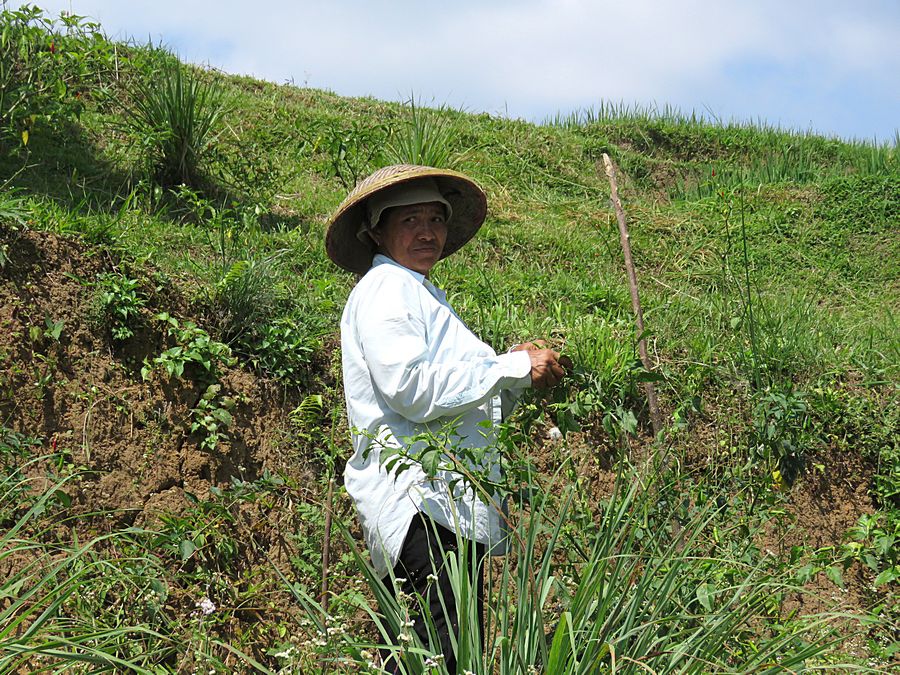
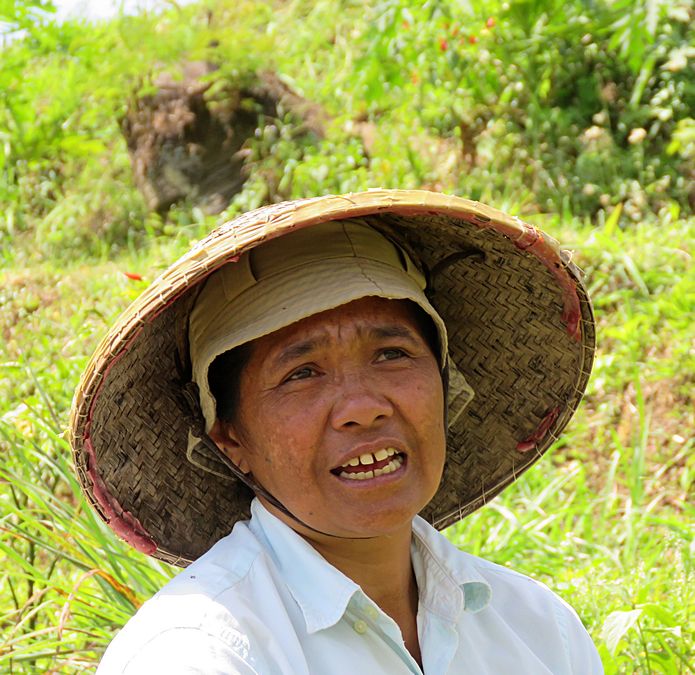
Female working in the fields
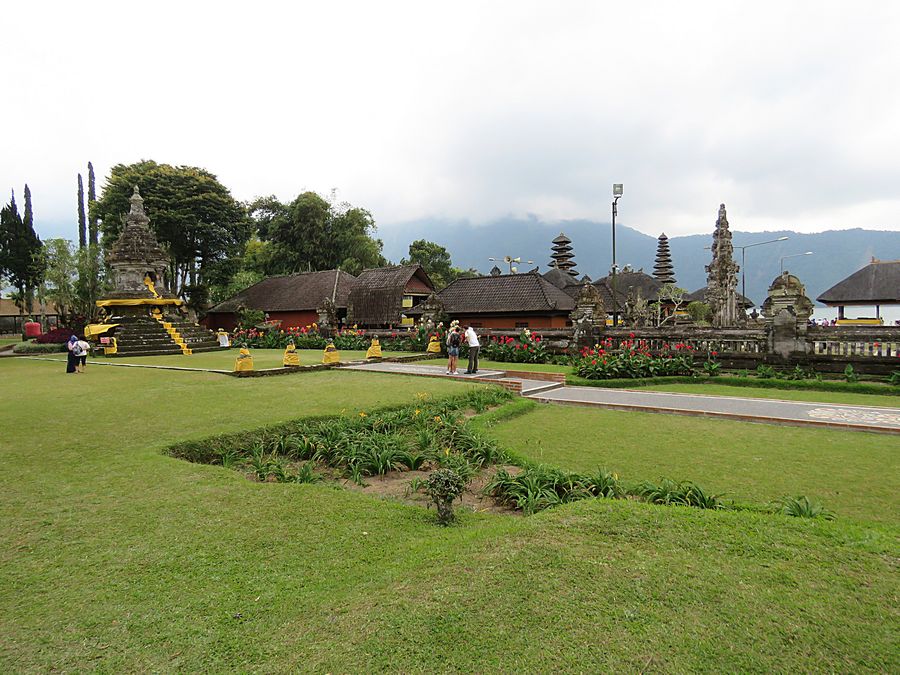
Ulun Danu Bratan, a 17th century island temple at Lake Bratan.
Balinese Hinduism is sometimes called the religion of the holy water,
because of the important role that water plays in rituals and livelihoods.
This temple is dedicated to the goddess of the lake, Dewi Danu. Its pagodas
rest on small islands.
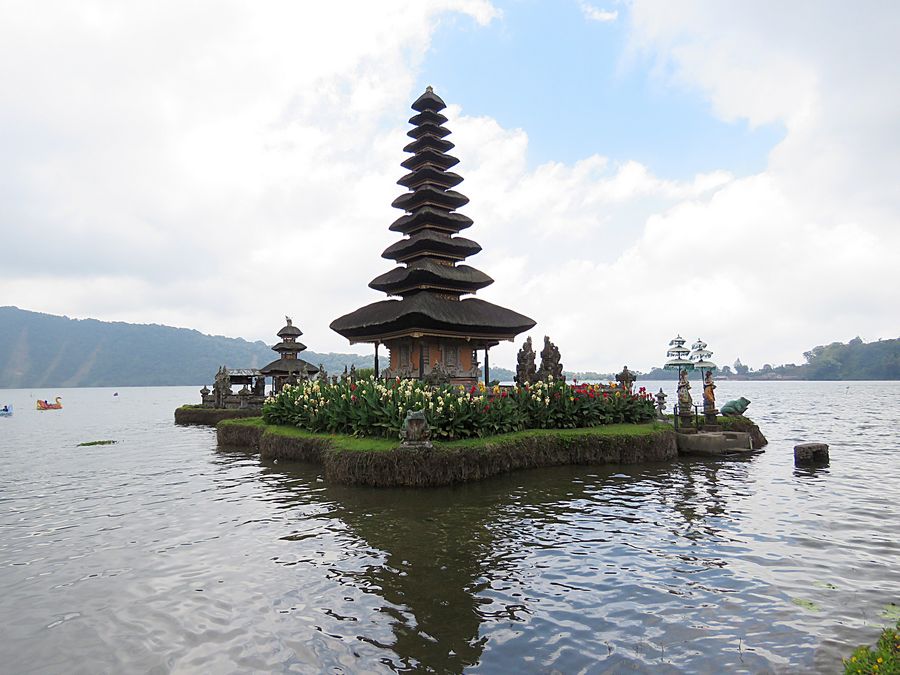
Pagoda
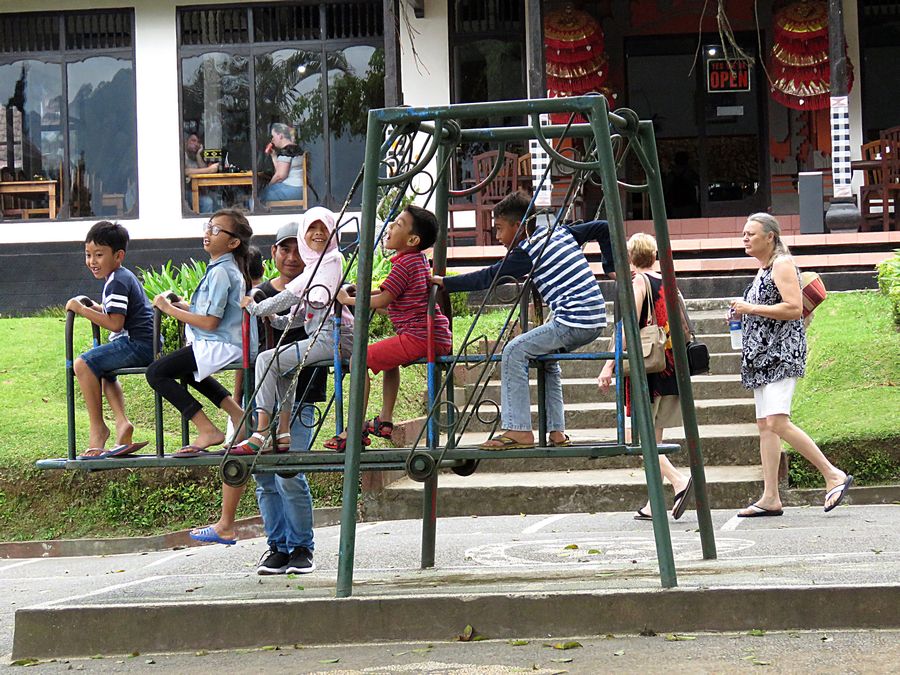
Indonesian kids having a great time on a
swing on the Temple grounds
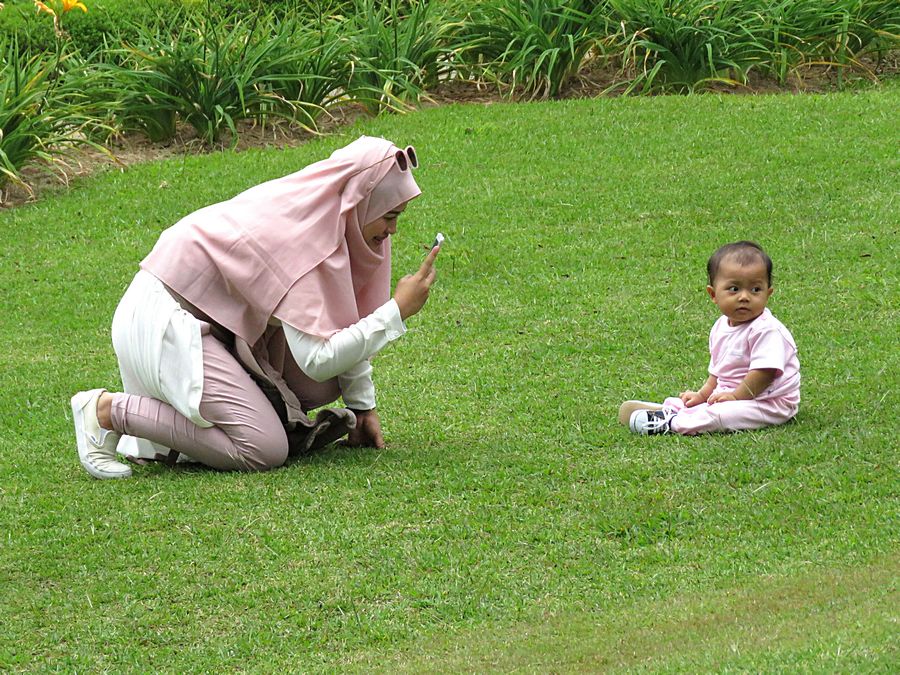
Indonesian mother on the Temple grounds
trying vainly to get her child to look at the camera.
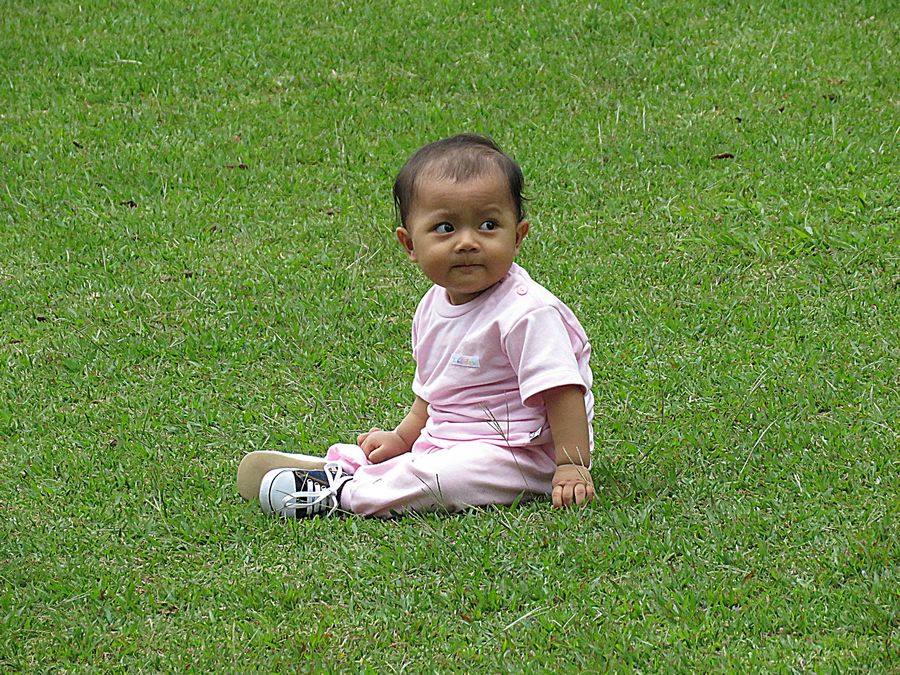
The baby was too fascinated with other things to pose.
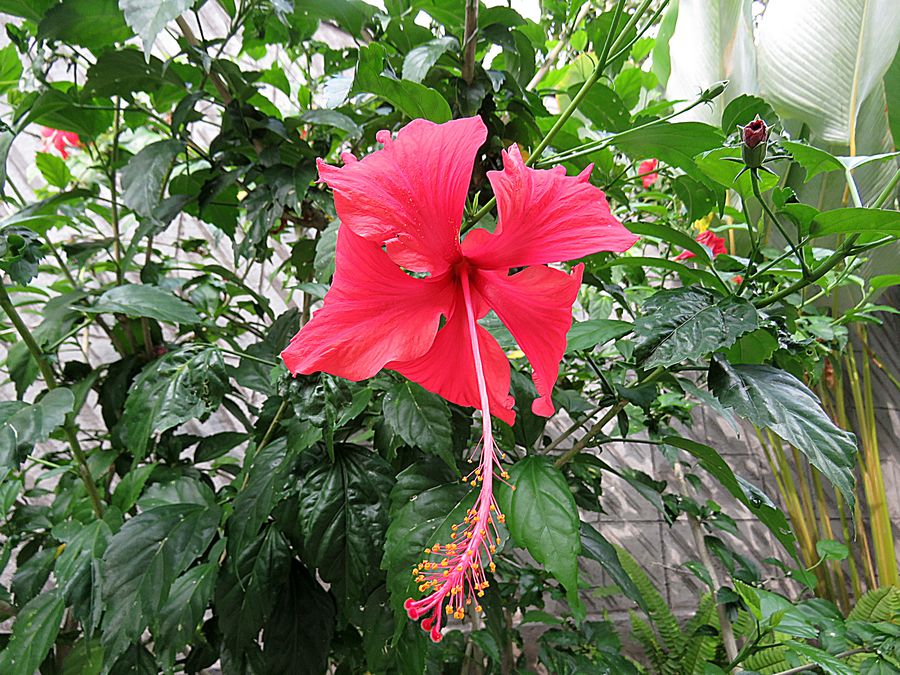
Like everywhere in Indonesia, flowers were
abundant on the Temple grounds.
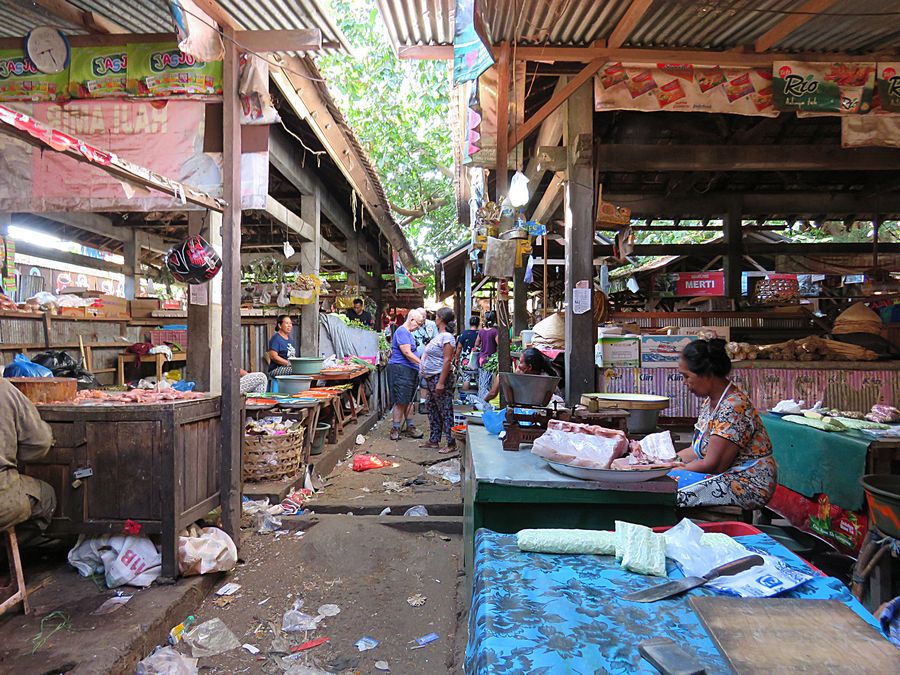
After spending the night in Lovina on Bali's north shore, on
September 23, we experienced a day in the life of the rural hills outside
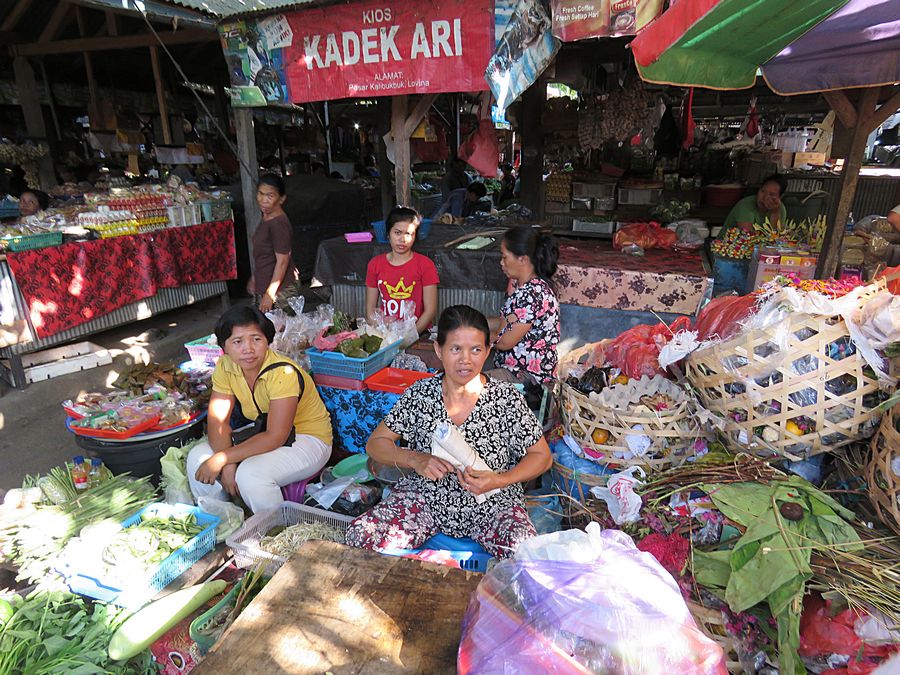
Lovina. First we visited a local market. While the southern half of Bali
specializes in rice production, citrus fruit orchards and cocoa and sugar
plantations are common in northern Bali.
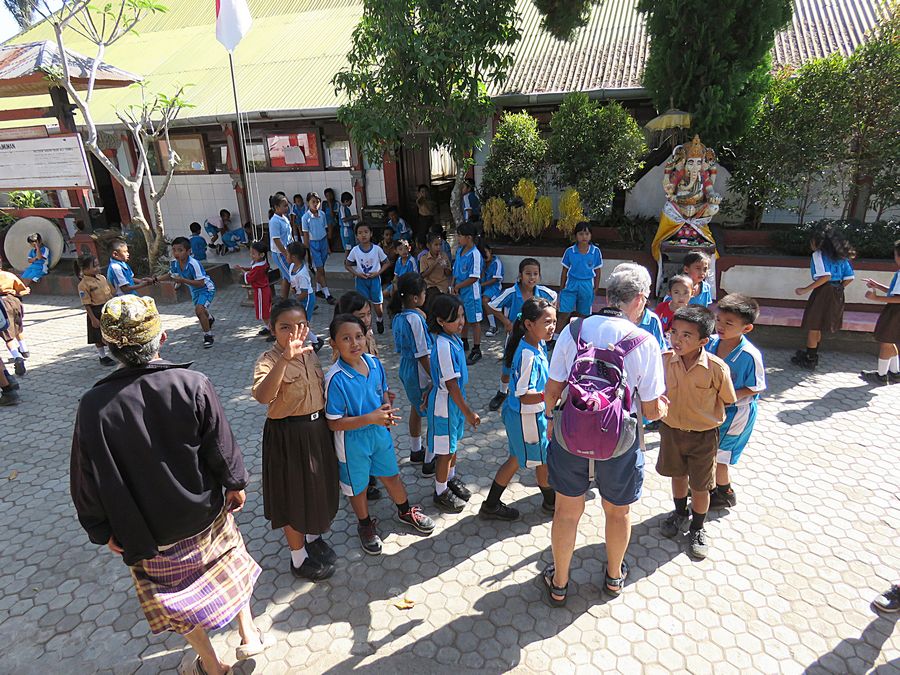
We drove by minivan to the farming community of Tiga Wasa. First we
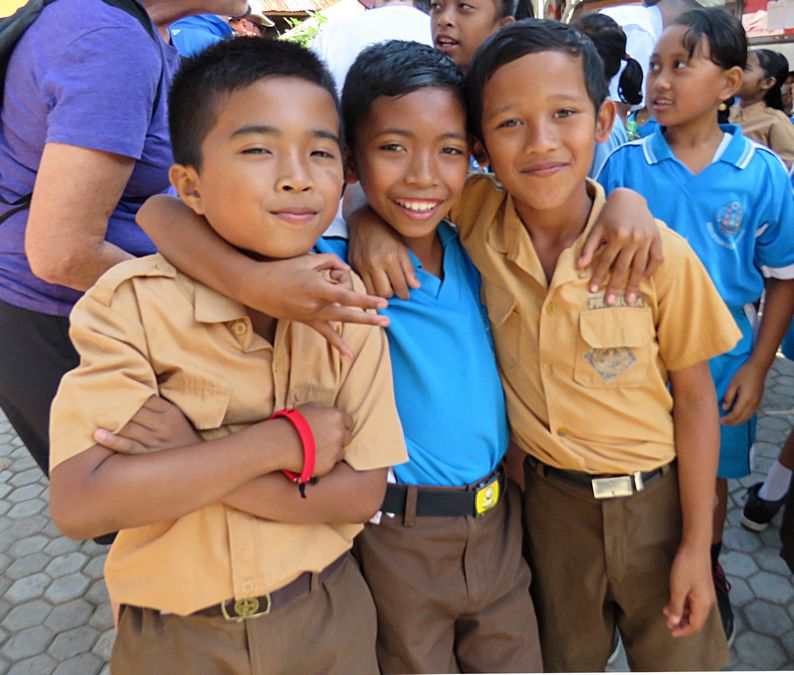
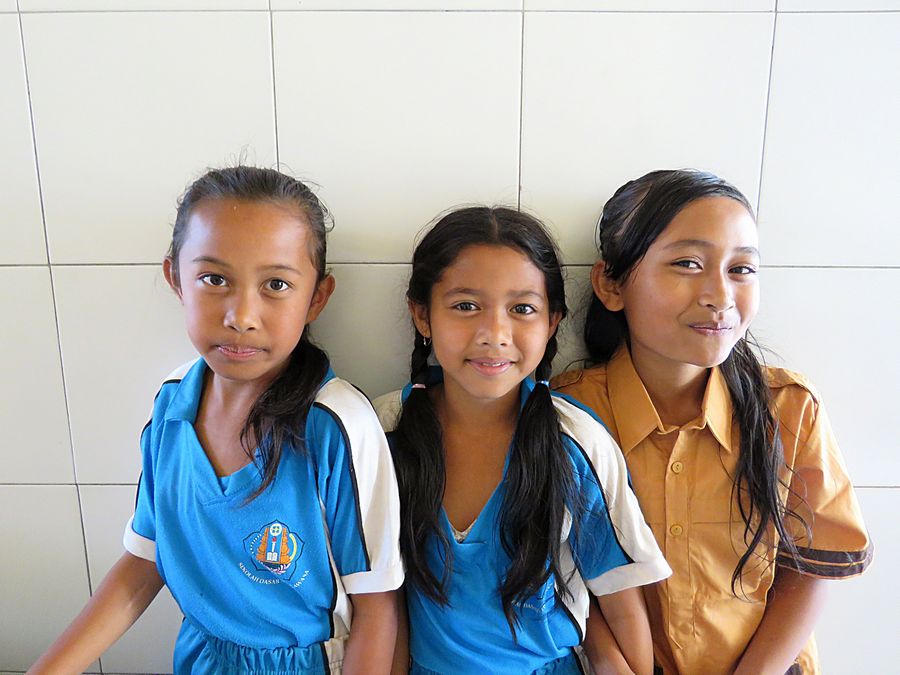
visited the Tiga Wasa Village School, which is partly supported by the
Grand Circle Foundation. Grand Circle owns Overseas Adventure Travel.
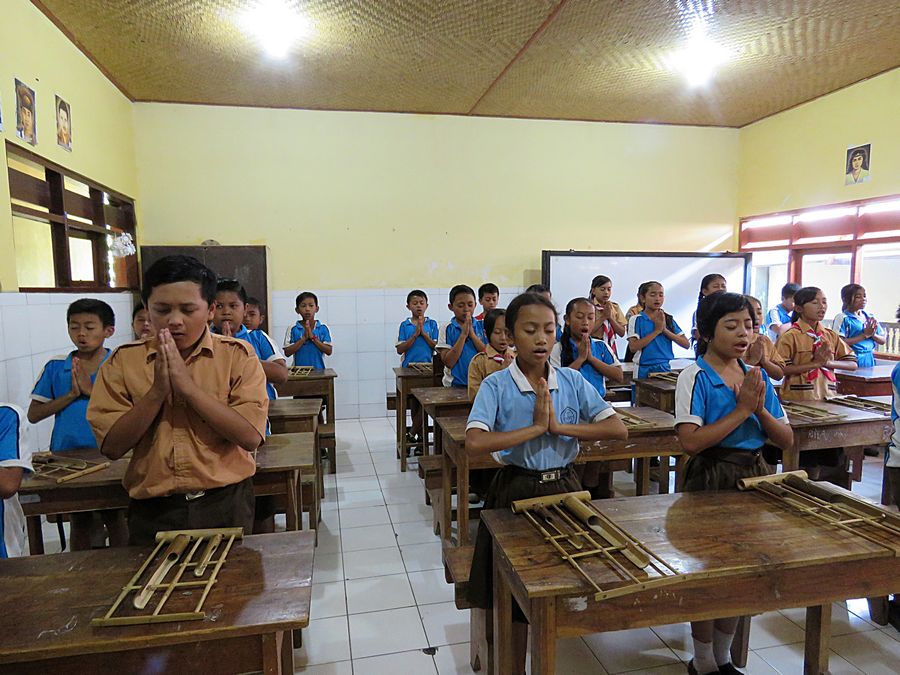
Inside a classroom. Musical instrument on the desks
is an angklung, a musical instrument from Indonesia,
made of a varying number of bamboo tubes and a bamboo
frame. The tubes are carved to have a resonant pitch when struck.
The base of the frame is held in one hand; the other hand shakes the instrument.
This causes a repeating note to sound. Each of three or more performers
play just one note or more, but altogether complete melodies are produced.
Playing the angklung as an orchestra requires cooperation and coordination,
and is believed to promote the values of teamwork, mutual respect,
and social harmony. We joined the kids in playing the instrument with direction
from the teacher.
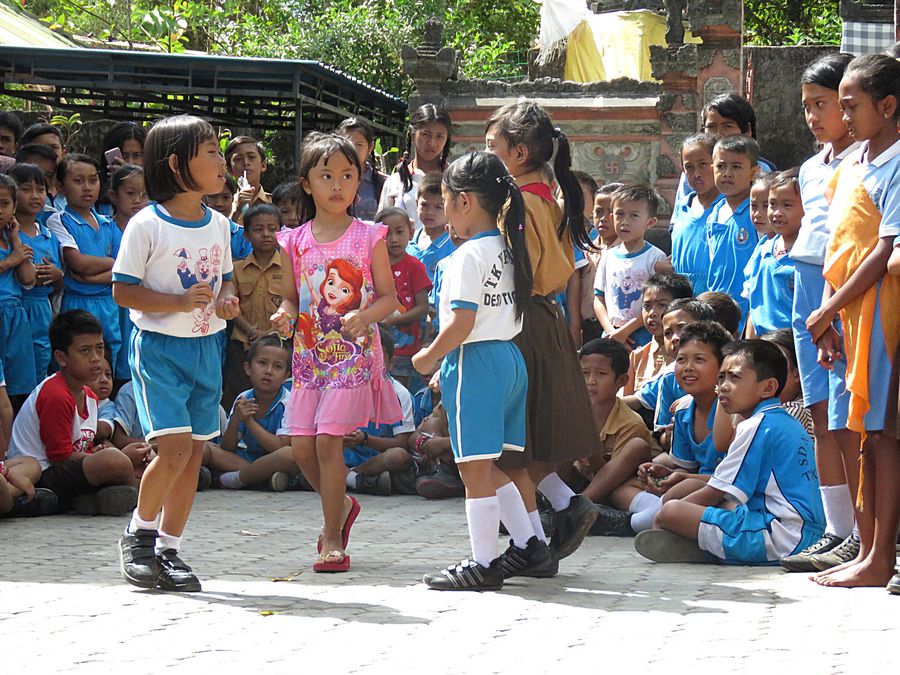
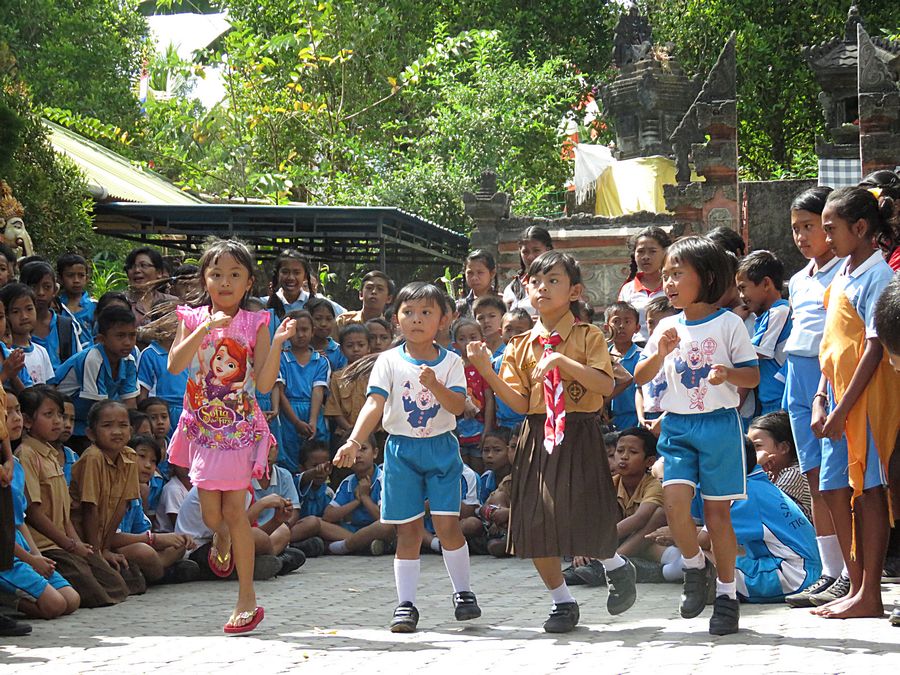
Some of the kids performing a dance for us in
the school yard.
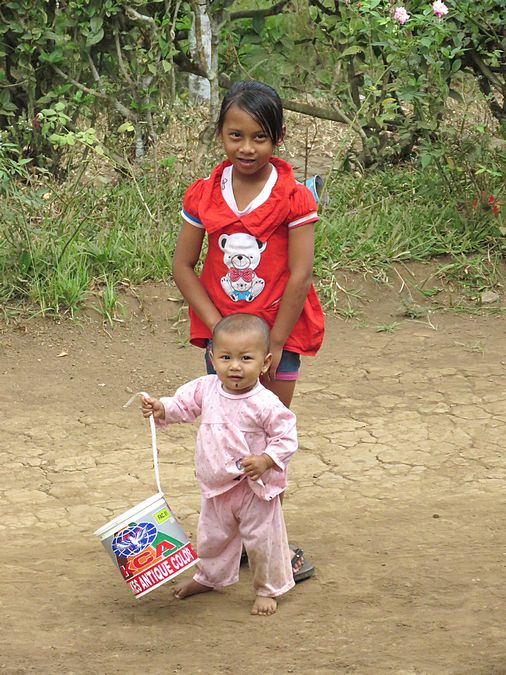
Girl taking care of her sibling - seen while walking around the village
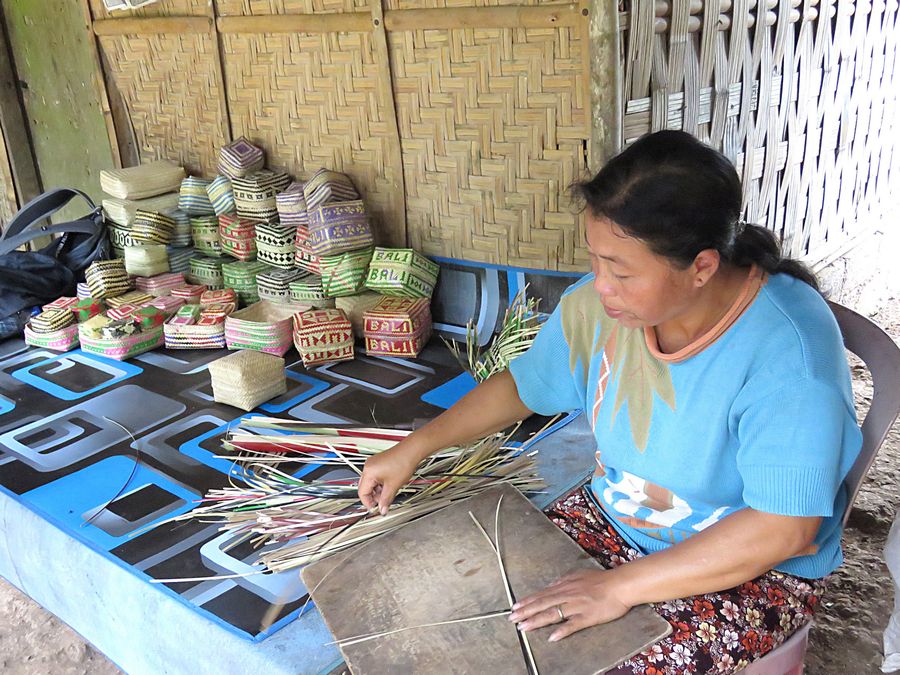
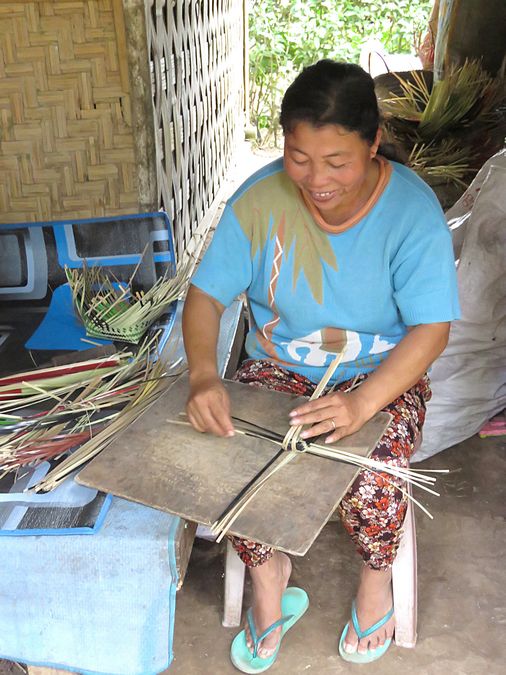
At home of bamboo weaving family
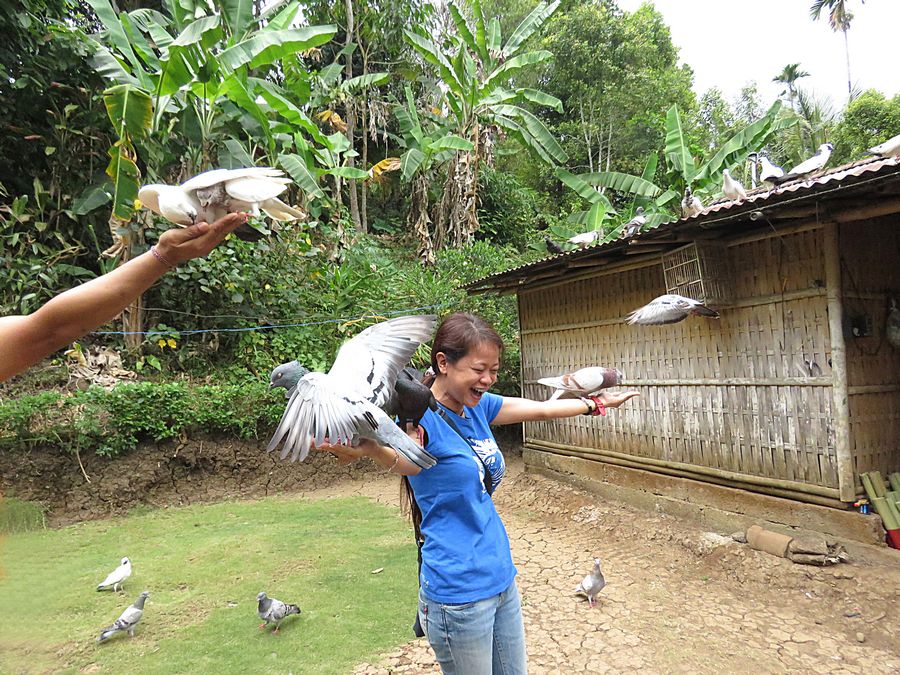
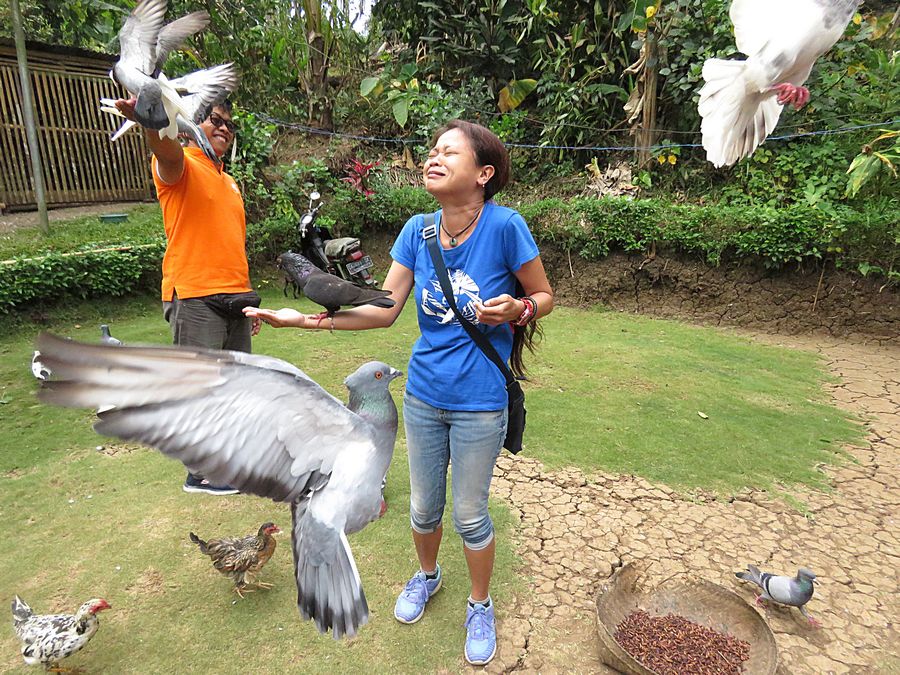
The husband of the bamboo weaving household has a
hobby of raising homing pigeons. Here, our tour
leader Susi endures having some of them land on her
to feed on treats. Several in our tour group joined in.
One landed on my head. You can definitely feel the claws.
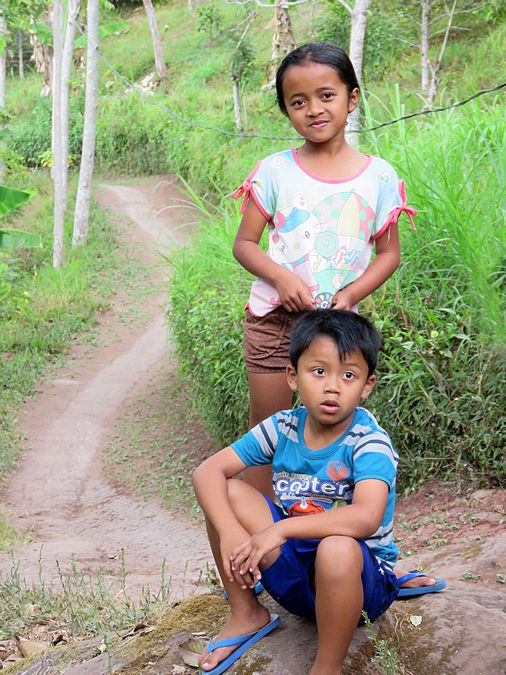
Kids on a path we were taking to a family home hosted lunch
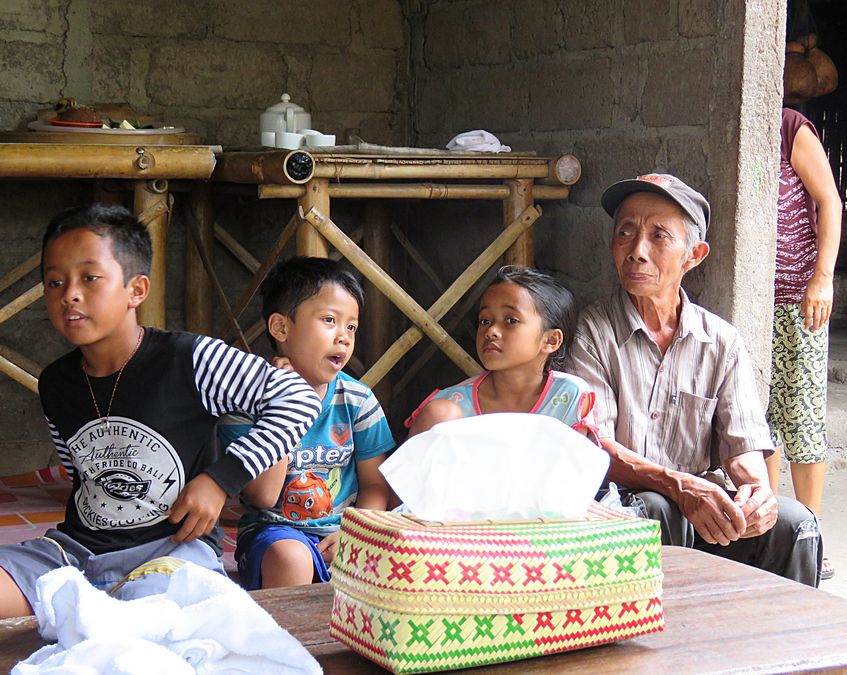
Waiting for lunch
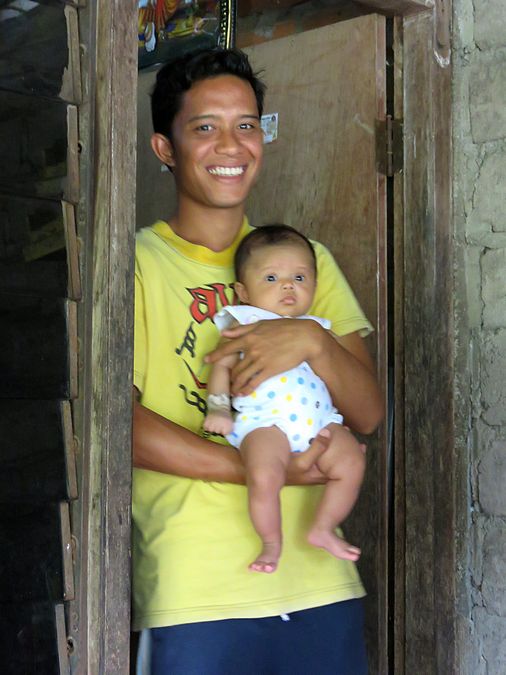
Recent addition to the family
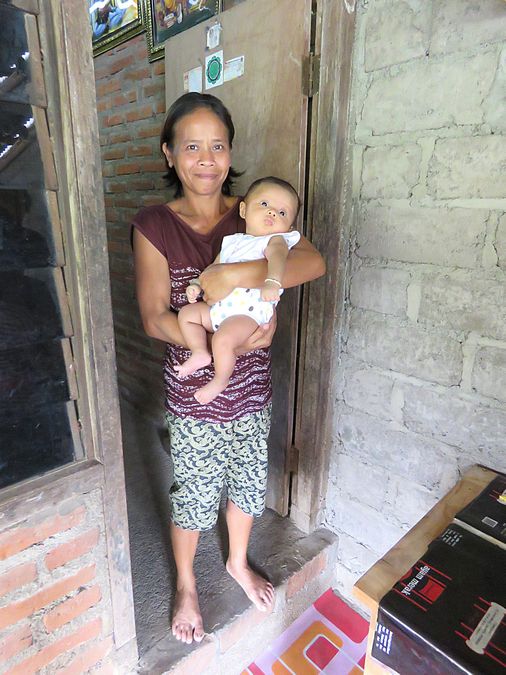
Grandmother and baby in this typical extended family household
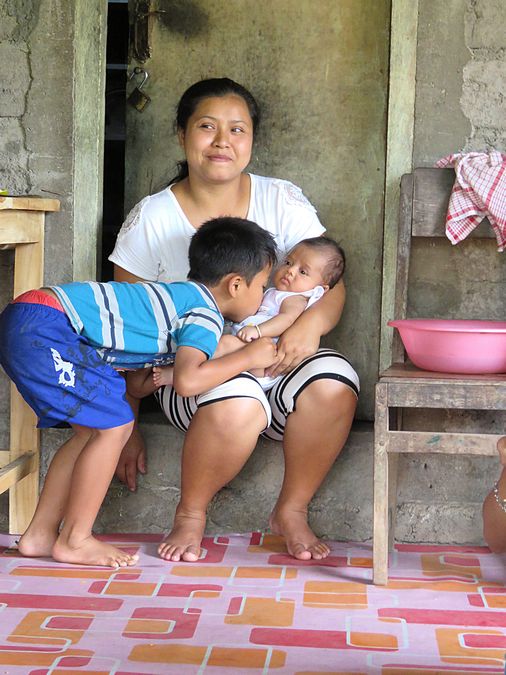
This kid loves his new sibling.
Link to Part Two, Page 7 - Travel to Sanur, Uluwatu Temple
Pat's Home Page