Indonesia: Java, Bali, and Komodo Islands - September 10 - October 2, 2017
Part Two - Bali, Indonesia
Page Five - Ubud, Bali
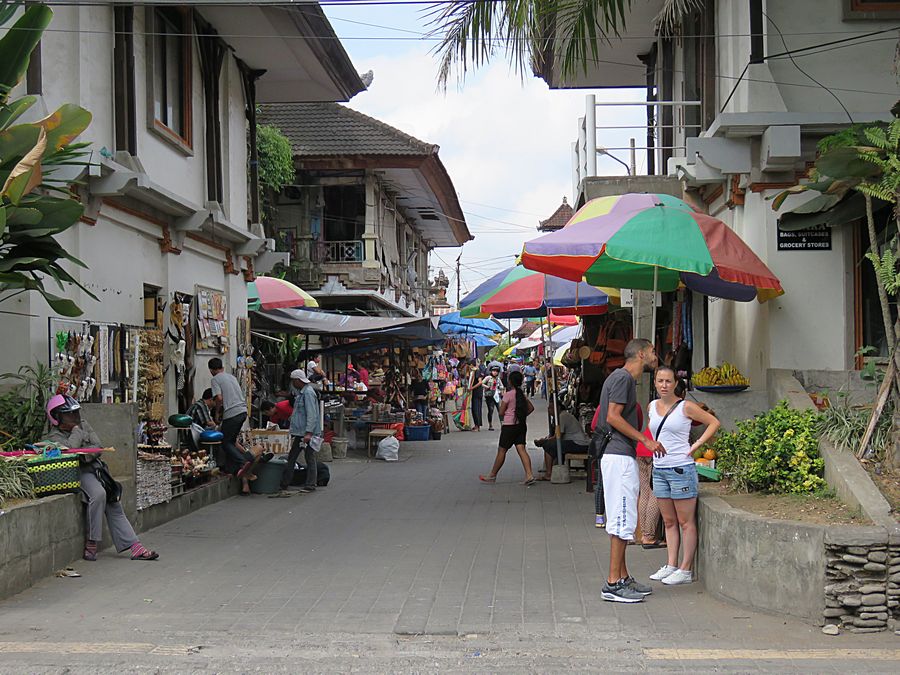
September 21 - in a market and tourist area of Ubud.
Ubud is in the mountains about an hour's drive from Denpasar, Bali
and the Indian Ocean. It is considered the center of Bali's arts.
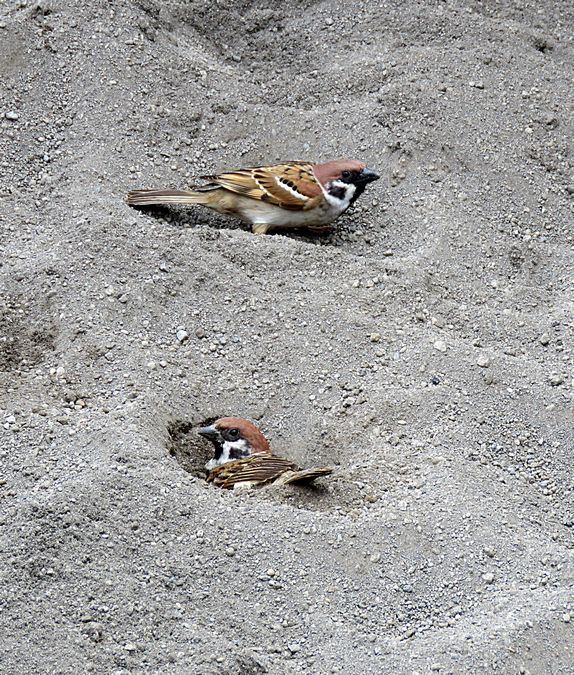
Unknown type of bird digging into gravel nearby
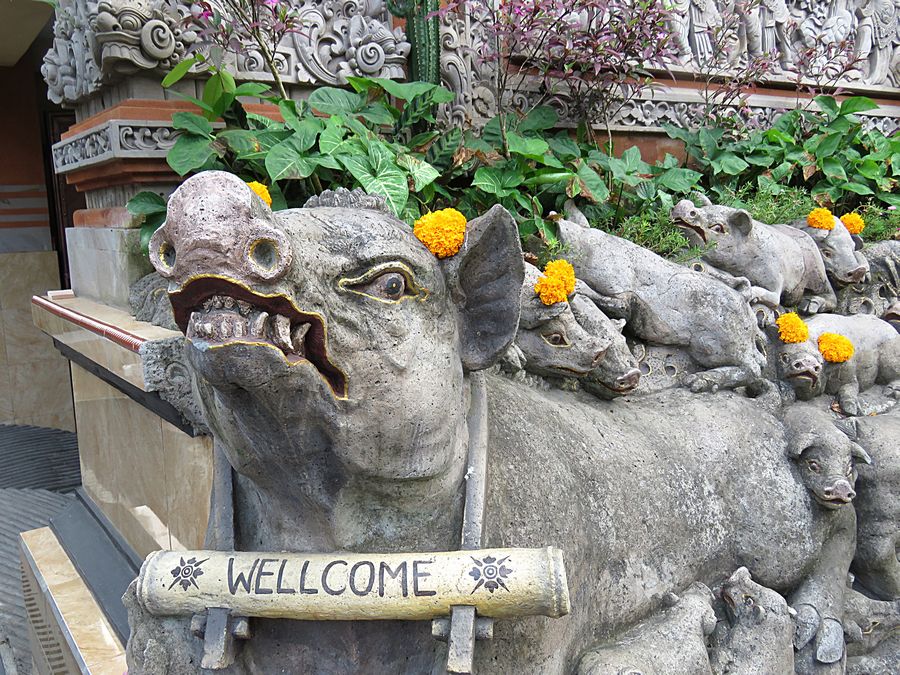
Welcome sign to Suckling Pig Restaurant in Ubud
This fella does not look too welcoming, probably
upset about roasting pigs.
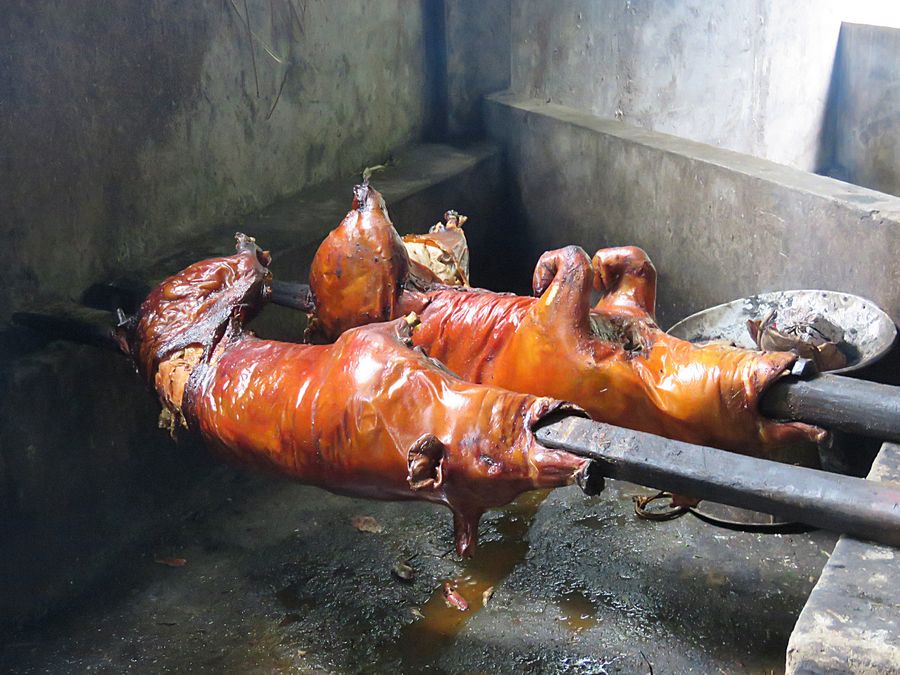
Pigs being cooked
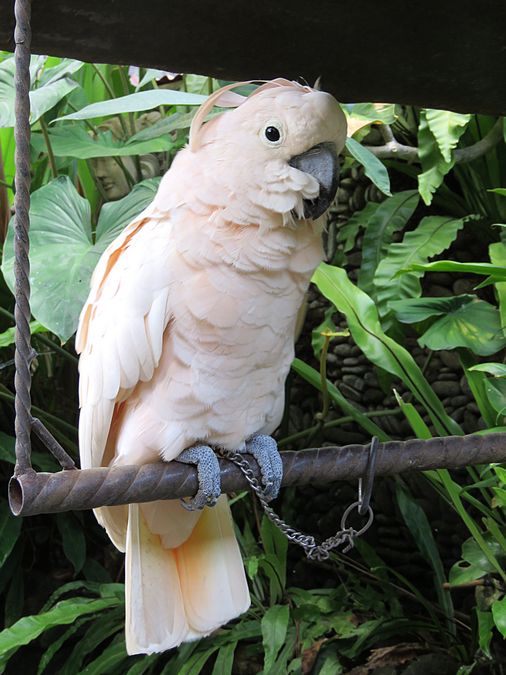
The restaurant's pet parrot
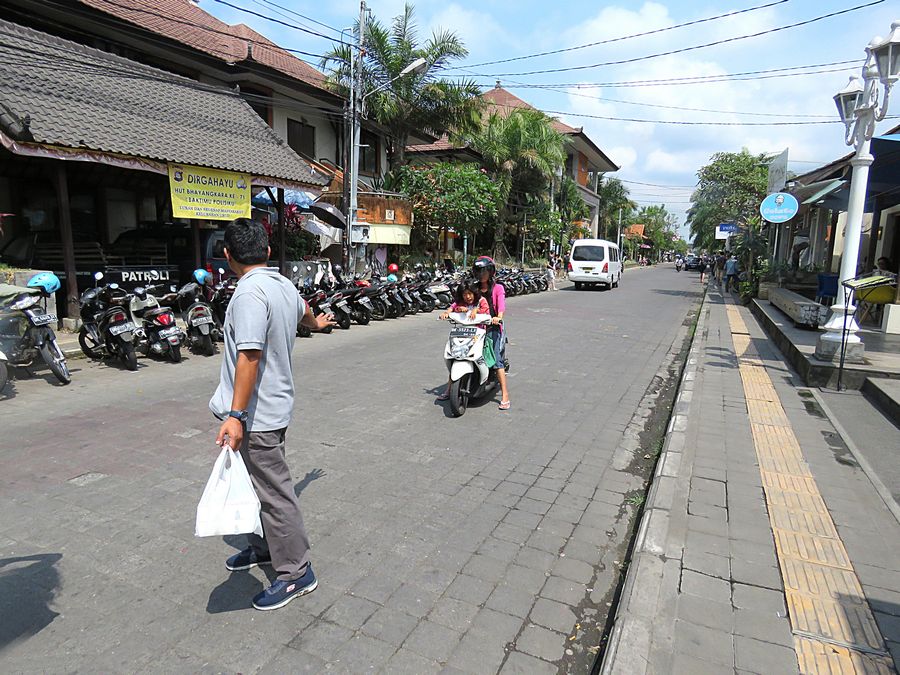
This shows how one crosses the street in Indonesia.
Our local guide Darma holds his hand out to signal
to oncoming traffic to stop. In this case, it was just a
a woman on a motor scooter and her child. When the
traffic is heavy, it is far more exciting.
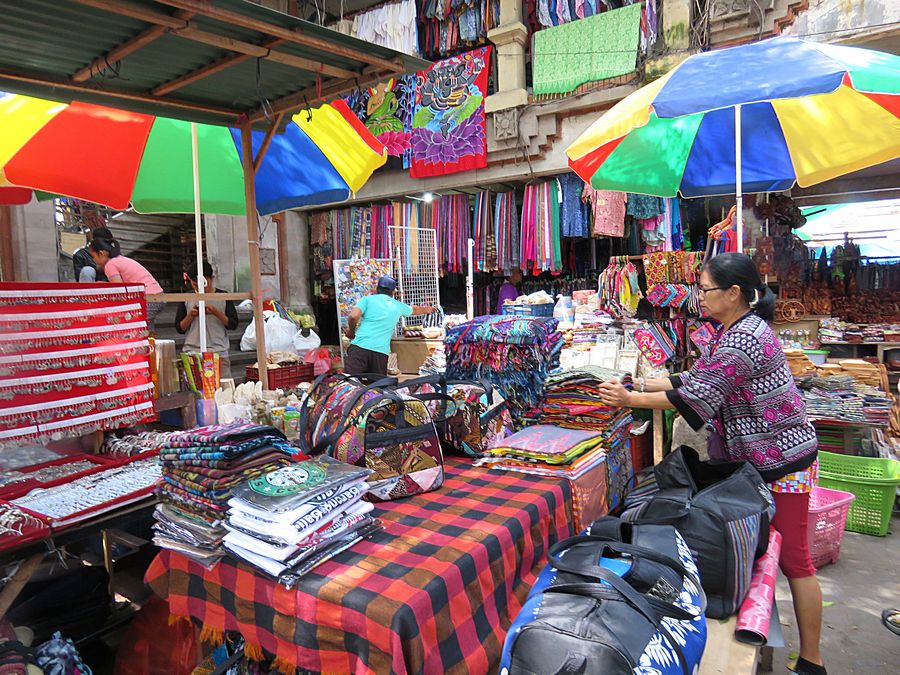
At Pasar Ubud, across from the Royal Palace. Large market area with shops
selling clothing, handicrafts, souvenirs, fresh produce.
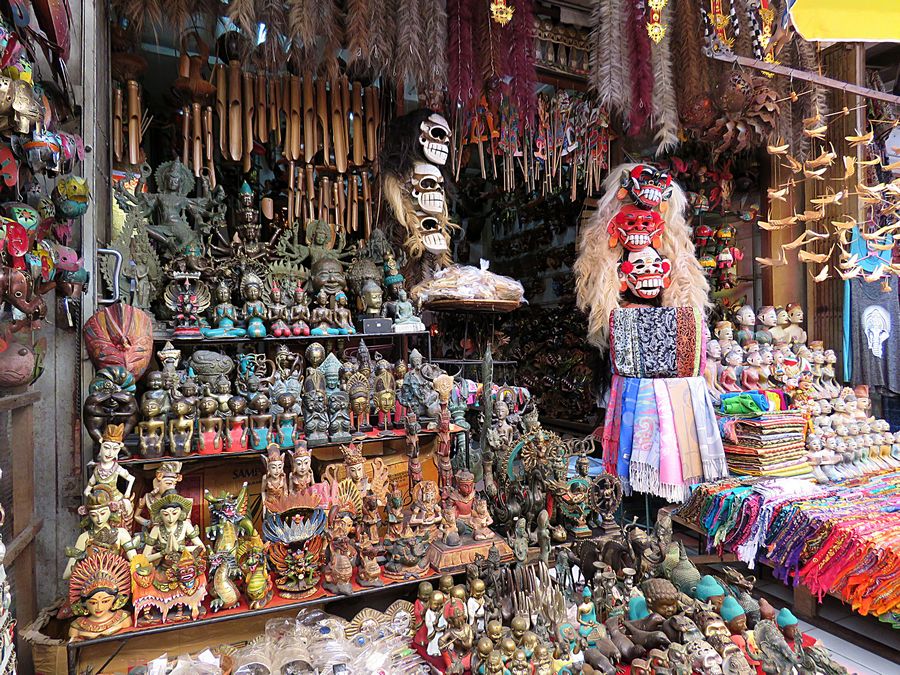
Mask and figurine store at the market.
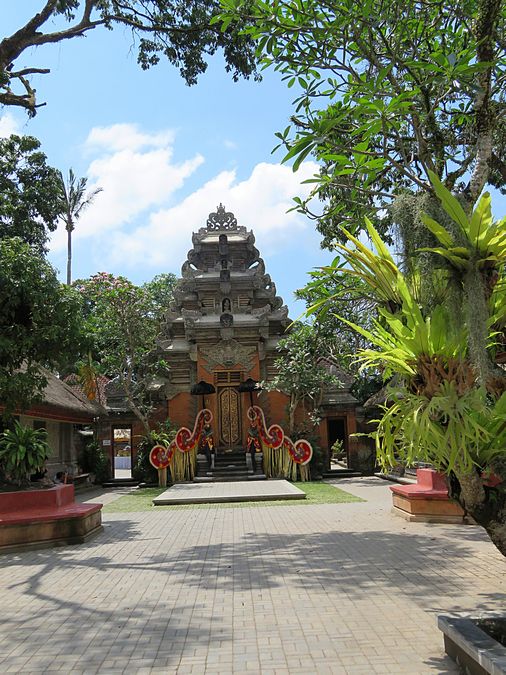
Puri Saren Agung (the Royal Palace of Ubud), from where Ubud was ruled
from the late 1800s until WWII. The buildings were erected after an
earthquake in 1917.
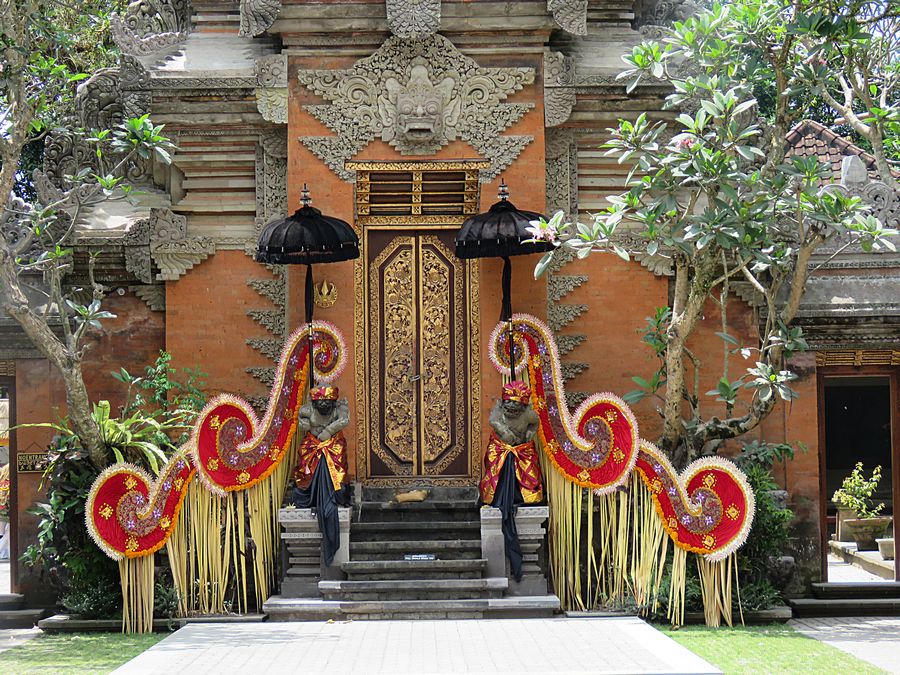
They were preparing for a wedding so we could not go in.
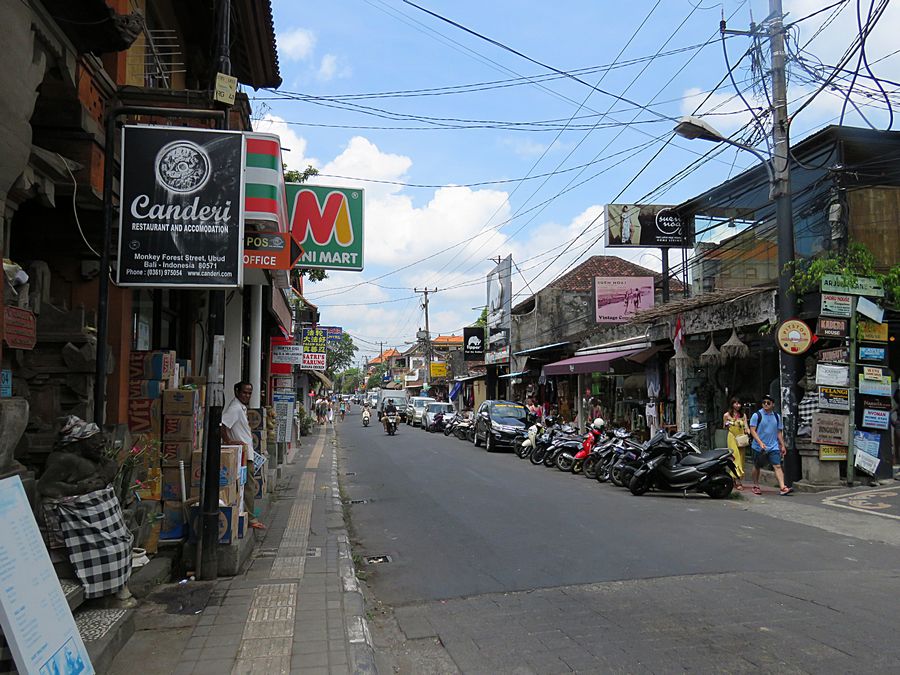
Monkey Forest Road, a shop and hotel lined road in Ubud that leads to
Ubud's Sacred Monkey Forest. Berdi, Karen, and I walked down this road
past the Forest back to the Plataran Resort.
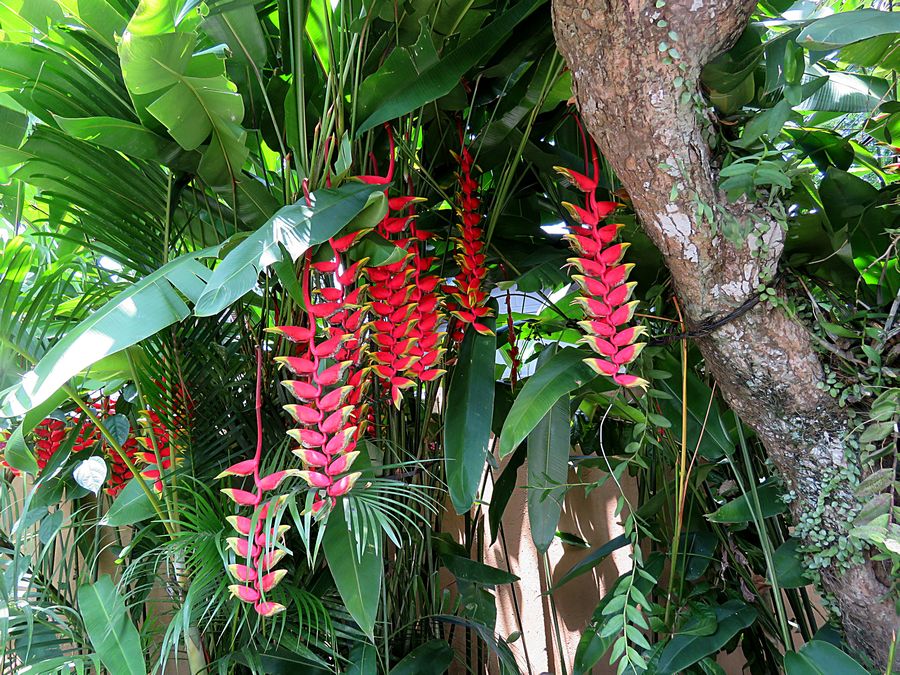
We saw bird of paradise in a number of places
in Indonesia. Seen while walking Monkey
Forest Road.
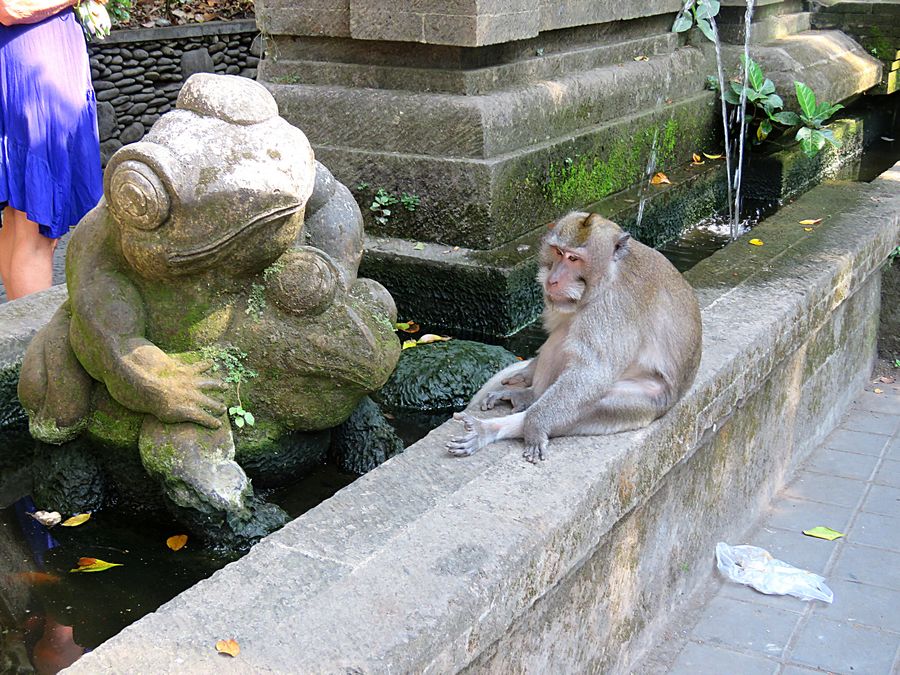
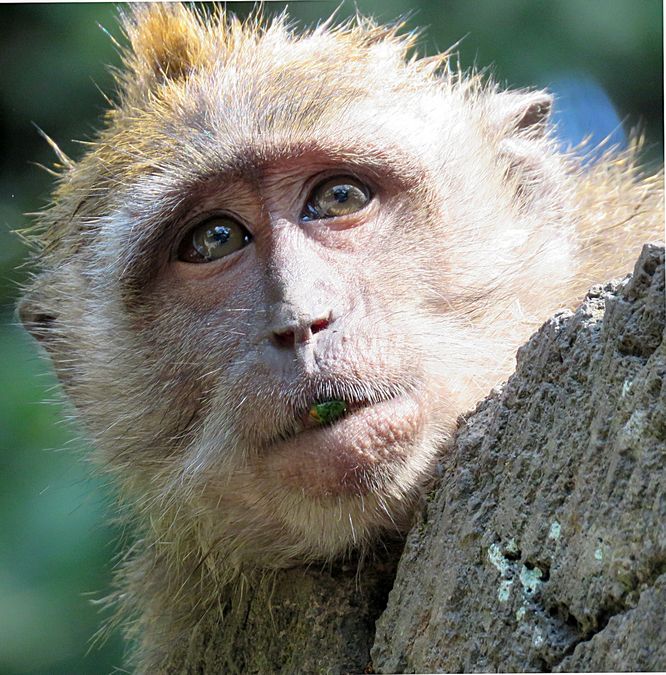
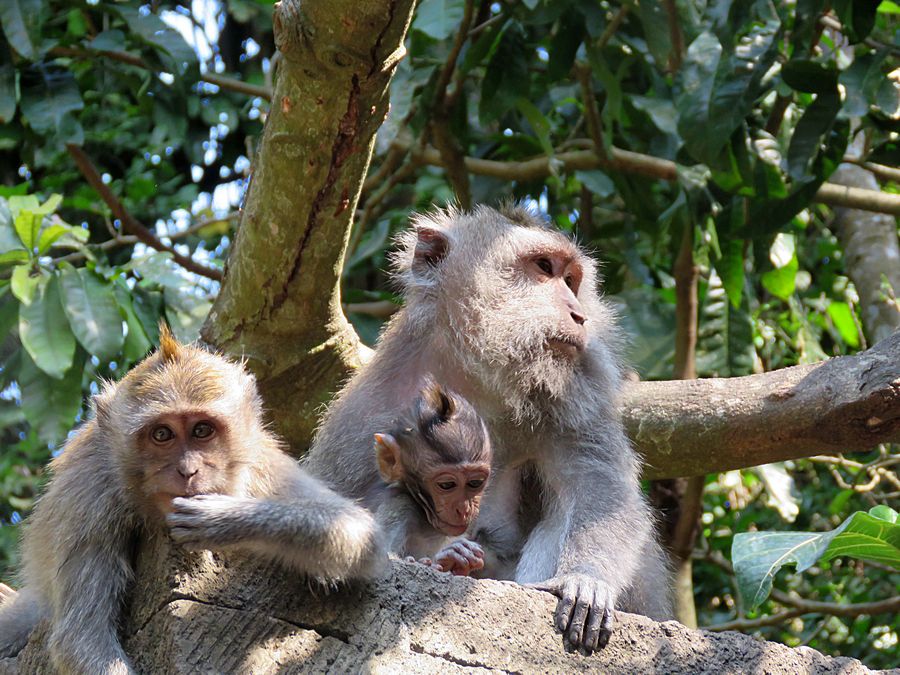
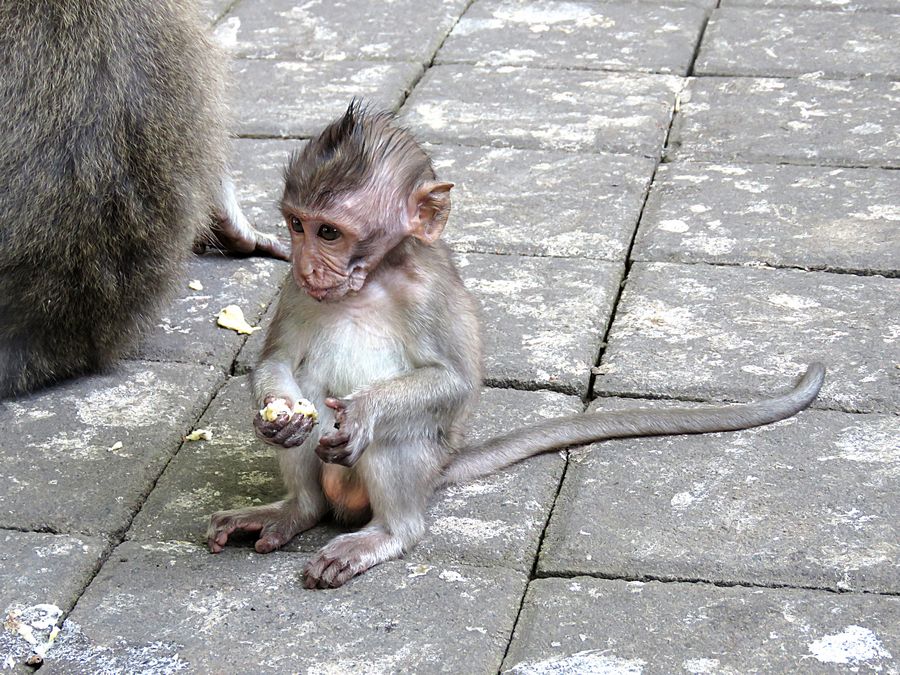
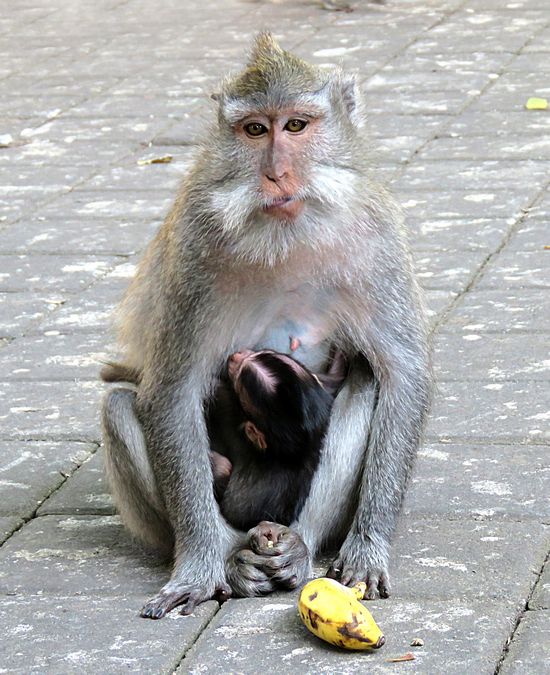
In the afternoon of September 21, the group went to the Monkey Forest of
Ubud, a sanctuary where hundreds of Balinese monkeys (long-tailed
macaques) abound in large nutmeg trees and at a small temple. We were
told not to wear hanging jewelry, such as earrings or necklaces, and to keep
all valuables in a bag, zipped. The monkeys can grab keys, sunglasses, any
shiny object and run off with it. They also like water bottles and food.
They don't bother you if you have nothing they are interested in.
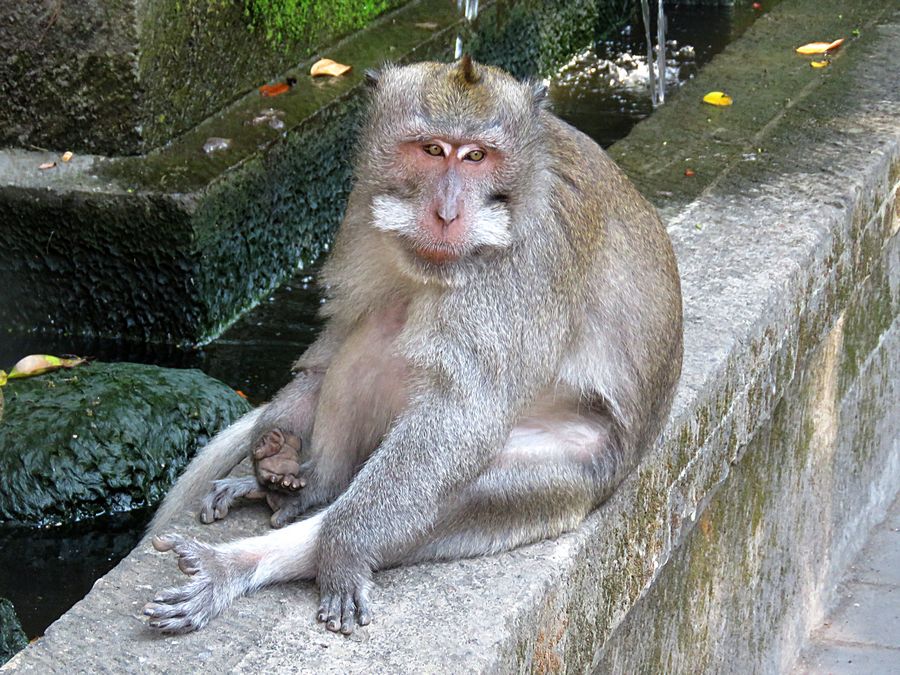
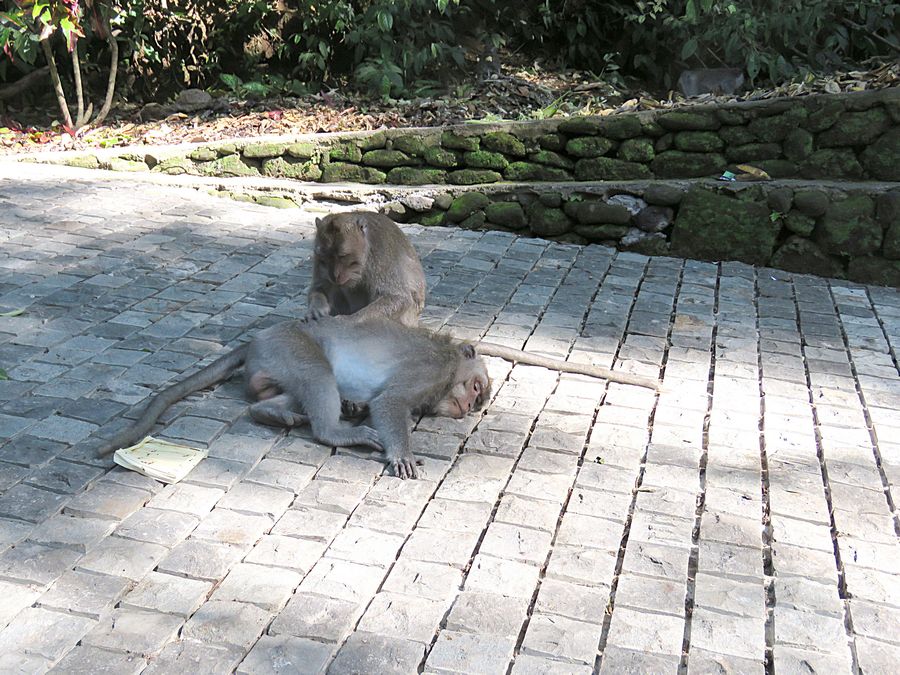
Nothing like a massage.
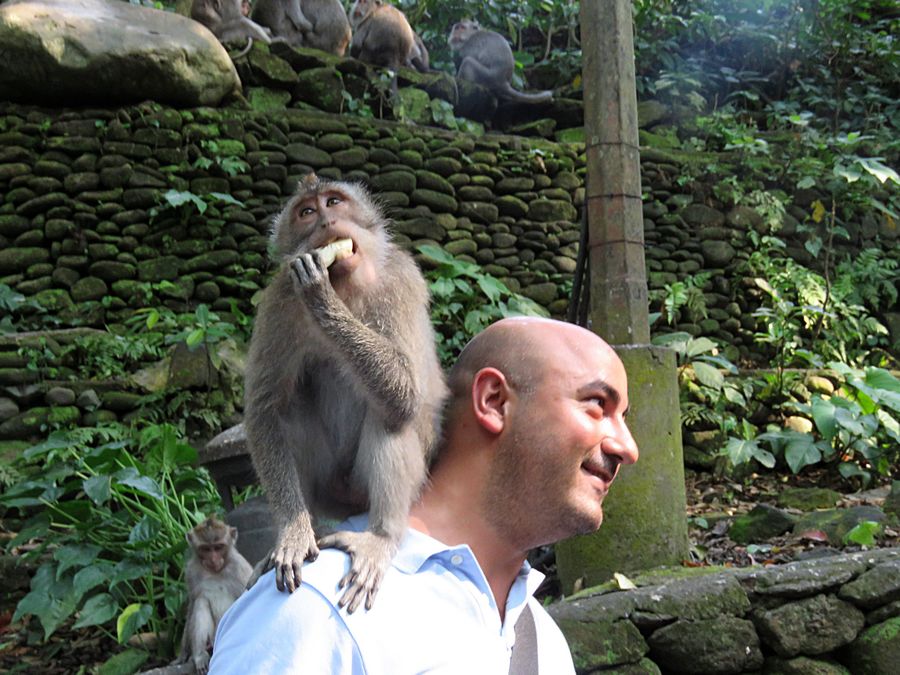
Some tourists encouraged the monkeys to climb on them by enticing them
with food, such as bananas. However, if the monkeys get upset about
something, they can attack. None of our group risked this man's behavior.
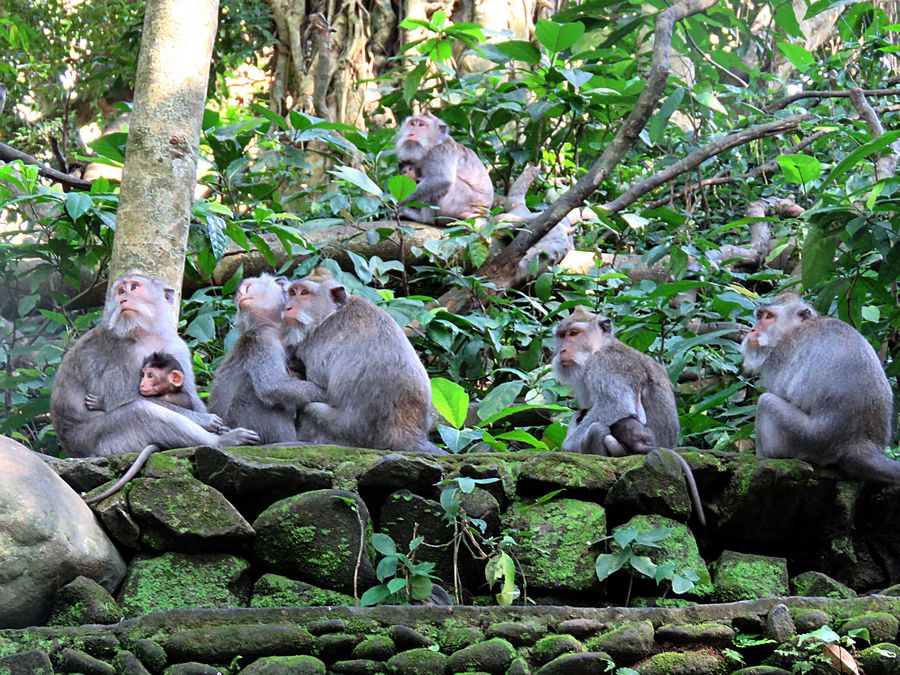
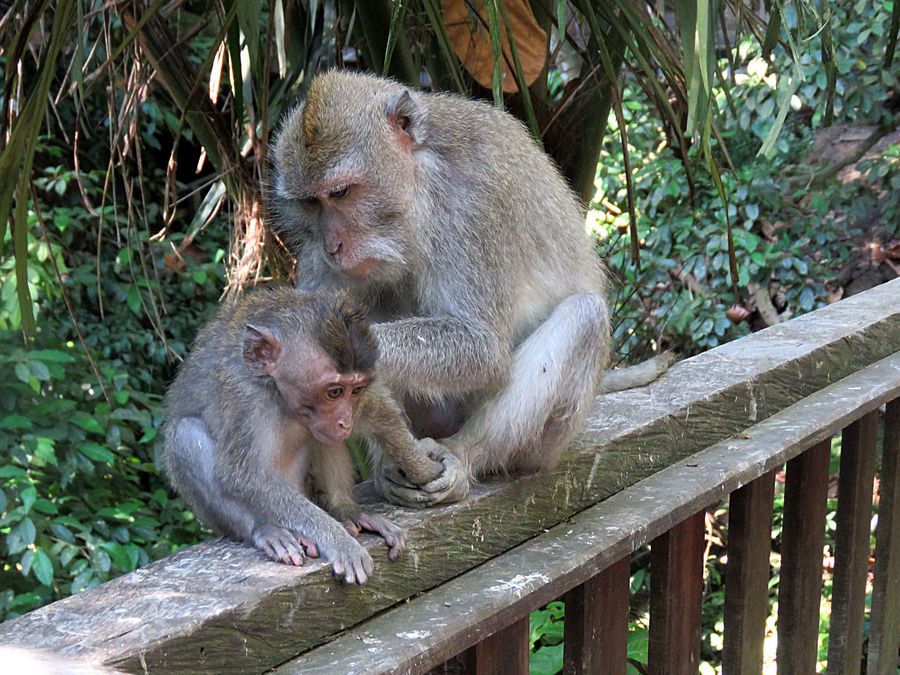
Grooming
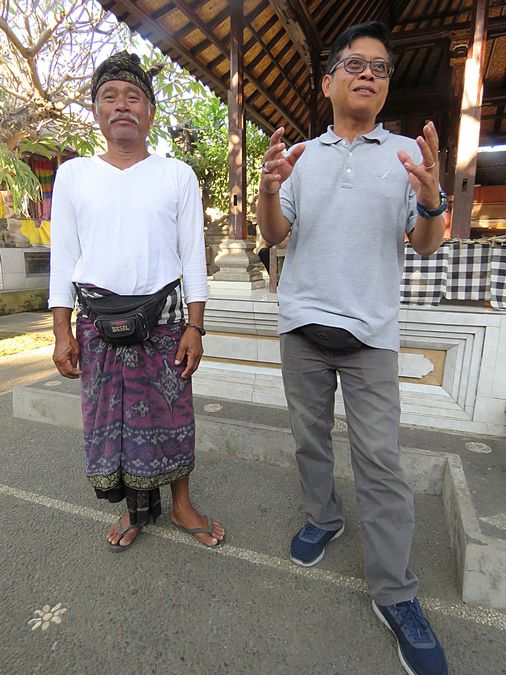
At the home of a puppet master where his workshop is. He gave us a short
performance. We were told this art is not so popular any more.
Puppets are made out of leather.
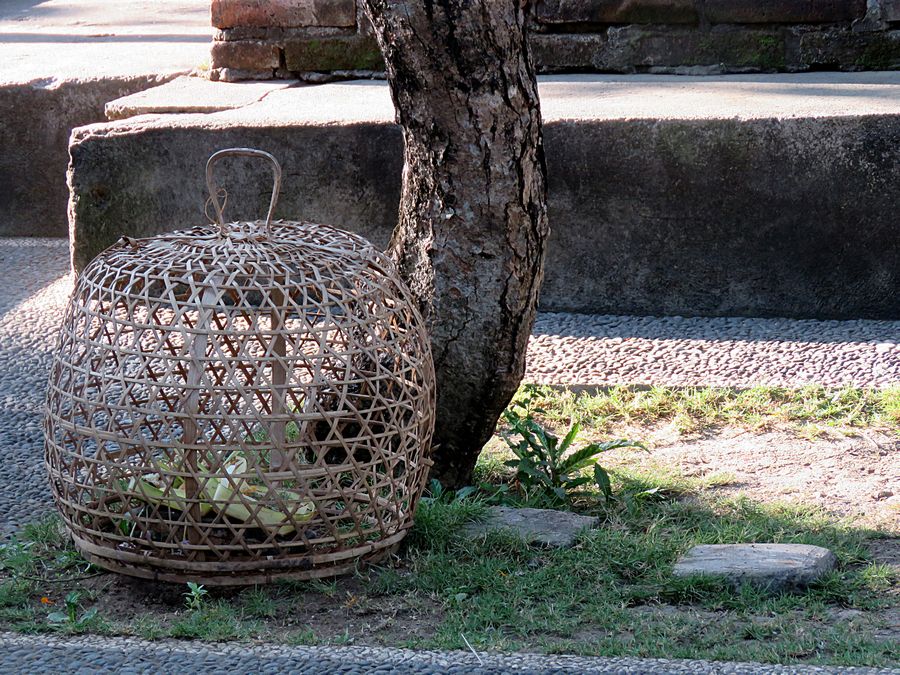
Area of the home where the baby's placenta was buried in a coconut shell.
The Balinese believe in the eternal cycle of reincaration, and life on earth
is just one stage. A person's life is marked by rites of passage that are
celebrated by the entire community.The first major ritual is at birth when
the placenta is typically buried in a coconut shell near the entrance to the family
house. Babies are regarded as the reincarnation of ancestors, so they are
holy and treated with reverence.
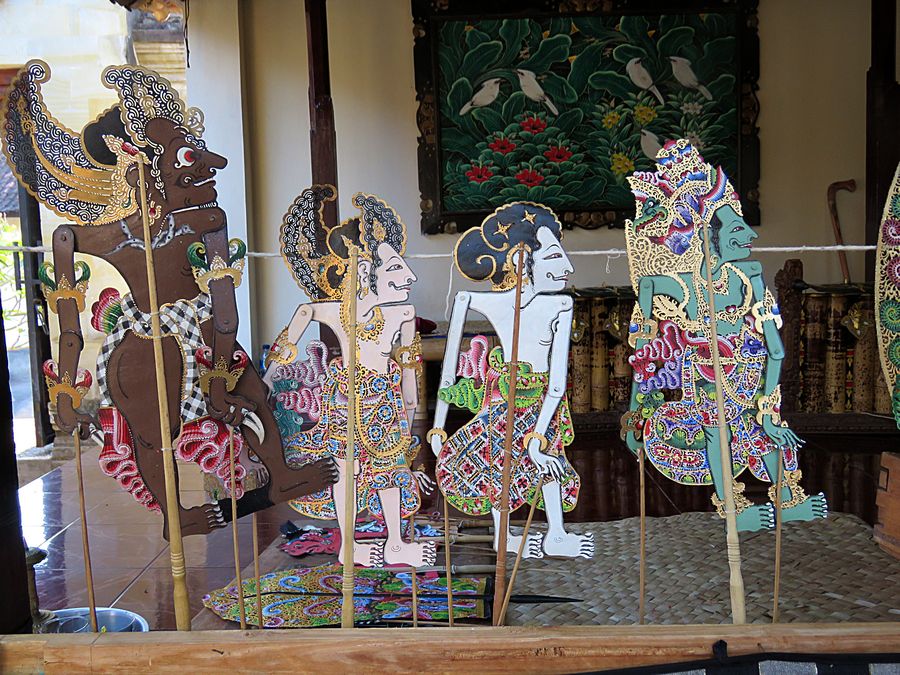
Puppets
Wayang or "Shadow" is a form of puppet theater art found in Indonesia
A dramatic story is told through shadows thrown by puppets and sometimes
combined with human characters. The art form celebrates the Indonesian
culture and artistic talent. Its origins are traced to the spread of Hinduism in
the medieval era and the arrival of leather-based puppet arts from southern
India. Wayang refers to the entire dramatic show. Sometimes the leather
puppet itself is referred to as wayang. The dramatic stories depict
mythologies, such as episodes from the Hindu epics the Ramayana, the
Mahabharata, as well as local adapations of cultural legends.
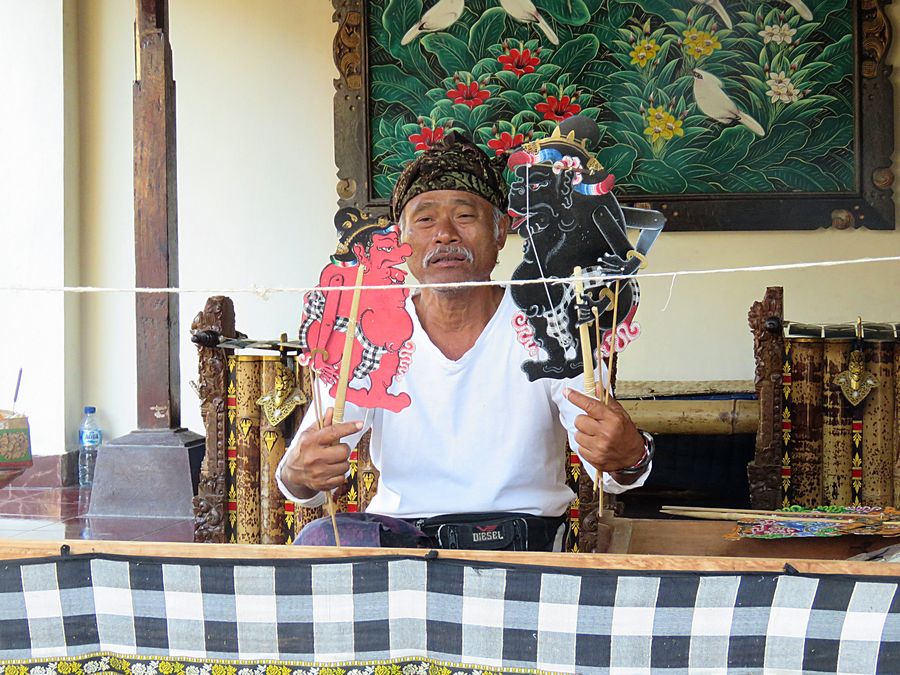
The puppet master gave a short performance for us.
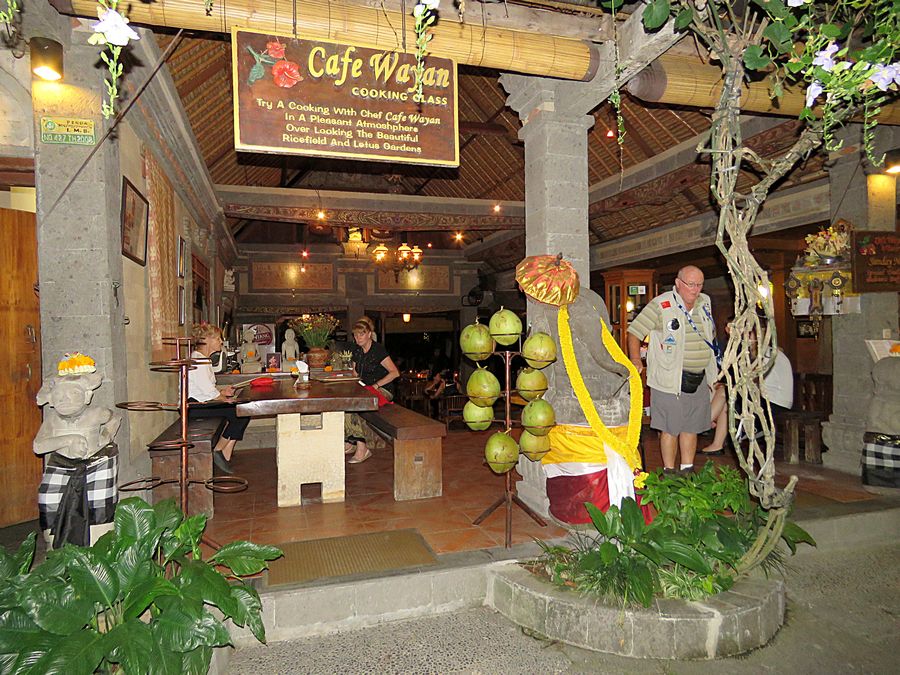
Cafe Wayan in Ubud, where the group had dinner, a well known bakery &
restaurant, featured in Elizabeth Gilbert's memoir, "Eat, Pray, Love."
(also the
movie starring Julia Roberts)
Link to Part Two, Page 6 - Jatiluwih, Ulun Banu Bratan Temple, Tiga Wasa Village
Pat's Home Page