Indonesia: Java, Bali, and Komodo Islands - September 10 - October 2, 2017
Part Three - Flores Island, Indonesia
Page Three - Rinca Island; Return to Denpasar, Bali
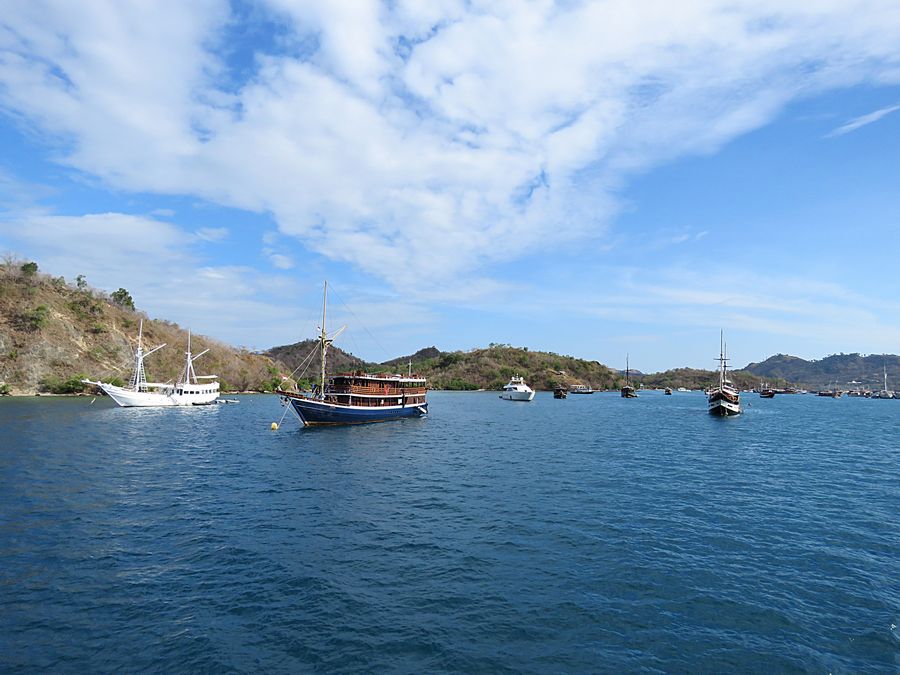
September 29, we took a much larger boat to Rinca Island from
Labuan Bajo in Flores to see more
komodo dragons at
another part of Komodo National Park. This is part of the
harbor area in Labuan Bajo.
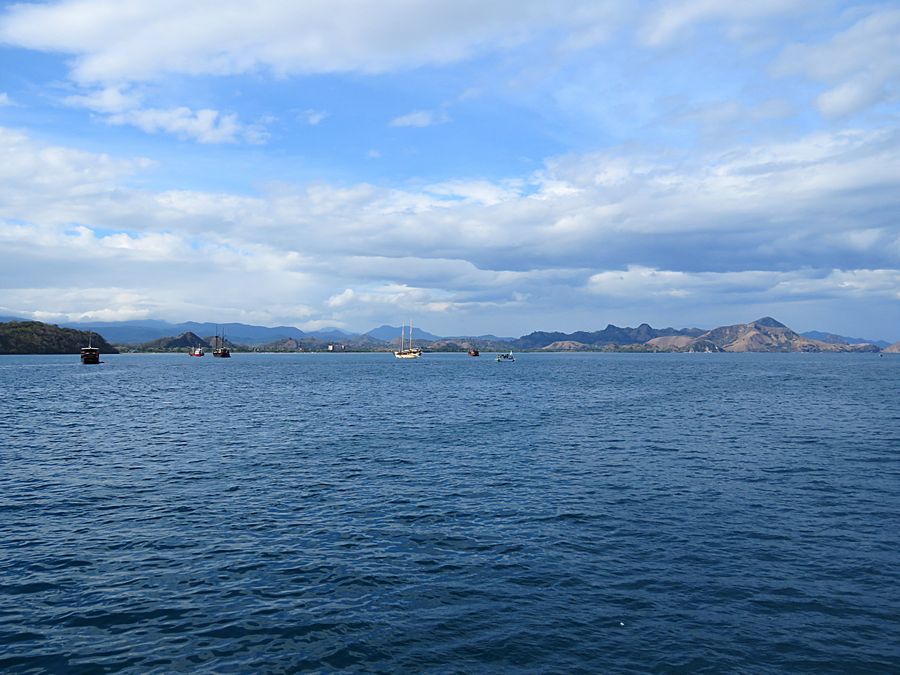
Heading toward Rinca
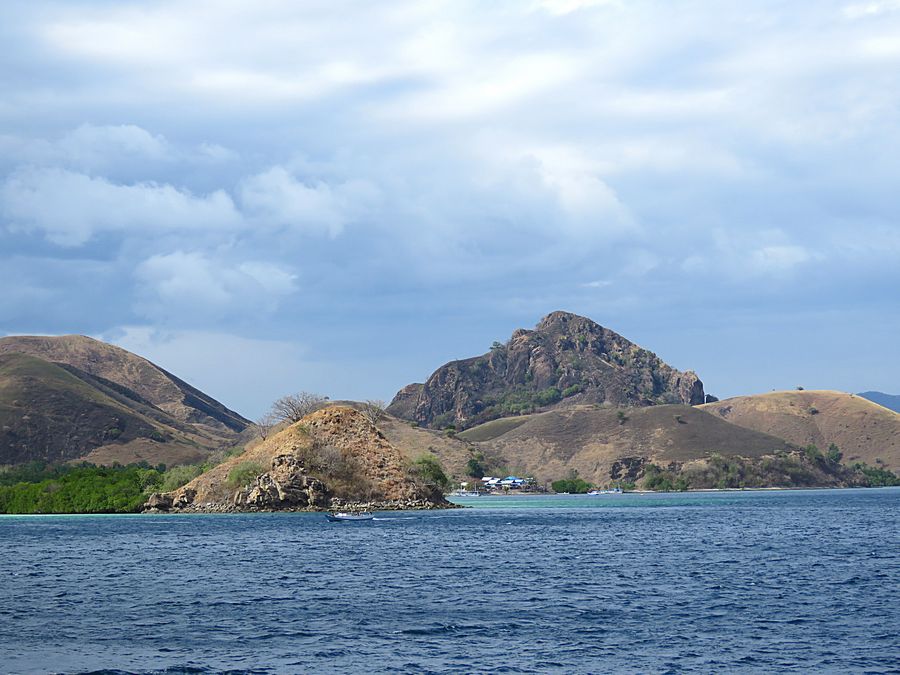
Island seen along the way
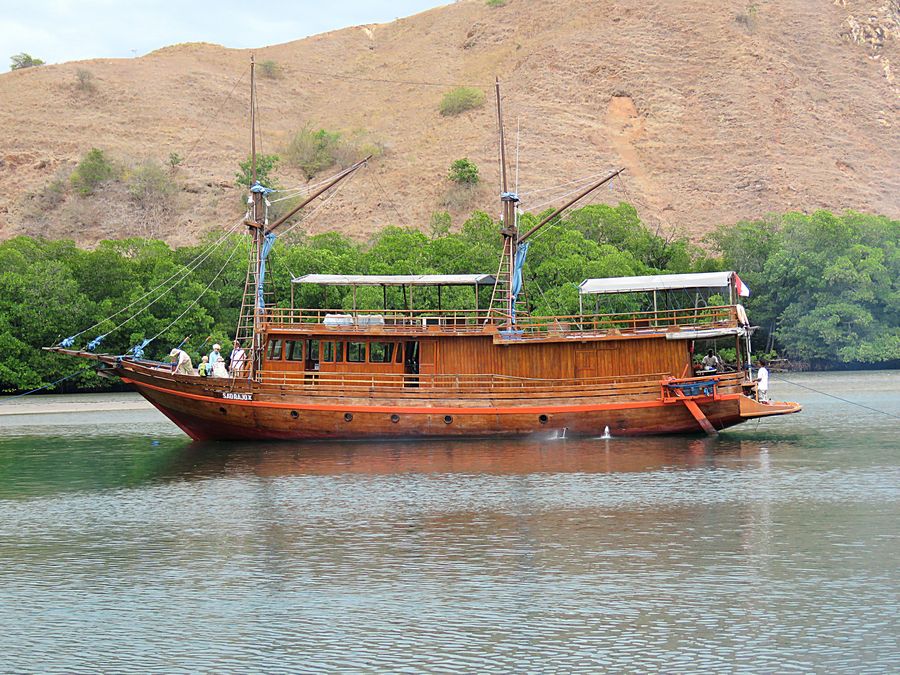
Boat we took to Rinca Island; anchored in the harbor area of Rinca.
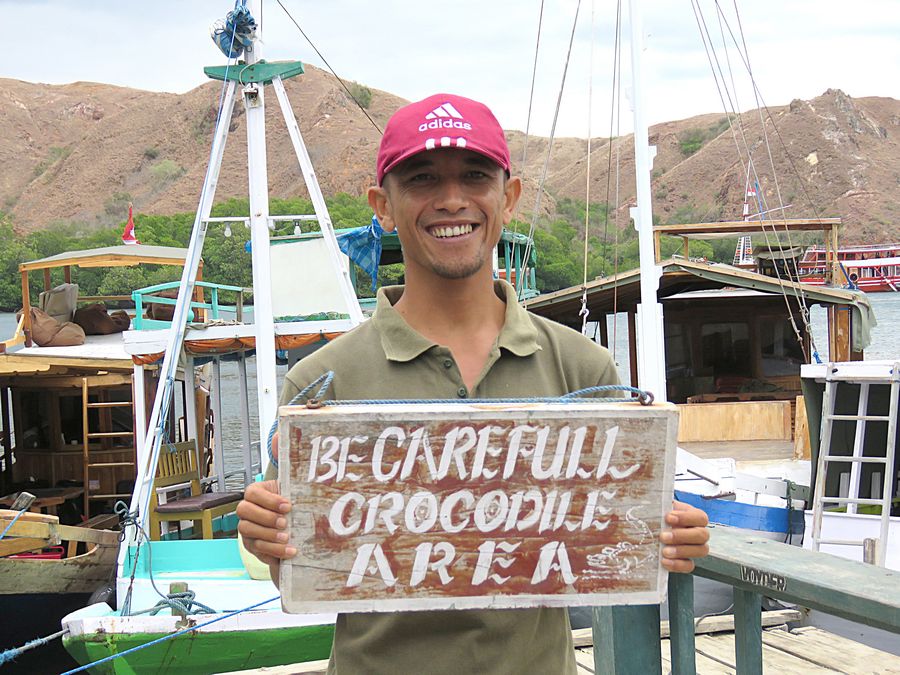
Our local guide, Thomas, at the dock.
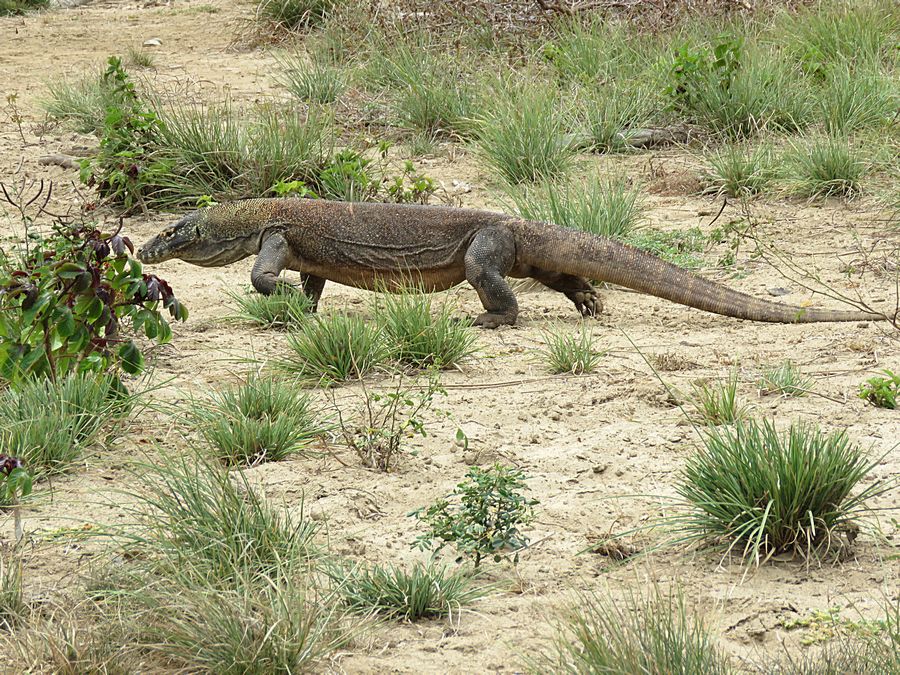
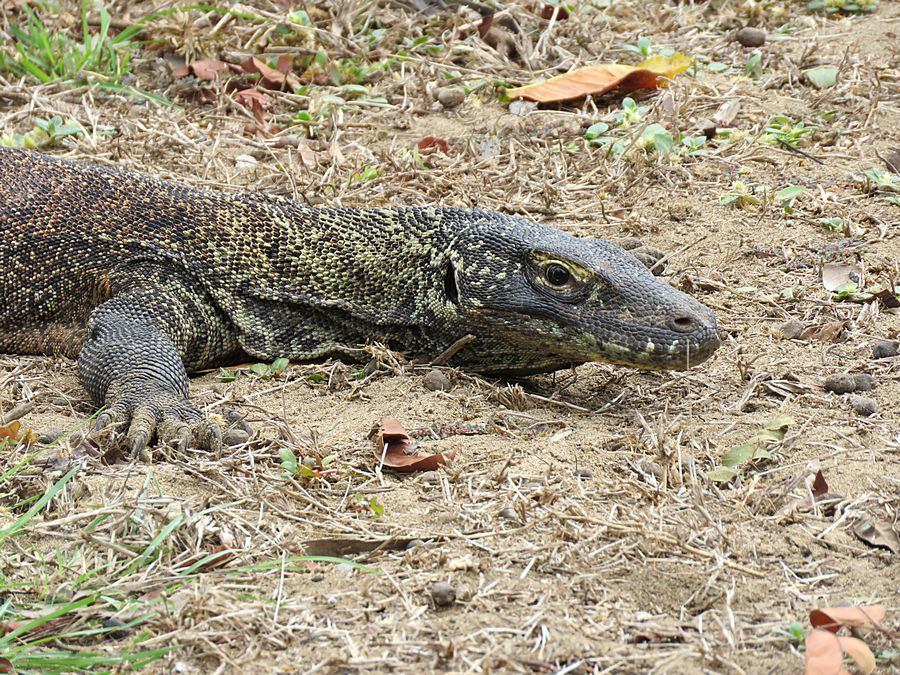
Komodo dragon we saw walking to the visitor center
area of Rinca Island. Rinca Island is smaller than
Komodo Island, so you are more likely to see komodo
dragons there.
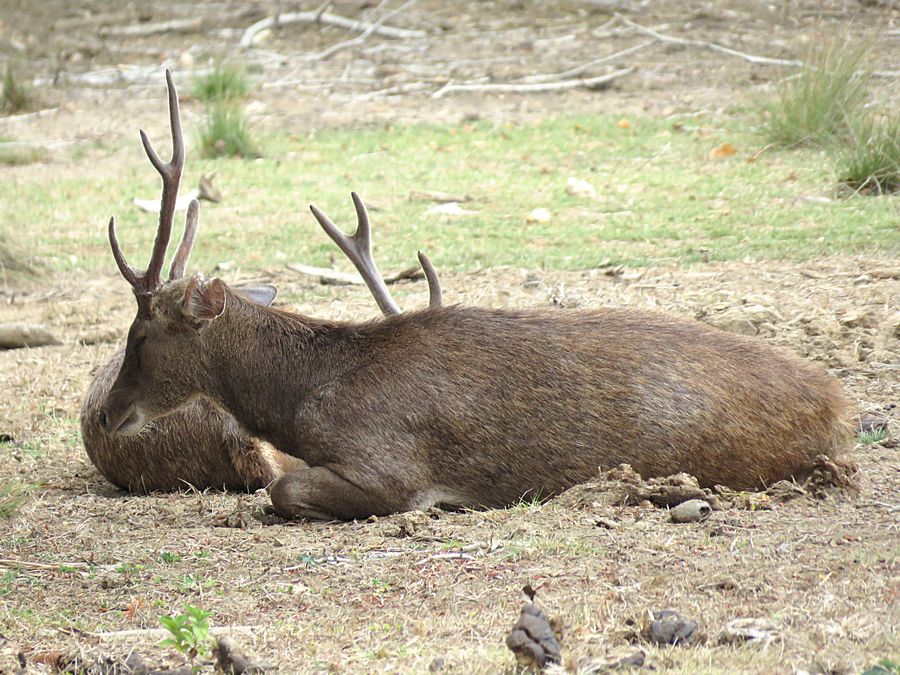
Deer near the visitor center, seen as we started
our walk with 2 park rangers.
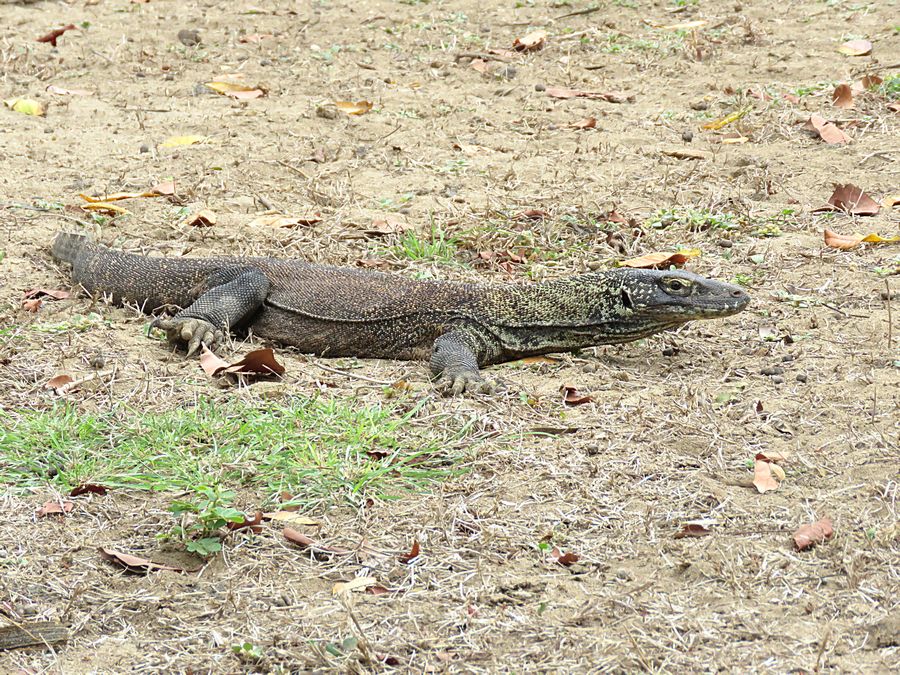
Younger dragon. We were told this one might
be about 7 years old.
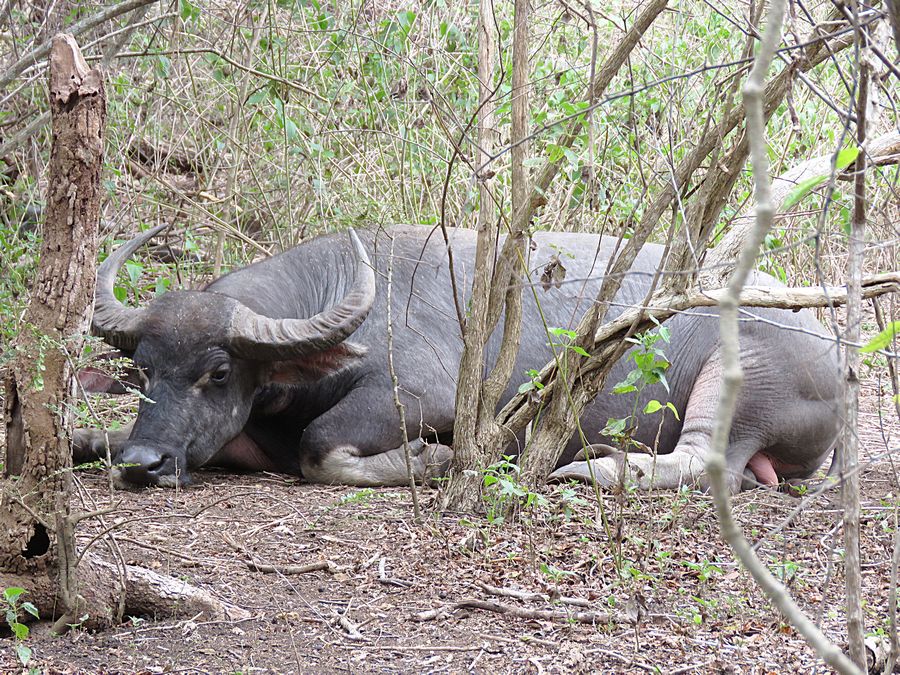
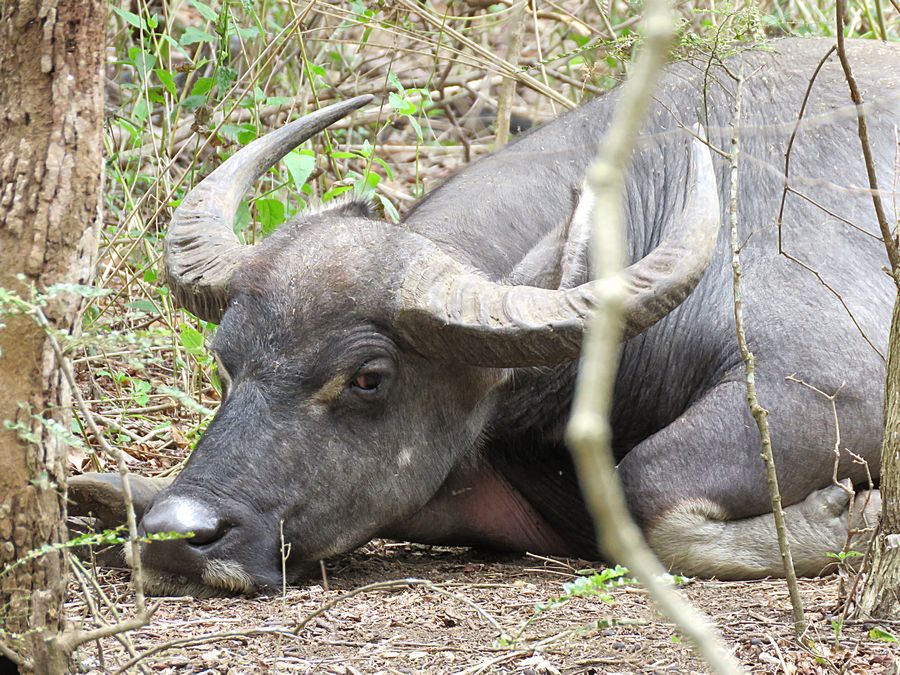
Wild buffalo in the forest.
A park ranger thought this buffalo might have been attacked by a dragon,
since it did not run away when we were taking photos.
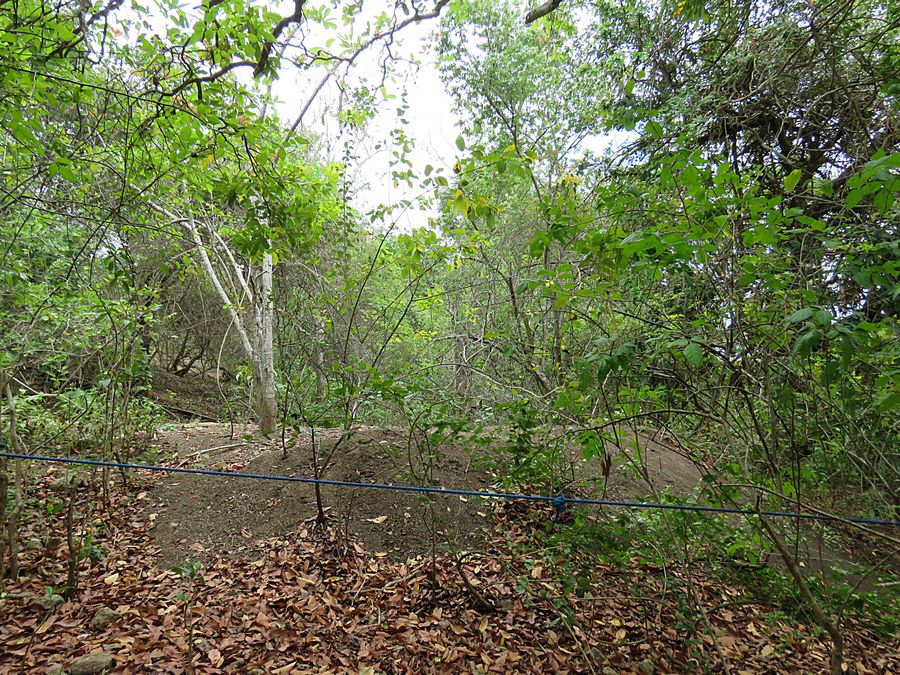
Mound with dragon eggs. Rangers had roped it off, since they knew a female
was actively guarding it. One ranger was sent ahead to locate where she
was, since she would be aggressive if she thought we threatened the nest.
The female Komodo lays about 30 eggs. The female lays her eggs in depressions
dug on hill slopes or within the pilfered nests of megapodes—large, chicken-like
birds that make nests of heaped earth mixed with twigs that may reach 3 feet in
height and 10 feet across. While the eggs are incubating—about nine months—
females may lie on the nests, or stay nearby, protecting their future offspring.
However, there is no parental care of newly hatched Komodos. The females stop
protecting the nests after a few months when the rainy season comes.
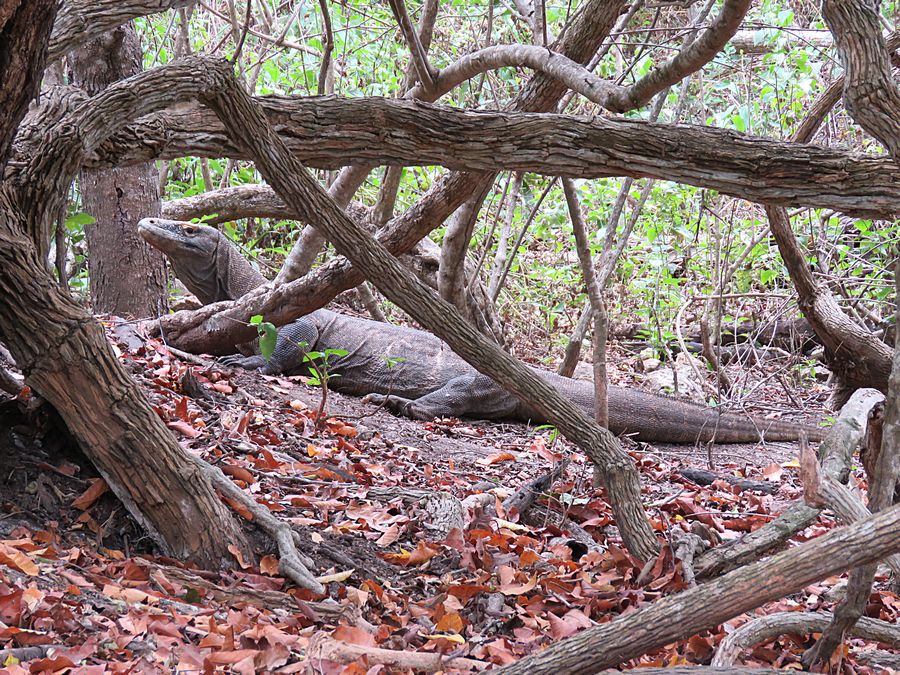
The ranger did locate the female heading toward us.
She did sense our presence and moved toward the mound.
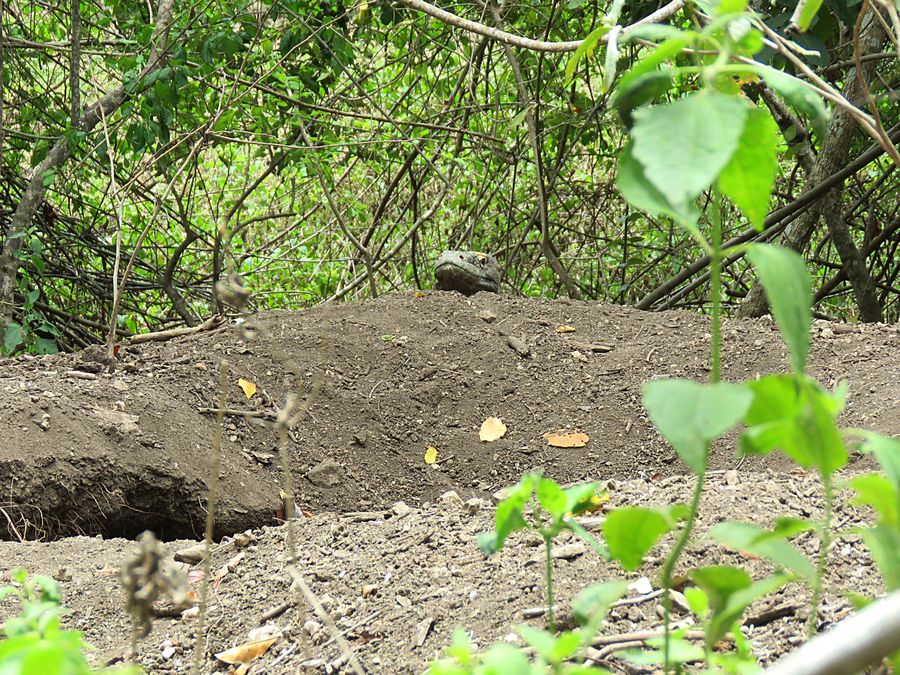
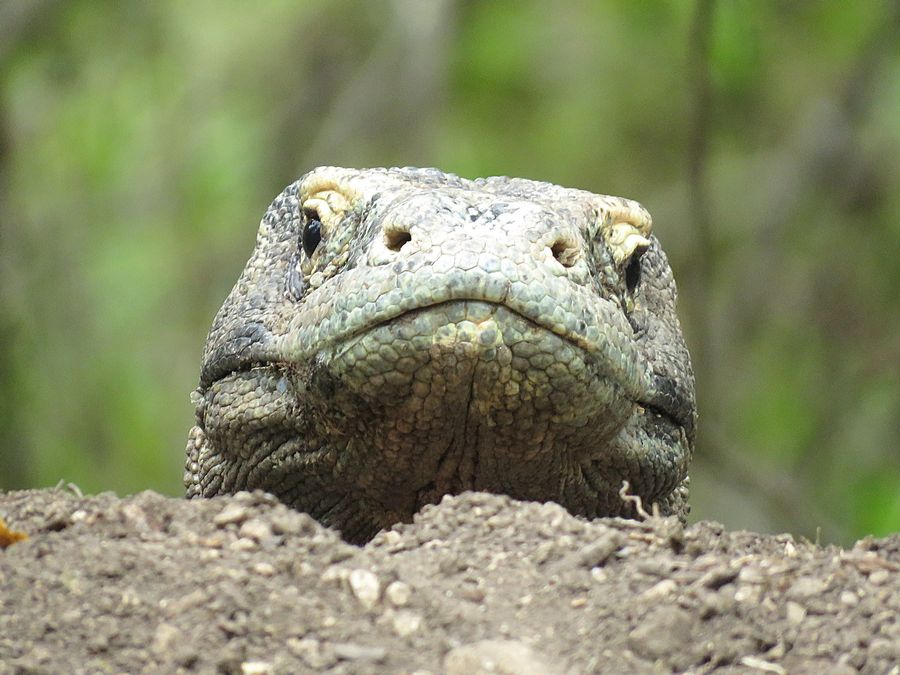
She poked her head above the mound and waited
there, on the alert.
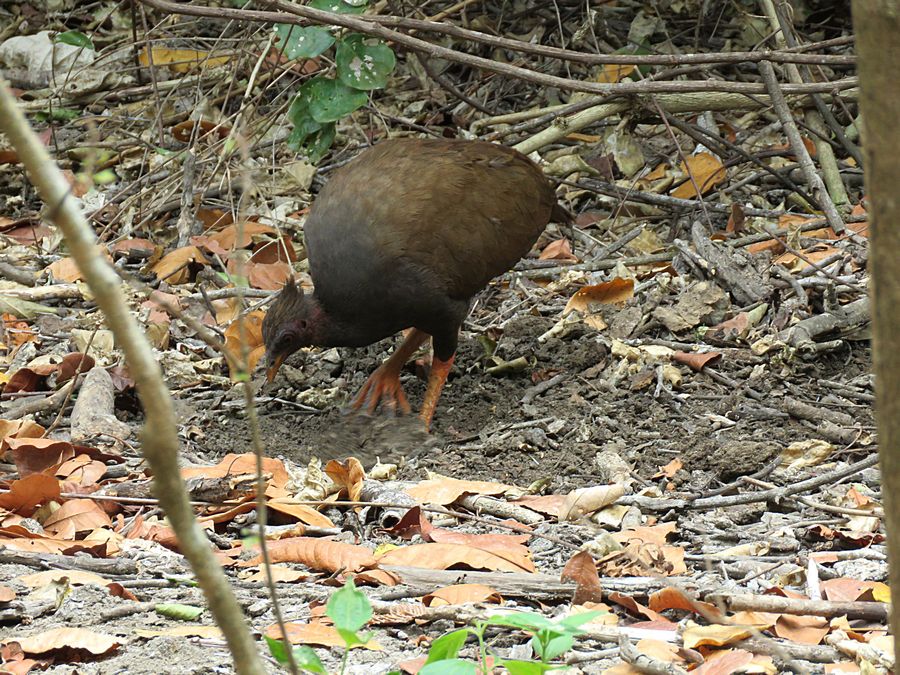
The bird (megapode) that digs mounds that dragons sometimes use to lay eggs.
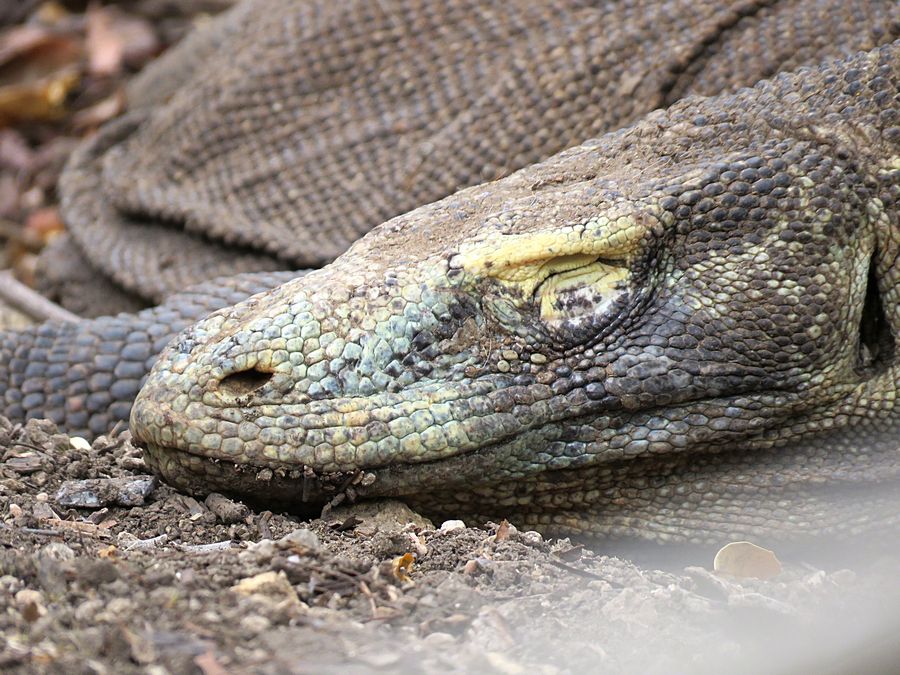
Another komodo dragon that we saw back in the trees
a few minutes
later. Note yellow eyelid.
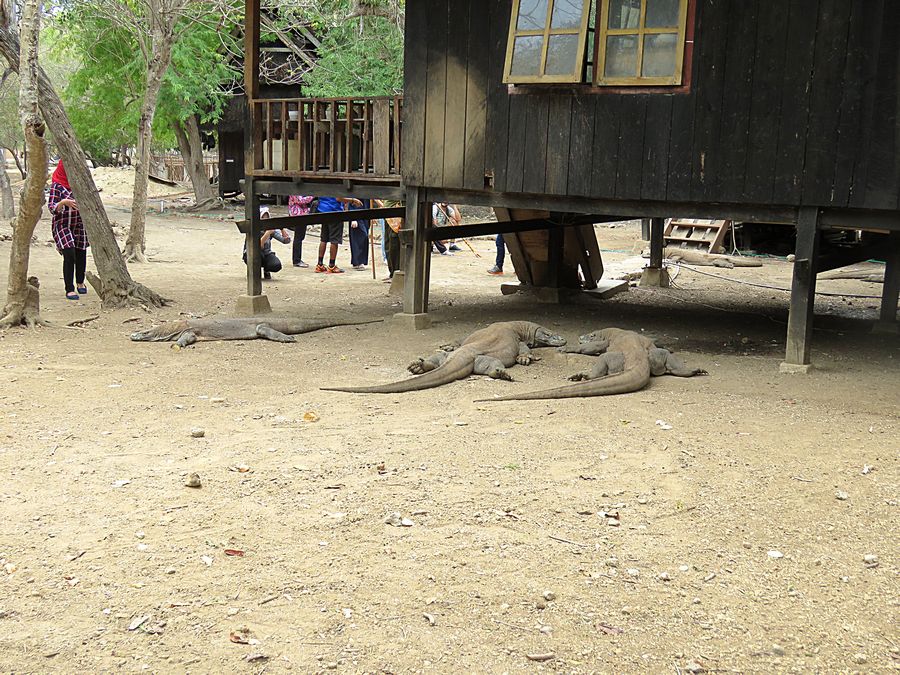
Back at the park rangers' cabins, there were numerous komodo dragons
gathered. Others also showed up behind us while we were looking at
those around the cabins. Park rangers stood guard while everyone took
numerous photos. It was hard to keep count as we saw so many, but
we think we saw about 20 komodo dragons on Rinca. Most of them
were resting or moving around or near the ranger cabins.
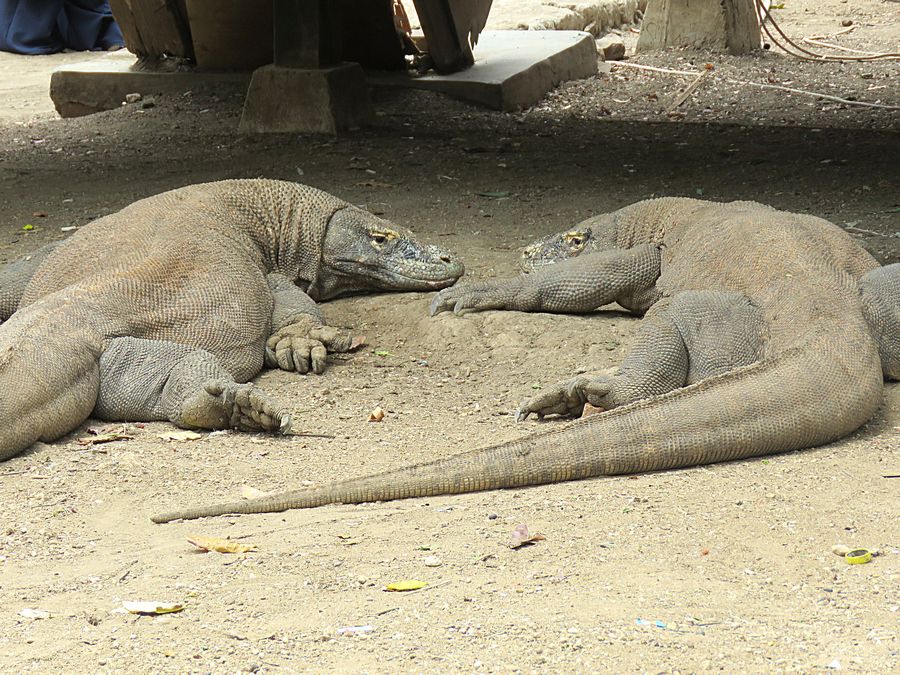
Two males keeping an eye of each other.
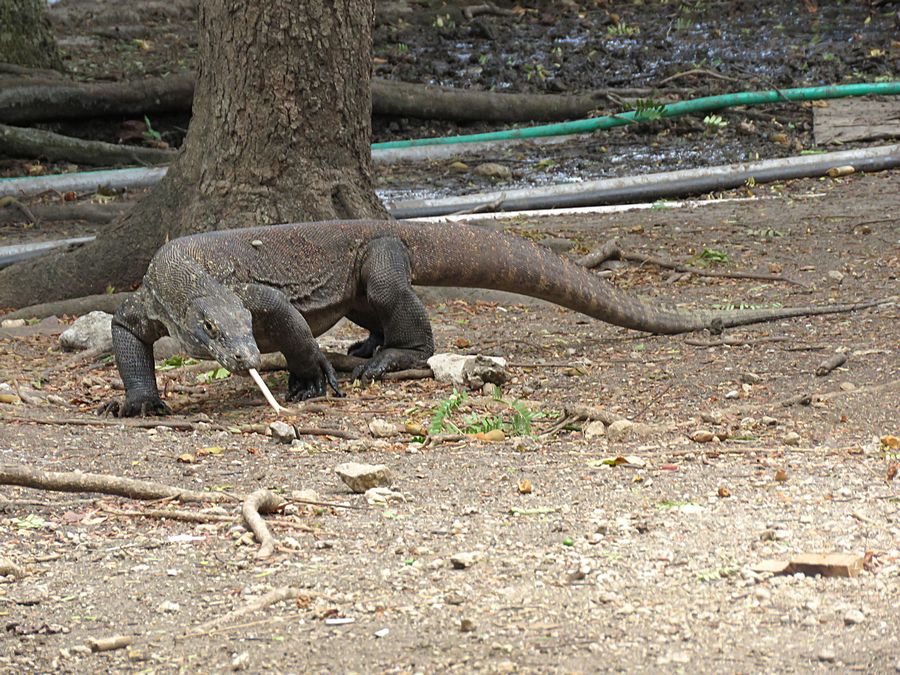
This dragon was moving around one of the cabins, using
its forked tongue to smell.
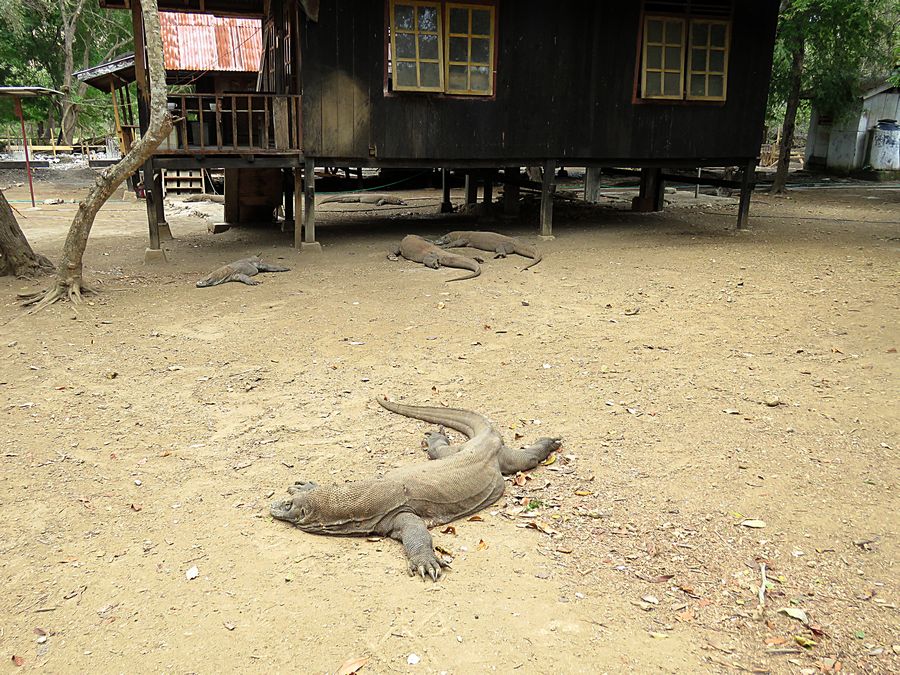
You can see at least 6 dragons in this photo. I accidentally
walked very close to the head of the one in front when
I was trying to duck under someone taking a photo.
I did not realize I was that close until hearing the audible gasps
from people and rangers standing nearby.
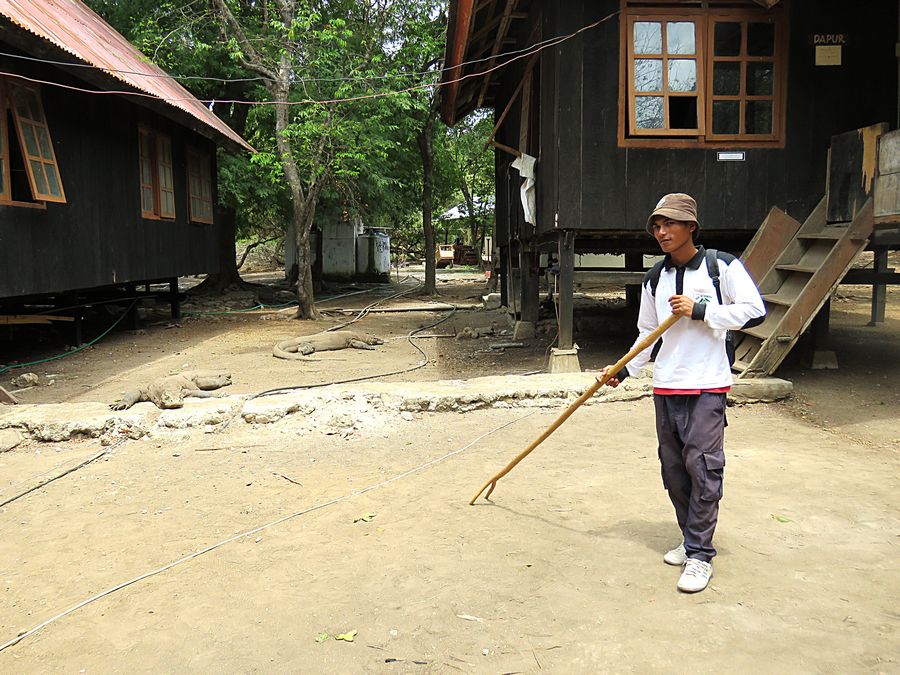
One of the park rangers standing nearby to protect us. One dragon
has his head on the walkway between 2 cabins. Rangers must have
to be very careful whenever they leave their cabins.
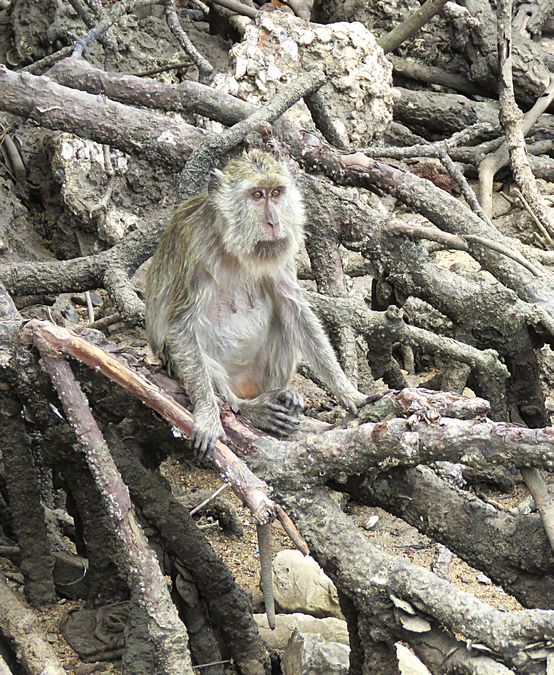
A monkey that was hanging out near the dock as we were preparing to take
a motorboat back to our boat anchored in the water.
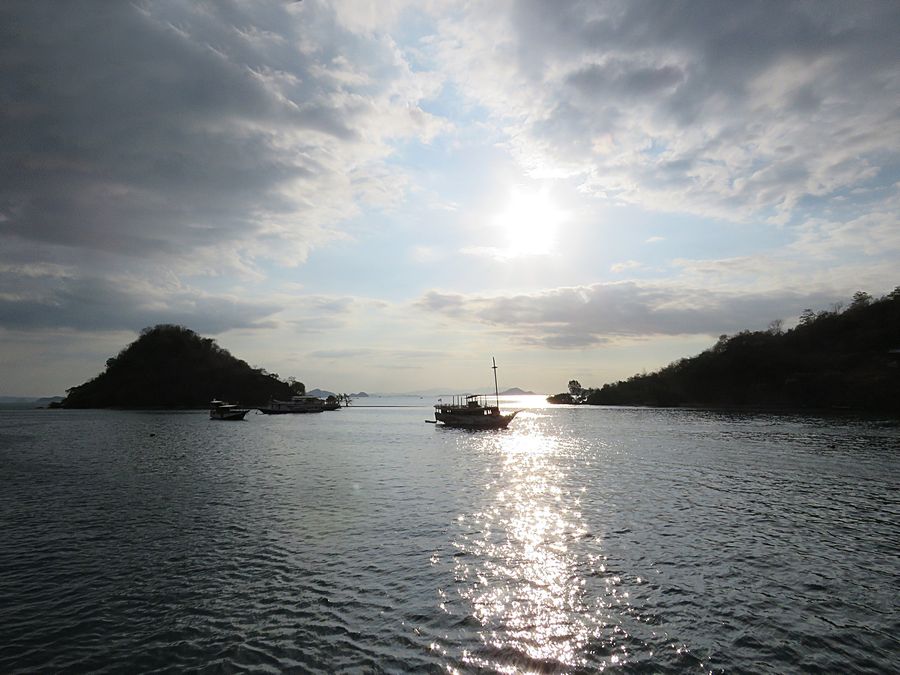
Nearing dusk on the way back to Labuan Bajo
We stopped at a beach to swim on the way back.
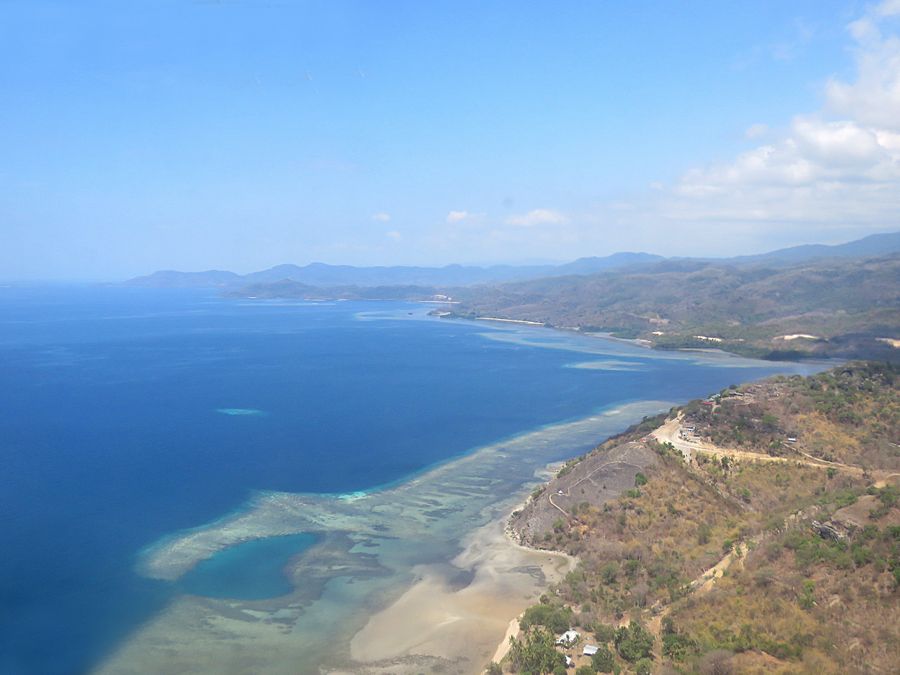
Leaving Flores Island on September 30 to fly to
Denpasar International Airport on Bali.
We stayed overnight in Kuta near the
Denpasar airport.
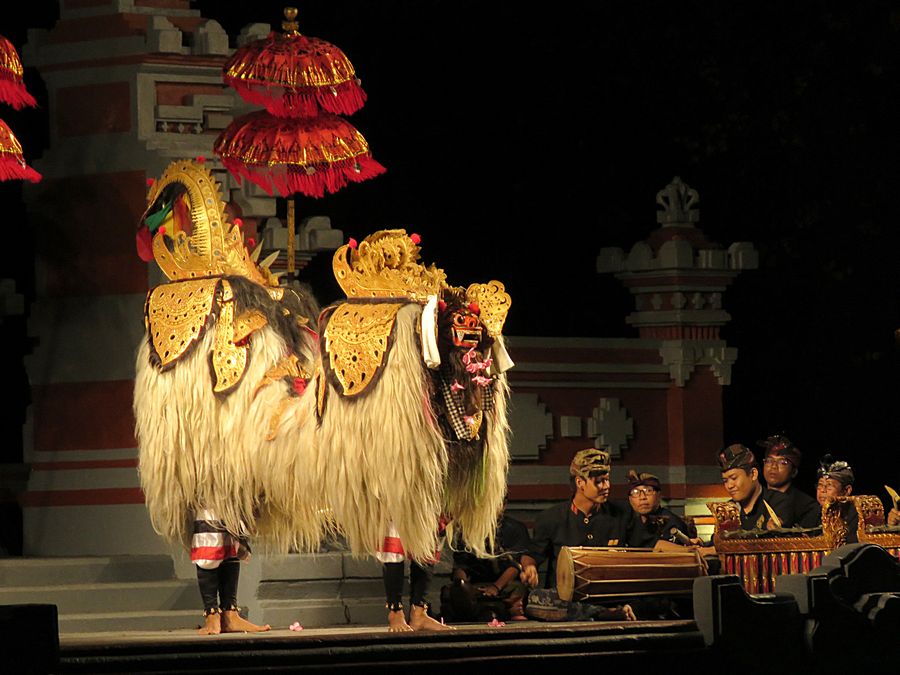
Night time in Kuta, Bali in the Denpasar area. The hotel next to ours had
entertainment in their pool and beach area.
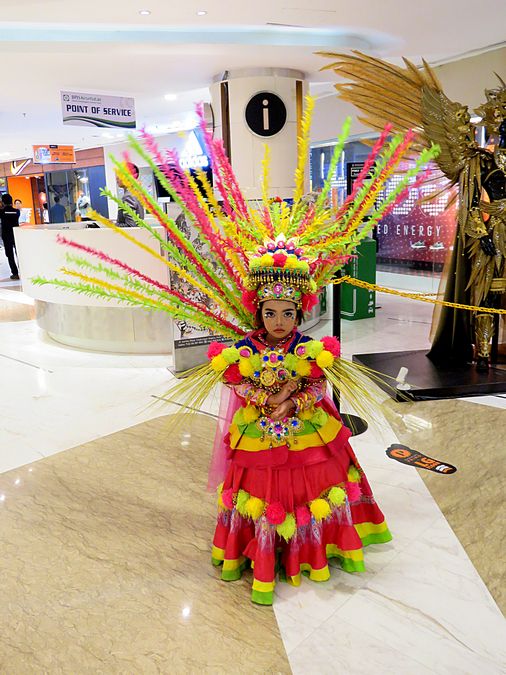
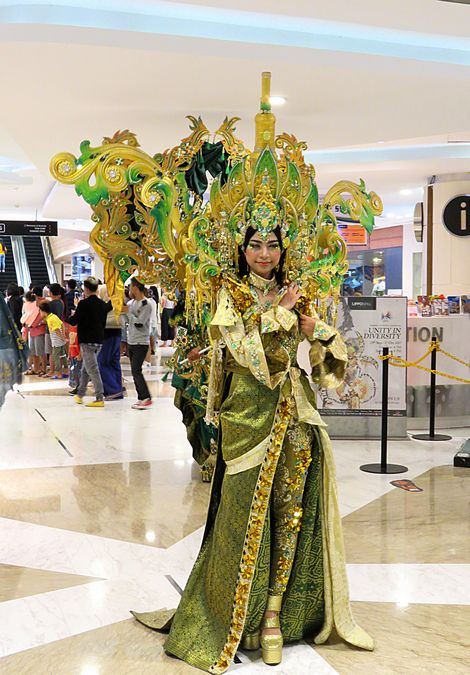
The shopping mall near our hotel had a traditional costume show that night.
The costumes were winners of national competitions for traditional costumes.
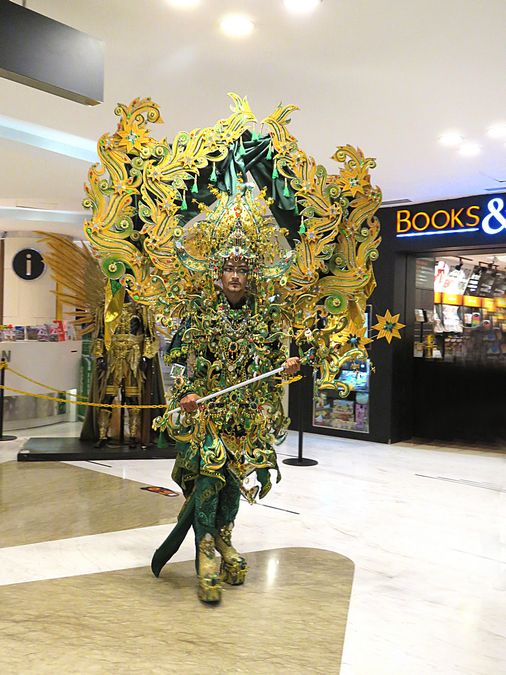
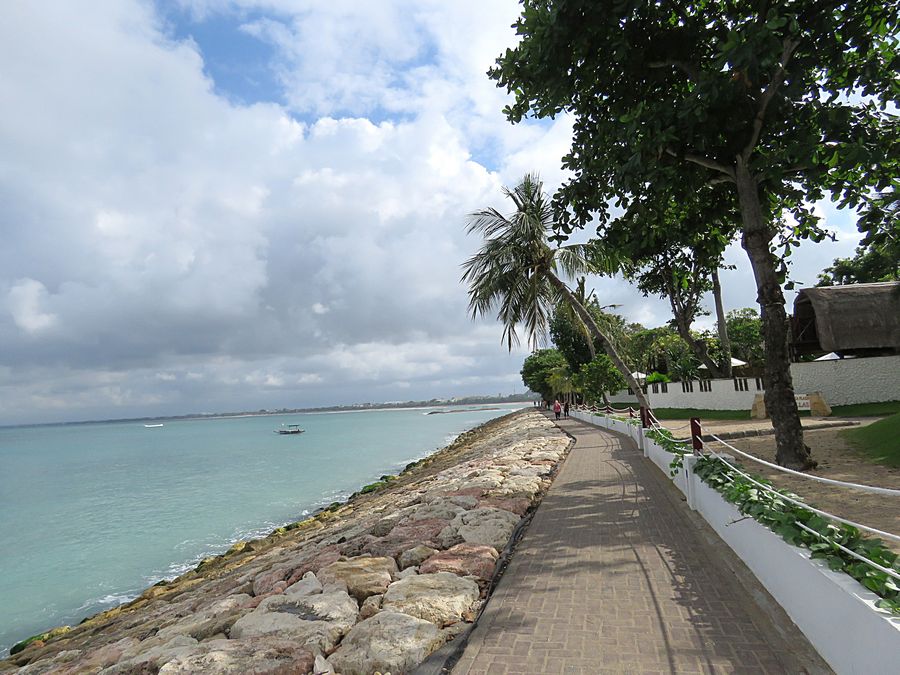
Sunday, October 1, we had the morning free in Kuta before leaving for
the Denpasar Airport and our various flights. This is a walkway along
Kuta Beach, lined with a bunch of hotels. Kuta is a huge tourist area.
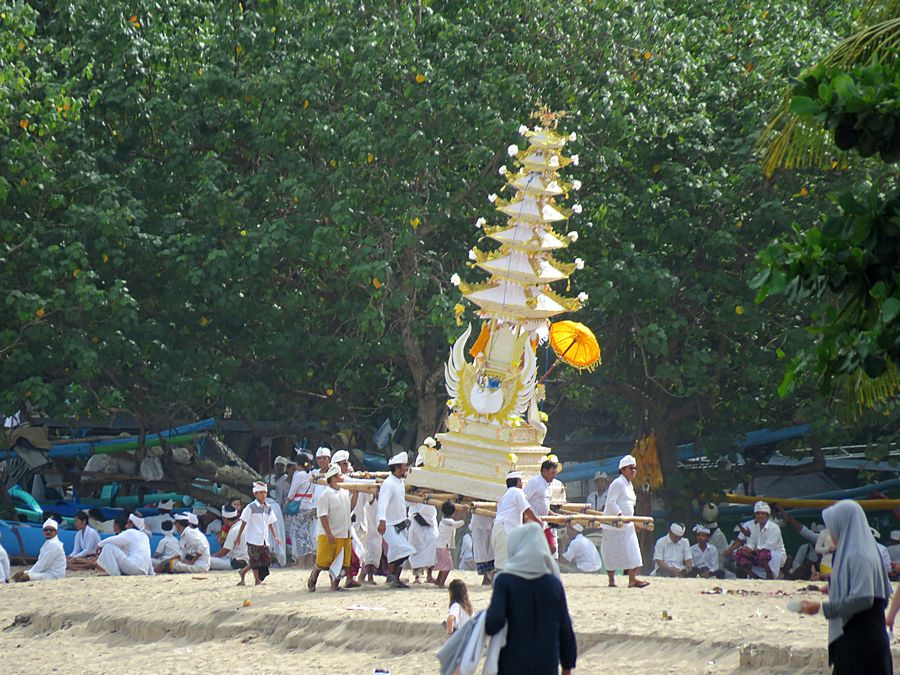
There happened to be a Hindu funeral ritual that morning on the beach.
The Hindu funeral ritual in Bali is performed to release the dead person's
soul so that it can enter the upper realm, where it can wait to be reborn
or become liberated from cycles of rebirths. Balinese Hindu theology
believes there is a competition between evil residents of the lower realm
to capture the deceased soul, so a proper cremation increases the chance the
soul will reach the upper realm.
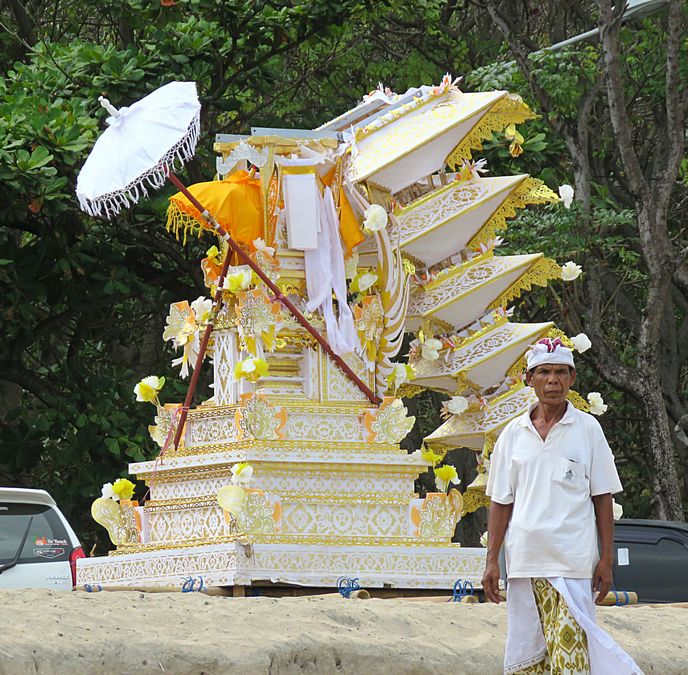
Typically, in Balinese Hindu culture, people bury the dead for a while, pool funds,
and may cremate many recently dead on the same day, unless it is a wealthy
family. Once families are ready, they select an auspicious day. At the
cremation area, the corpse is often placed into a temple-shaped wadah (see above),
final hymns are recited, and the cremation pyre is lit. Days after cremation,
the families collect the ashes, fill them inside a coconut shell, and carry it to
a nearby river or sea to return the remains to the elements.
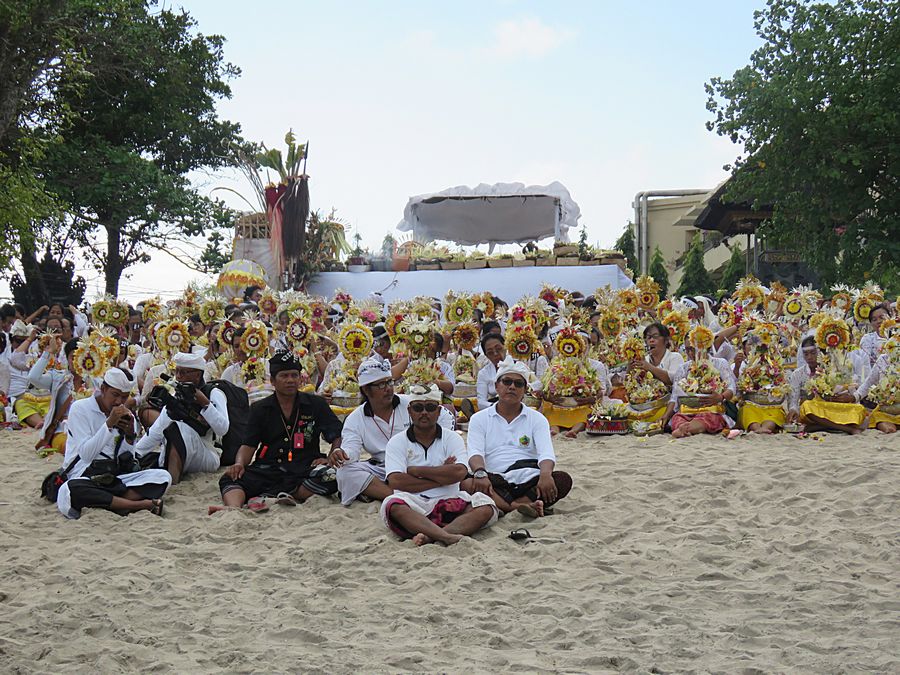
Since it appeared there was only one deceased person involved,
the family must be wealthy.
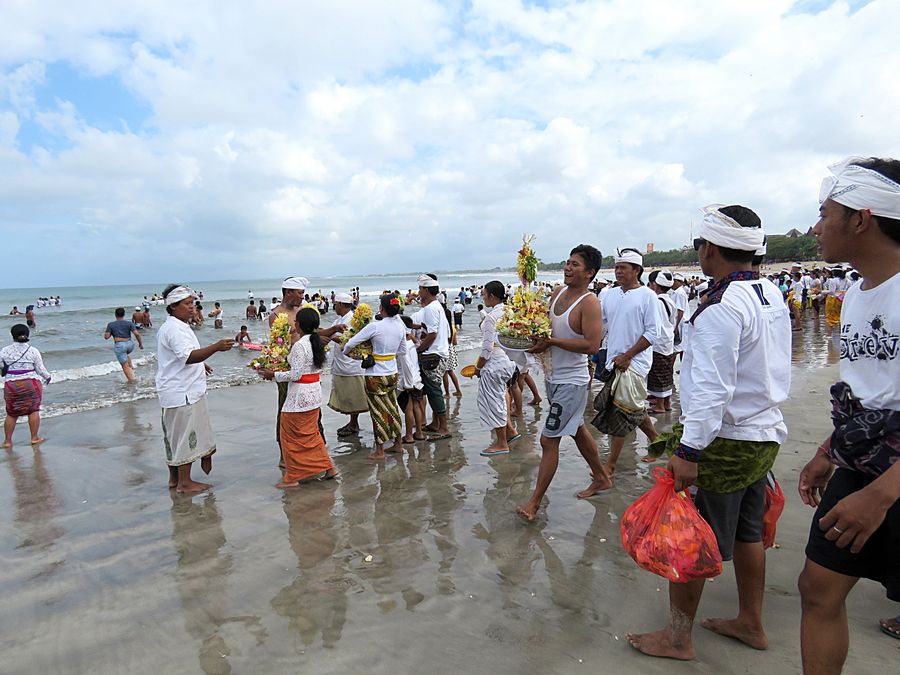
Making offerings in the sea.
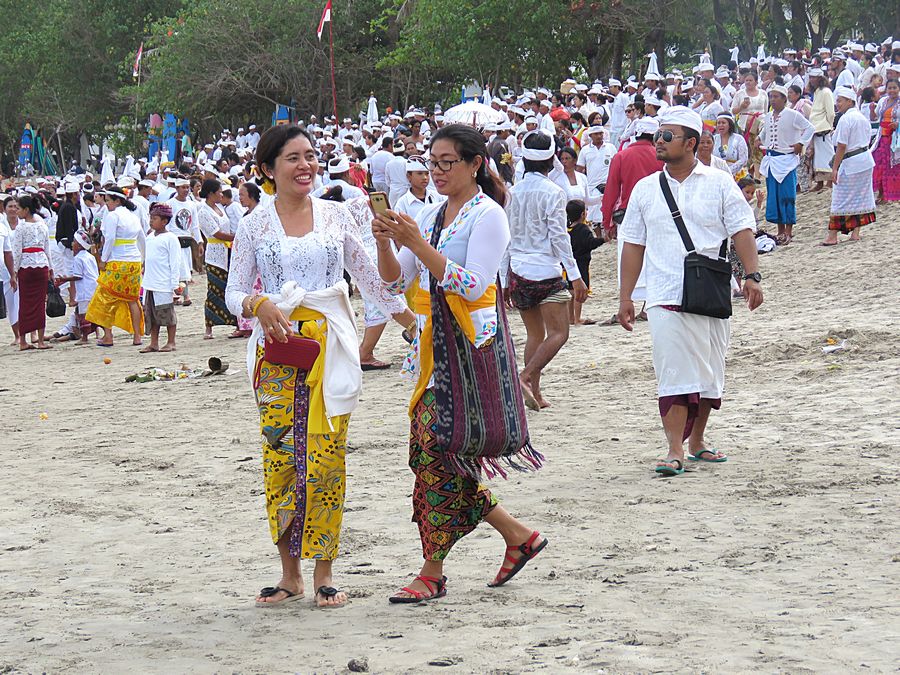
People starting to leave the beach area after the ceremony.
There is a caste system in Balinese Hinduism, with 4 castes. In urban
areas, the caste system is no longer as significant as it once was, but it
remains significant, especially in rural areas. Each caste has its own
language and a separate dialect exists to enable someone to address one
of unknown cast to avoid disrespect. The national language of Indonesia
that is taught in schools simplifies communication somewhat.
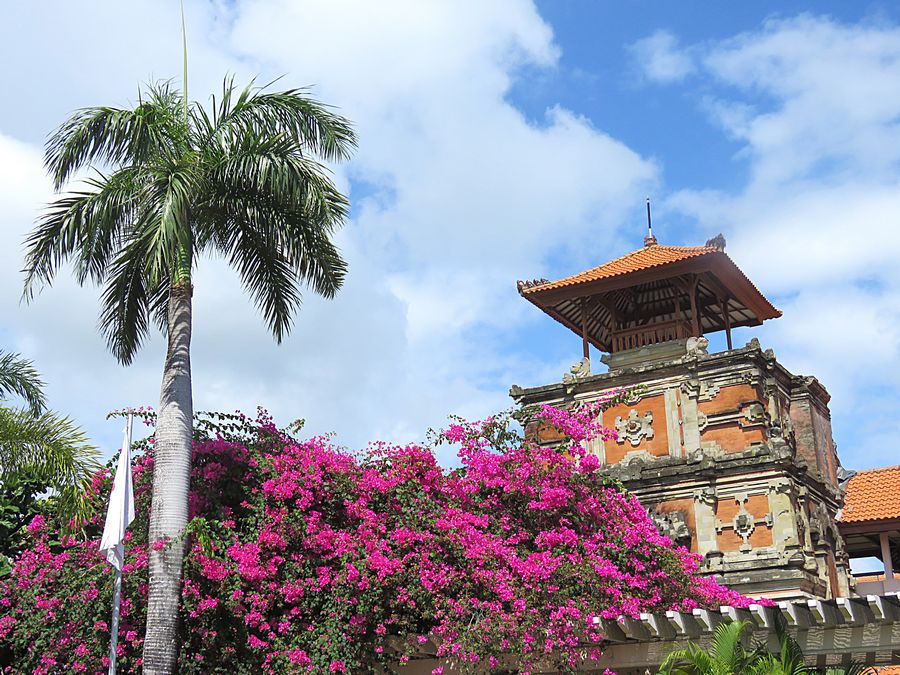
Fancy hotel next to ours that had a beach front.
Beautiful building and setting.
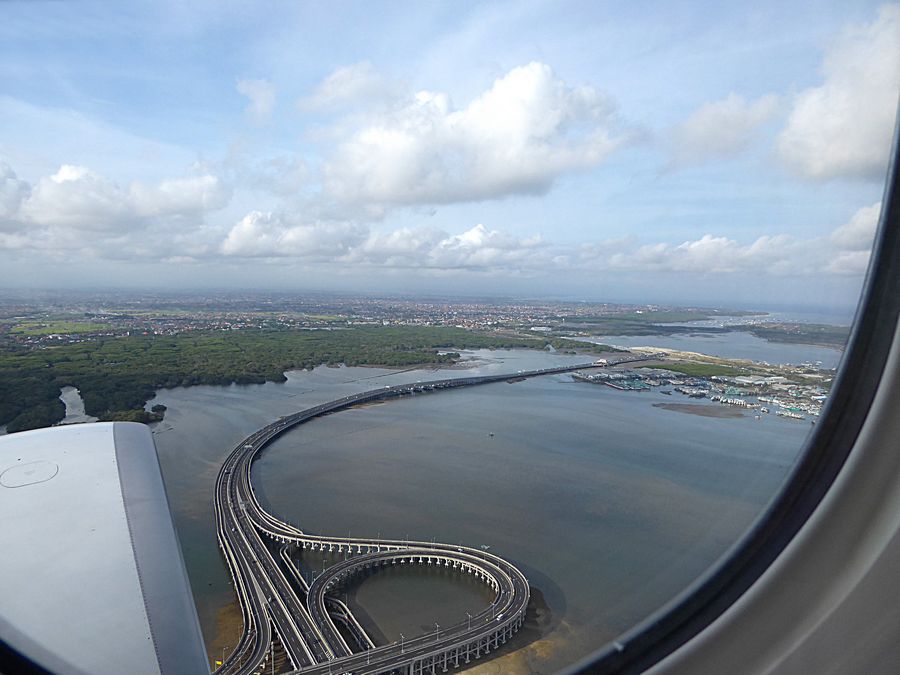
Departing from Denpasar International Airport to head home.
I took Eva Airlines (Taiwanese airline) to Taipei, then took
another Eva Airlines flight to Los Angeles, stayed overnight in
Los Angeles, and took an American Airlines flight to Denver
the following morning.
THE END
Link Back to Part One, Page One - Java
Pat's Home Page